

Pilgrim's guide
Kraków-Łagiewniki - pilgrim's guide
Photos: marek7400 · CC BY 3.0
The Divine Mercy Sanctuary in Kraków-Łagiewniki is where St Faustina Kowalska lived and died, and the world centre of devotion to the Divine Mercy. This guide will help you plan your visit, from the Hour of Mercy to quiet prayer at the Saint's tomb.
Machine-translated guide.
Why go
In the small convent chapel hangs the image of the Merciful Jesus, renowned for graces, and beneath it rest the relics of St Faustina. It is an intimate place, visited every year by pilgrims from dozens of countries around the world.
Beside the historic convent rises a modern basilica, where John Paul II entrusted the world to the Divine Mercy. Łagiewniki combines the quiet of a convent garden with the scale of an international sanctuary, and the daily prayer at 3 pm unites those present with those who join in through the broadcast.
A short history
Sister Faustina Kowalska of the Congregation of the Sisters of Our Lady of Mercy died in the Łagiewniki convent on 5 October 1938. From the 1940s pilgrims gathered at her tomb and at the image of the Merciful Jesus. John Paul II beatified her in 1993 and canonised her on 30 April 2000, at the same time establishing Divine Mercy Sunday for the whole Church.
On 17 August 2002 the Pope consecrated the new basilica and entrusted the world to the Divine Mercy. The sanctuary was also visited by Benedict XVI in 2006 and by Francis in 2016, during World Youth Day.
Getting there
The sanctuary lies in the southern part of Kraków, on Siostry Faustyny Street. From the city centre you can get here quickly by public transport or by train.
- by train: the Kraków Sanktuarium stop, opened in 2016, is right next to the sanctuary
- by tram: from the tram stop a footbridge known as the Bridge of Mercy leads to the sanctuary; on Divine Mercy Sunday the city runs extra lines
- by car or coach: there are two car parks at the sanctuary, one for cars and the other also for coaches
When to go
The sanctuary is full of life all year round. A visit around 3 pm is the most moving, when the Hour of Mercy and the Chaplet are prayed in the basilica. If you want to pray in silence, come in the morning on a weekday.
- Good Friday - beginning of the Novena to the Divine Mercy
- Divine Mercy Sunday (the first Sunday after Easter) - the sanctuary's greatest feast, with tens of thousands of pilgrims
- 17 August - anniversary of the consecration of the basilica and the entrustment of the world
- 5 October - memorial of St Faustina on the day of her death
What to see and experience
- The chapel with the image of the Merciful Jesus and the tomb of St Faustina - the heart of the sanctuary
- The oratory - the place where St Faustina died
- The former convent gate, where the Saint worked
- The Basilica of the Divine Mercy, with chapels dedicated to various nations in its lower church
- The Chapel of Perpetual Adoration
- The viewing tower beside the basilica, with a panorama of Kraków
- The sisters' convent cemetery
- The Hour of Mercy at 3 pm - the Chaplet prayer, broadcast every day
Practical information
- dress: modest; silence is kept in the convent chapel
- guide: the sisters' website describes a route of over a dozen stations around the sanctuary, useful if you are exploring on your own
- intentions for prayer at the Hour of Mercy can be sent through the sanctuary's website
- for groups: the sisters give talks for pilgrims, to be arranged before you arrive
- times of Masses, services, confession and the tower: check the current schedule on the sanctuary's website
Accommodation and food
The sisters offer guest rooms in the House of St Sister Faustina, in the convent building, for individuals and groups; groups can also order meals at the restaurant by the sanctuary. Within the complex there is also a Pastoral House with guest facilities. Beyond that, Kraków offers accommodation of every kind, and the easy rail connection means you can even stay in the city centre.
Tips from pilgrims
- Go first to the small chapel with the image, and only then to the basilica - an order that helps you understand the place.
- Arrive for the Hour of Mercy a quarter of an hour early, especially at weekends and in season.
- On Divine Mercy Sunday choose the train or tram rather than the car and plan an unhurried day.
- Combine your visit with the nearby John Paul II Centre - it is a short walk away.
- Leave a moment for the convent cemetery and the garden, the quietest corners of the sanctuary.
Frequently asked questions
What time is the Hour of Mercy in Łagiewniki?
Every day at 3 pm the Chaplet of Divine Mercy is prayed at the sanctuary. The prayer is broadcast live.
How do I get to Łagiewniki from the centre of Kraków?
The simplest way is by train to the Kraków Sanktuarium stop, or by tram, with a footbridge leading from the stop to the sanctuary. Check the route in the current timetable.
Where is St Faustina buried?
Her relics rest in the convent chapel, beneath the image of the Merciful Jesus, in the historic part of the sanctuary.
When is Divine Mercy Sunday?
On the first Sunday after Easter. It is preceded by a novena that begins on Good Friday.
Can I stay overnight at the sanctuary?
Yes. The sisters run guest rooms in the House of St Sister Faustina for individuals and pilgrim groups.
Nearby
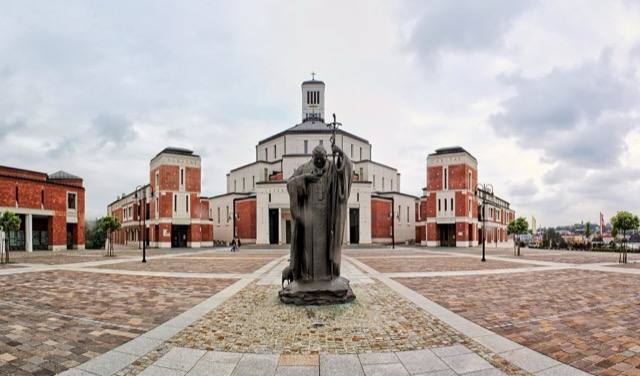 Sanctuary of Saint John Paul II, KrakówKraków, PL
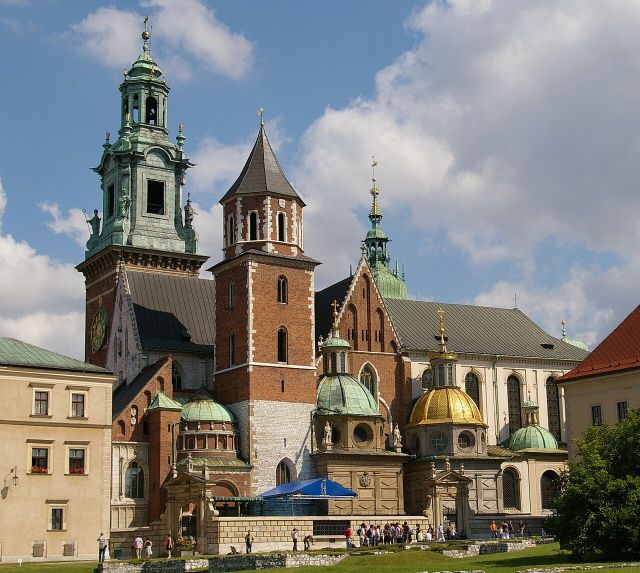 Archcathedral Basilica of Saints Stanislaus and Wenceslaus (Wawel Cathedral), KrakówKraków, PL
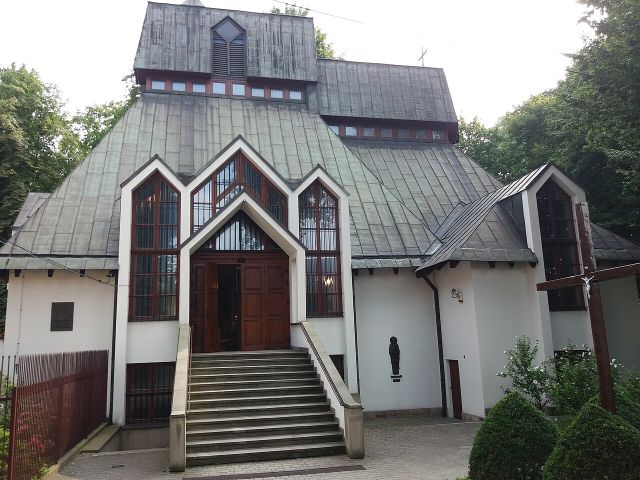 Ecce Homo Shrine of Saint Brother Albert, KrakówKraków, PL
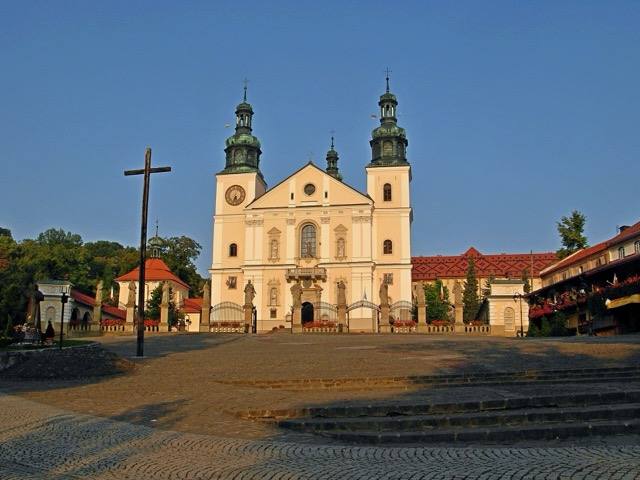 Kalwaria ZebrzydowskaKalwaria Zebrzydowska, PL
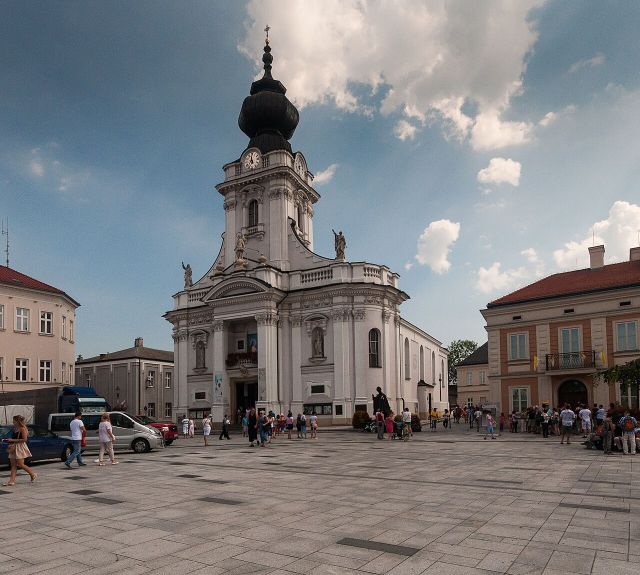 Basilica of the Presentation of the Blessed Virgin Mary, WadowiceWadowice, PL