
Pilgrim's guide
Padua - Basilica of St Anthony - pilgrim's guide
Photos: Tiziano Gioiellieri · CC BY-SA 3.0
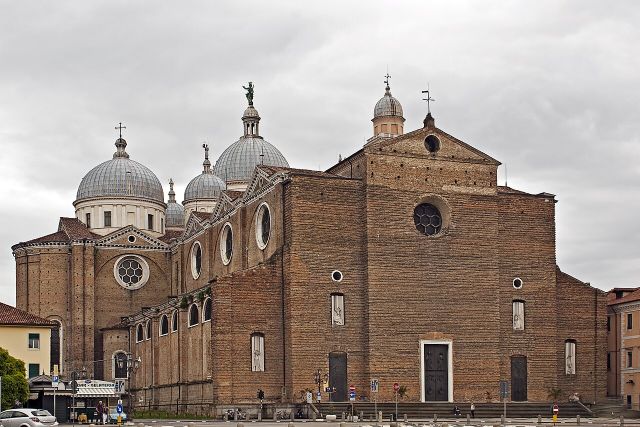
The Basilica of St Anthony in Padua, known to locals simply as Il Santo, holds the tomb of one of the Church's best-loved saints. This guide is for pilgrims who want to pray at his tomb, see his relics and discover the traces of other nations in the basilica, including a Polish chapel.
Machine-translated guide.
Why go
For many Catholics St Anthony is the patron of everyday matters: lost things, but also lost paths in life. In Padua you can stand at his tomb, touch the marble slab on which millions of pilgrims have laid their hands for centuries, and leave your intentions. The basilica draws huge numbers of faithful from all over the world every year, and yet a spirit of recollection reigns around the tomb.
Padua also has a distinctly Polish connection. The basilica contains the Chapel of St Stanislaus, founded at the beginning of the 17th century by Polish students of the famous University of Padua. Members of the Sapieha family, among others, are buried there, and the modern altar is adorned with a painting of St Maximilian Kolbe.
A short history
Anthony, a Portuguese Franciscan, came to Padua as a preacher, and here, by the church of Santa Maria Mater Domini, a friary was established in 1229. He died in 1231 at Arcella near Padua, and in accordance with his wishes his body was taken to Mater Domini. Construction of the great basilica probably began around 1232, and it had taken its essential shape by 1310. The old church of Mater Domini became part of it as the Madonna Mora Chapel.
The basilica combines Romanesque, Gothic and Byzantine elements, and its domes recall St Mark's Basilica in Venice. The high altar was decorated by Donatello, who also placed the equestrian statue of Gattamelata in front of the church. The Polish student nation founded in 1592 built the Chapel of St Stanislaus, consecrated in 1607. Since 2021 two of the basilica's chapels, those of St James and Blessed Luke Belludi, have formed part of the UNESCO site of Padua's 14th-century fresco cycles. The basilica is a papal basilica and the property of the Holy See.
Getting there
Padua lies in the Veneto, about half an hour by train from Venice, and is one of the most accessible pilgrimage destinations in Italy. The nearest airports are Venice and Treviso; by coach or car it is easily reached on the Italian motorway network. Groups often combine Padua with Venice, Loreto and Assisi.
- by air: Venice Marco Polo airport, about 50 km away, with direct buses to Padua or a bus to Mestre and then a train; Treviso airport, about 42 km away, also has buses to Padua
- by train: Padua is a major rail hub with fast connections from Venice, Bologna and Milan
- by tram: from the railway station take line SIR1 towards Guizza and get off at the Santo stop, right by the basilica
- by car: via the A4 and A13 motorways; from the car park at Prato della Valle you can walk or use local transport
When to go
The basilica is open every day all year round. Most pilgrims come in June, during the celebrations in honour of the saint. If you are looking for quiet, choose a weekday outside June and come in the morning.
- 13 June - solemnity of St Anthony: Masses from dawn to evening and an afternoon procession with the saint's statue and relics through the streets of the city
- late May and early June - the Tredicina, thirteen days of prayer before the feast, with evening celebrations and diocesan pilgrimages
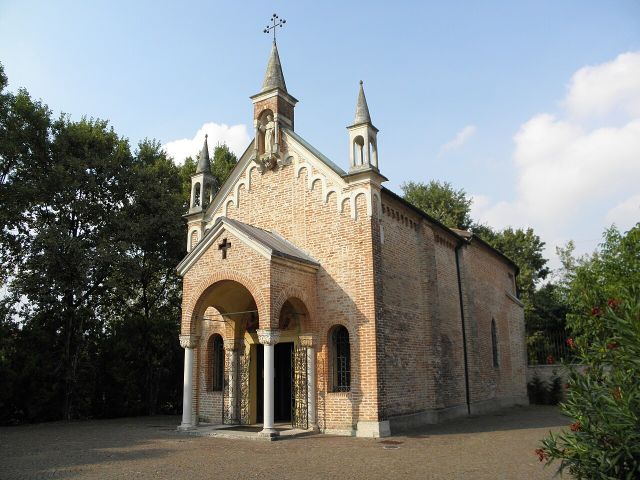
- 12 June in the evening - commemoration of the saint's passing, with a procession to the shrine at Arcella
- Tuesdays - the day traditionally dedicated to St Anthony, with more people at prayer
What to see and experience
- the Chapel of the Tomb (Arca del Santo) with marble reliefs from the saint's life; pilgrims walk behind the tomb, laying a hand on it
- the Chapel of the Relics, where a golden reliquary holds, among other things, the saint's tongue and chin
- the high altar with sculptures by Donatello
- the Chapel of St Stanislaus, a memorial of 17th-century Polish students
- the chapels of St James and Blessed Luke Belludi with UNESCO-listed frescoes
- the Madonna Mora Chapel - the old church where Anthony was first buried
- the friary cloisters and the museums of the basilica complex
- the shrine at Arcella, where the saint died, and the shrines at Camposampiero, where he spent his last days
Practical information
- entry to the basilica is free
- dress: appropriate for a church, with shoulders and knees covered
- the use of any photographic equipment is forbidden in the basilica; phones must be silenced or switched off
- food, drink and animals may not be brought in
- groups wishing to visit with a guide book their visit through the basilica website
- there is an information office and a pilgrim reception office at the basilica
- Masses for pilgrims' intentions can be requested on site or through the basilica website
- opening hours and Masses: check the basilica website
Accommodation and food
The basilica lists the Pilgrim House (Casa del Pellegrino) on its website as an official accommodation option; details and booking via the basilica website. Padua also has many religious houses and hotels, and as the city is well connected, some pilgrims stay in the surrounding area and travel in. Simple meals are easy to find near the basilica and in the centre, and the old town with its market squares invites a stroll.
Tips from pilgrims
- there is a slow-moving queue for the tomb; come in the morning before the groups arrive
- write your intentions on a piece of paper beforehand so you can leave them calmly at the tomb
- set aside separate time for the Chapel of the Relics, as many pilgrims rush past it
- if you are looking for the Chapel of St Stanislaus, ask at the information office, as it is easy to miss among the many chapels
- in June, especially on 13 June, expect crowds throughout the city and book accommodation well in advance
- combine your visit with Arcella and Camposampiero to follow the path of the saint's last days
On foot and on the trail
Many pilgrims link, on foot or by bike, the places associated with St Anthony's last days: the shrine at Arcella, where he died, and the shrines of the Walnut Tree and the Vision at Camposampiero, about 20 km from the city. Every year on the evening of 12 June a procession goes to Arcella, recalling the saint's passing to the Lord.
Frequently asked questions
Can I touch the tomb of St Anthony?
Yes. In the Chapel of the Tomb pilgrims walk around the sarcophagus and lay a hand on the marble slab while praying for their intentions. At peak times there is a queue.
Where are the relics of St Anthony's tongue?
In the Chapel of the Relics in the basilica, in a golden reliquary. Other mementoes of the saint are kept alongside.
Can I take photos in the basilica?
No. The basilica's rules forbid the use of photographic equipment in the church. Requests for permission to film should be sent to the basilica office.
How do I get from Padua station to the basilica?
Take the SIR1 tram towards Guizza to the Santo stop, right next to the basilica. You can also walk through the old town.
When is the feast of St Anthony in Padua?
On 13 June. It is preceded by the Tredicina, thirteen days of prayer, and on the feast itself, after the afternoon Mass, the saint's statue and relics are carried in procession through the city streets.
Is there anything Polish in the basilica?
Yes, the Chapel of St Stanislaus, built by Polish students of the University of Padua and consecrated in 1607, with the tombs of members of the Sapieha family, among others.