

Pilgrim's guide
Santiago de Compostela - cathedral - pilgrim's guide
Photos: Jocelyn Erskine-Kellie from London, UK · CC BY 2.0
The cathedral of Santiago de Compostela in Galicia guards the tomb of St James the Apostle and is the goal of the Camino, a network of pilgrim routes from all over Europe. This guide is for those who arrive on foot, by bicycle or fly in for a few days, and it explains the rules for receiving the Compostela.
Machine-translated guide.
Why go
Since the Middle Ages people have set out for Santiago from their own front doors, and today the Ways of St James are full of pilgrims again. Walking into the Praza do Obradoiro after many days on the road is, for many, a moment they never forget: tiredness, gratitude and the sense that the journey has changed something inside them.
Yet the cathedral is also a goal for those who have not walked the Camino. Praying at the Apostle's tomb, the Pilgrims' Mass and meeting people from all over the world who have just finished their own journey give the place a unique atmosphere.
A short history
According to tradition, at the beginning of the 9th century the hermit Pelagius found a tomb believed to be that of St James the Great. Bishop Theodomir informed King Alfonso II and pilgrimages soon began, making Santiago one of the most important destinations of Christian Europe in the Middle Ages.
Construction of the present Romanesque cathedral began in 1075 and it was consecrated in 1211. Master Mateo's Portico of Glory was completed in 1188 and the Baroque Obradoiro façade in 1740. In the crypt beneath the high altar is a silver reliquary with the remains attributed to the Apostle. The old town of Santiago is a UNESCO World Heritage Site.
When the solemnity of St James, 25 July, falls on a Sunday, the Church celebrates a Jacobean Holy Year and the cathedral opens its Holy Door. The next Holy Year is 2027, followed by 2032 and 2038.
Getting there
Most pilgrims reach Santiago by air: directly or with a connection to Santiago-Rosalía de Castro airport, from where a bus runs into the city. Pilgrims starting the Camino also fly to other cities where the routes begin, for example Porto for the Portuguese Way, or Madrid and Bilbao, and then continue by train or bus. Parish coach pilgrimages combining Santiago with other shrines in Spain and Portugal are also popular.
- by air: Santiago-Rosalía de Castro airport is close to the city and has a bus to the centre and the stations; check connections from your home airport with the airlines
- by train and bus: Santiago has a railway and a bus station with connections across Spain; from the centre you can walk to the cathedral
- by coach: organised pilgrimages, usually lasting several days, with several shrines along the way
- by car: for most travellers from elsewhere in Europe a long drive; the old town is best explored on foot, leaving the car in a car park
When to go
Most pilgrims arrive in Santiago between spring and autumn, and in summer the city can be full. Spring and September offer good walking weather and fewer crowds. In winter the routes are empty, some hostels may be closed and Galicia is rainy. The 2027 Holy Year will draw exceptionally large numbers of pilgrims, so it is worth booking accommodation well in advance.
- 25 July - solemnity of St James the Apostle, the cathedral's most important feast
- major solemnities, including Easter, Pentecost, the Assumption and Christmas - occasions when the botafumeiro is usually used
- Holy Year 2027 - the Holy Door is open and a plenary indulgence can be gained under the usual conditions
What to see and experience
- the Praza do Obradoiro and the cathedral's Baroque façade - the place where the Camino ends
- the crypt with the relics of St James beneath the high altar
- the statue of the Apostle behind the high altar, which pilgrims approach to embrace it or kiss its cloak
- the Pilgrims' Mass, celebrated daily
- the botafumeiro - a huge thurible swung beneath the cathedral dome on major feasts; check before you travel whether it is being used
- Master Mateo's Portico of Glory - visits with a ticket, best booked in advance
- the Cathedral Museum
- the Holy Door, opened only in a Holy Year
- the Pilgrim's Office, where the Compostela is collected
Practical information
- times of Masses, visits and confessions: check the current information on the cathedral's website
- rucksacks: for security reasons they may not be taken into the cathedral; leave them at your accommodation or in a left-luggage facility
- the Compostela: to receive it you must walk or ride on horseback at least 100 km, or cycle at least 200 km, with the last stage ending at the cathedral; the purpose of the journey must be religious or spiritual
- pilgrim passport (credencial): you collect dated stamps in it; if you cover the minimum distance in stages, you need a stamp at the start and end of each stage
- the Compostela is free; the Pilgrim's Office also issues a paid certificate of distance showing the route and number of kilometres
- at the Pilgrim's Office you take a ticket with a QR code that shows your place in the queue; in peak season collection on the same day is not guaranteed
- language: Spanish and Galician; the cathedral also has Masses in other languages and confession is available in several languages
- pilgrim groups can request a Mass or the botafumeiro through the cathedral
Accommodation and food
Santiago has accommodation for every budget: public and parish pilgrim hostels (albergues), religious houses, guesthouses and hotels. Pilgrims with a credencial use hostels along the way and in the city, but in summer and during a Holy Year places run out quickly, so it is good to book a bed for the day you arrive. The old town has no shortage of bars and restaurants, and many of them offer a simple pilgrims' menu.
Tips from pilgrims
- When you arrive, stop first in the Praza do Obradoiro and give yourself a moment; the formalities can wait.
- Get your QR-code ticket at the Pilgrim's Office early, before you go to Mass, because at peak times the daily allocation can run out.
- If you can, stay in Santiago an extra day: the Pilgrim's Office and the cathedral are quieter in the morning.
- On the last 100 km collect stamps regularly and clearly dated, so you have no trouble when collecting the Compostela.
- Arrive early for the Pilgrims' Mass, as the pews fill up quickly.
- Do not count on the botafumeiro on an ordinary day; check on the cathedral's website when it is used.
- Bring a rain jacket, because in Galicia rain can come at any time of year.
On foot and on the trail
The Camino de Santiago is a network of routes waymarked with the scallop shell of St James and yellow arrows. The most popular is the French Way, about 800 km from Saint-Jean-Pied-de-Port across the Pyrenees. Second in popularity is the Portuguese Way from Lisbon or Porto. The Northern Way runs along the coast and is hillier, and the Primitive Way starts in Oviedo. Many pilgrims choose only the last 100 km, starting in Sarria.
Those who start walking outside Spain on a recognised route need at least 70 km covered in Spain to receive the Compostela. A credencial can be obtained from the Pilgrim's Office, parishes and associations of friends of the Way of St James, which exist in many countries, including Poland, crossed by more than twenty waymarked Ways of St James. There is also an official app with a digital credencial.
Frequently asked questions
How many kilometres do I need to walk to get the Compostela?
At least 100 km on foot or on horseback, or 200 km by bicycle, on a recognised route, with the last stage ending at the cathedral. Those who started walking outside Spain need at least 70 km in Spain. The official Pilgrim's Office gives the details.
How many stamps do I need in my credencial?
Stamps are collected along the way, usually at places where you stay, churches and hostels. If you cover the minimum distance in stages, you need a dated stamp at the start and end of each stage.
Do I have to pay for the Compostela?
No, the Compostela is free. Only the additional certificate of distance is paid for, and the income from it supports services for pilgrims.
When is there a Holy Year in Santiago?
When 25 July, the solemnity of St James, falls on a Sunday. The next Holy Year is 2027, followed by 2032 and 2038. During a Holy Year the cathedral's Holy Door is open.
When can I see the botafumeiro?
The botafumeiro is used on major solemnities, and pilgrim groups can request it through the cathedral. It is sometimes out of use because of conservation work, so check the cathedral's website before you travel.
Which Camino route should I choose for my first time?
The French Way is the most common choice, and for a shorter trip its last 100 km from Sarria. The Portuguese Way from Porto is a good alternative with convenient flights. The Northern and Primitive Ways are more demanding.
Nearby
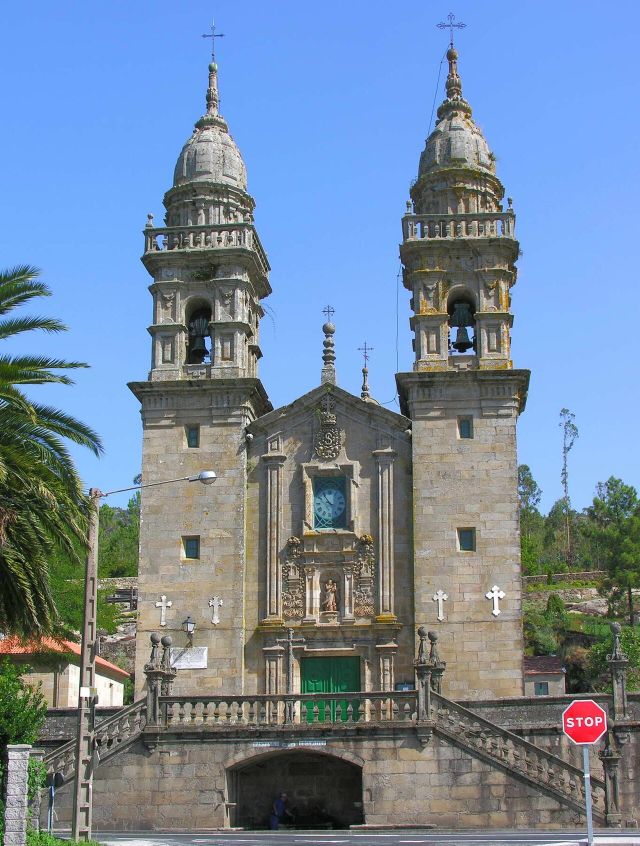 Church of Nuestra Señora de la Esclavitud, A EscravitudeA Escravitude, ES
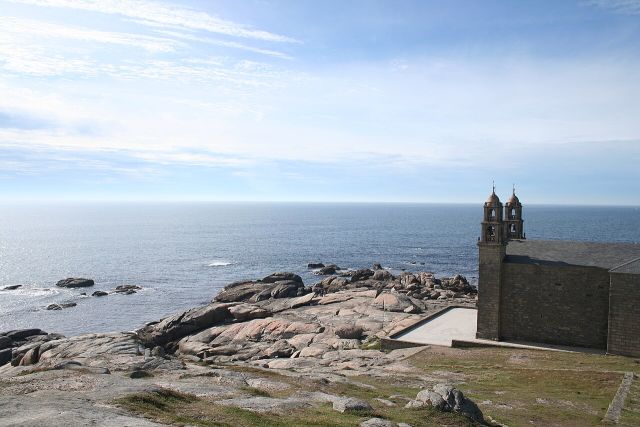 Shrine of Nuestra Señora de A Barca, MugíaMugía, ES
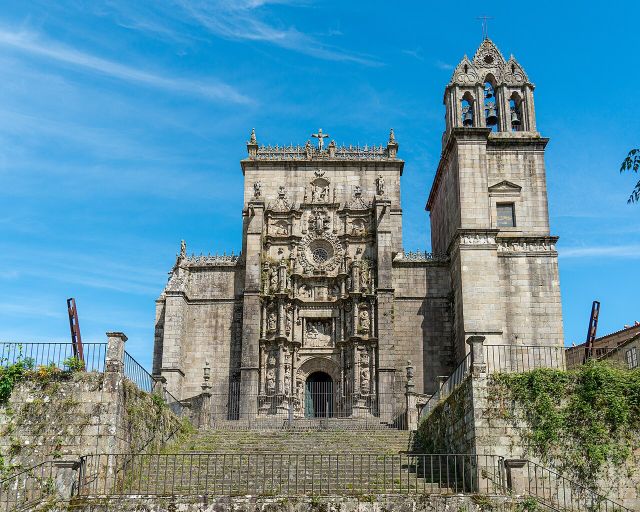 Basilica of Santa María la Mayor, PontevedraPontevedra, ES
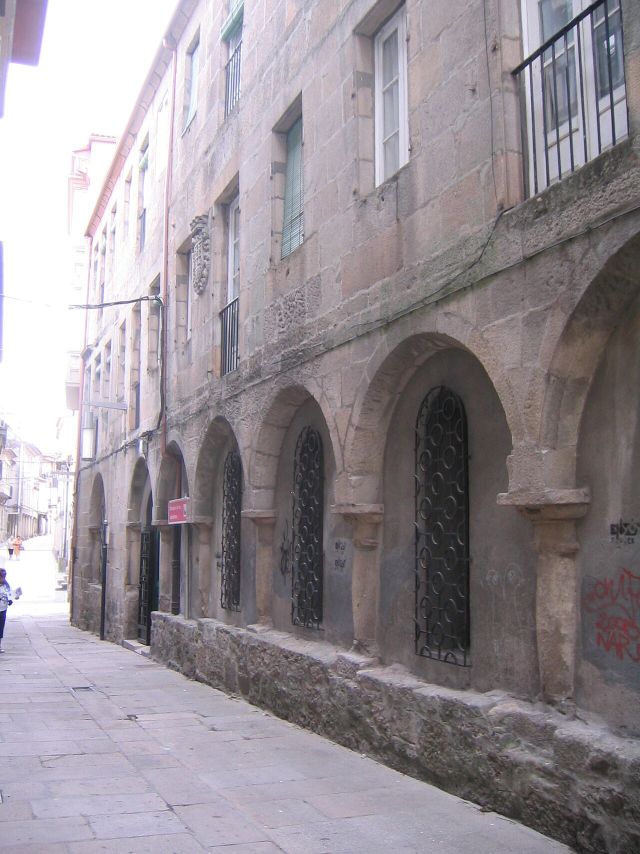 Shrine of the Apparitions, PontevedraPontevedra, ES
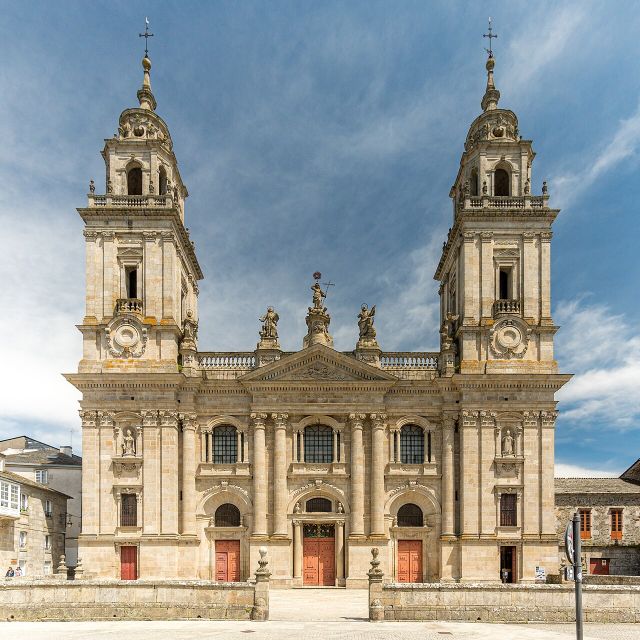 Cathedral of Santa María de Lugo, Ciudad de LugoCiudad de Lugo, ES