
Pilgrim's guide
Święta Lipka - pilgrim's guide
Photos: Schorle · CC BY-SA 3.0
Święta Lipka is a Baroque Marian shrine on the border of Warmia and Masuria in north-eastern Poland, famous for its organ with moving figures and its cloisters full of frescoes. It has been in the care of the Jesuits for centuries. This guide is for those who want to come here to pray and, along the way, experience one of the most beautiful church interiors in Poland.
Machine-translated guide.
Why go
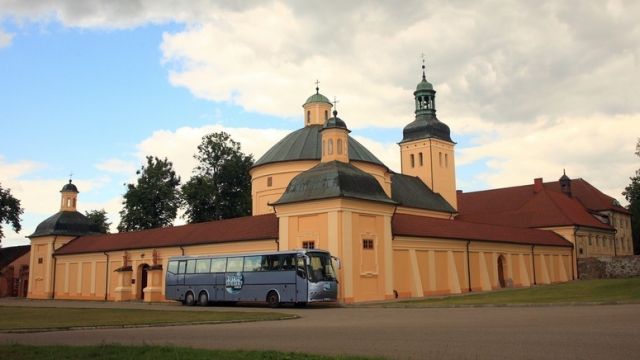
The Basilica of the Visitation of the Blessed Virgin Mary in Święta Lipka enchants from the first step into the courtyard: the yellow façade, the cloisters with corner chapels, and inside the gold of the altar and the painted vaults. Above all, though, it is a place of prayer before the crowned image of Our Lady, to which pilgrims have been coming since the Middle Ages.
The shrine's location is also special: it stands on the old border between Catholic Warmia and Protestant Masuria. For centuries it drew people of different denominations, and today it is sometimes called the shrine of the Mother of Christian Unity.
A short history
According to legend, a prisoner from Kętrzyn carved a statue of Mary and hung it on a lime tree by the road to Reszel. The first reliable records of a chapel date from the 15th century. During the Reformation, around 1524, the chapel was destroyed and a gallows was put up in its place to deter pilgrims. In 1619 a new chapel was built on the uncovered foundations and entrusted to the Jesuits.
The present church was built at the end of the 17th century and consecrated on 15 August 1693. The cloisters with their chapels were completed in 1708, the high altar was made in 1712-1714 and the vault frescoes in 1727. The famous organ with moving figures was built in 1719-1721 by Johann Josua Mosengel of Königsberg. The Jesuits had to leave the shrine in Prussian times and returned in 1932. On 11 August 1968 Cardinal Stefan Wyszyński crowned the image of Our Lady, and Cardinal Karol Wojtyła celebrated the Mass. In 1983 John Paul II gave the church the title of minor basilica, and in 2018 the complex was declared a Monument of History.
Getting there
The shrine lies in the Mrągowo Lake District, on the road between Reszel and Kętrzyn, a dozen or so kilometres from Kętrzyn. It makes a good stop on the way into the Masurian Lakes.
- by car and coach: from Olsztyn via Reszel or from Kętrzyn; on summer weekends the parking spaces by the shrine fill up quickly
- by public transport: to Kętrzyn or Reszel, then by regional bus; check timetables with local operators before you travel
- on foot from Reszel: along the old pilgrim road with wayside shrines and old lime trees
When to go
The shrine is at its liveliest in summer: there are several organ demonstrations a day, and on Friday evenings in July and August the Święta Lipka Musical Evenings festival takes place. Outside the season it is quieter and easier to pray recollectedly before the image.
- July and August - organ demonstrations several times a day and evening concerts
- 11 August - anniversary of the crowning of the image in 1968
- 15 August - anniversary of the consecration of the church and the solemnity of the Assumption
- patronal feasts and diocesan pilgrimages - the current calendar is published by the shrine
What to see and experience
- the crowned image of Our Lady of Święta Lipka in the high altar
- the organ demonstration, during which the figures move, including the Annunciation scene with the Archangel Gabriel and Mary
- the cloisters with corner chapels and paintings on the vaults
- the frescoes of the nave vault and the richly decorated Baroque altar
- the old pilgrim road from Reszel with its Calvary wayside chapels
- Lake Wyrbel and Lake Dejnowa right next to the shrine
Practical information
- dress: modest; do not sightsee during Mass, and arrive a few minutes early for the organ demonstration
- organ demonstrations: short, several times a day in season; check the current schedule on the shrine's website
- accessibility: the historic interior and cloisters may have steps and uneven floors; visitors with reduced mobility should contact the shrine before arriving
- groups: it is worth arranging Mass and a guided tour in advance with the shrine's clergy
- times of Masses, opening and concerts: check the shrine's official website, as they change with the seasons
Accommodation and food
Near the shrine and in the surrounding villages there are guesthouses, farm stays and lakeside farms. There is a wider choice of accommodation and food in Reszel, Kętrzyn and Mrągowo. In summer it is worth booking early, as the area is popular with holidaymakers in Masuria.
Tips from pilgrims
- Plan your arrival so you catch an organ demonstration; it lasts only a few minutes but stays in the memory for a long time.
- After the demonstration, sit quietly for a while before the image once the tour groups have left.
- Walk round the cloisters slowly and look up; the paintings on the vaults are easy to miss in a hurry.
- Summer weekends are crowded, so an earlier hour or a weekday gives more peace.
- A Friday evening concert is a good reason to stay in the area overnight.
On foot and on the trail
Between Reszel and Święta Lipka runs the old pilgrim road with Calvary wayside chapels and old lime trees. It is a walk of a few kilometres that lets you reach the shrine as generations of pilgrims from Warmia did. The area around Lake Wyrbel and Lake Dejnowa is also good for short walks after the visit.
Frequently asked questions
When are the organ concerts in Święta Lipka?
In the summer season there are organ demonstrations several times a day, and on Friday evenings in July and August the Święta Lipka Musical Evenings festival takes place. The shrine publishes the exact times, as they change every year.
What is special about the Święta Lipka organ?
It is a Baroque instrument from 1719-1721 with figures that move while it is being played. The organ and the altar recently underwent thorough conservation.
Who looks after the shrine?
The Jesuits, who took it over in the 17th century. After a break in Prussian times they returned in 1932 and run the shrine to this day.
Where does the name Święta Lipka come from?
The name means "Holy Lime Tree". According to legend, a statue of Mary carved by a prisoner from Kętrzyn was hung on a lime tree by the road, and miracles began to happen by the tree. The first chapel was built around it.
How much time should I allow for a visit?
Two hours is usually enough for prayer, the organ demonstration and a walk round the cloisters. If you also walk the pilgrim road from Reszel, you will need the greater part of a day.