
Pilgrim's guide
Pompeii - pilgrim's guide
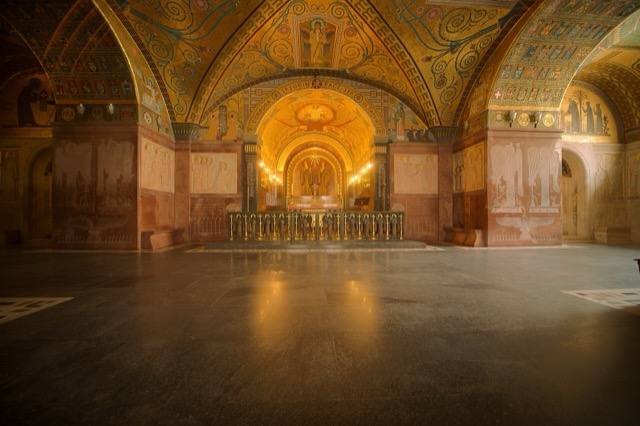
Photos: Norbert Nagel · CC BY-SA 3.0
The Shrine of Our Lady of the Rosary in Pompeii is one of the most important places of Rosary prayer in the world, just a few steps from the famous ruins of the ancient city. This guide is for those who want to come here in prayer, often after completing the Pompeii Novena, and to plan their stay in Campania well.
Machine-translated guide.
Why go
For many pilgrims Pompeii is associated above all with the Pompeii Novena, the 54-day Rosary that thousands of people have taken up in recent years. Coming to the place where this prayer was born is often a natural completion of the novena and an opportunity to give thanks for graces received.
It is also the place of a holy layman. Bartolo Longo, a lawyer who returned to the faith after years of being lost, built here not only a church but a whole work of charity for orphans and the children of prisoners. The shrine thus combines prayer with very practical care for people.
A short history
On 13 November 1875 Bartolo Longo brought an old painting of Our Lady of the Rosary to a poor parish in the Pompeii valley. First shown to the faithful in February 1876, the painting quickly began to draw people to prayer. That same year work began on a church, which was built until 1891 and later extended.
The monumental façade, conceived as a monument to universal peace, was completed in 1901, and the 80-metre bell tower was built in 1925. In 1883 Longo composed the first version of the Supplica, a solemn petition to Our Lady that is still prayed today. He died on 5 October 1926. John Paul II beatified him in 1980, and Pope Leo XIV canonised him on 19 October 2025.
Getting there
The most convenient airport is Naples (Capodichino). Flight connections change seasonally, so check what airlines currently offer. From Naples you can reach Pompeii by train, bus or car.
- by Circumvesuviana railway: the Naples - Poggiomarino line (via Scafati) has a station called Pompei Santuario, the closest to the shrine; the Naples - Sorrento line stops at Pompei Villa dei Misteri station by the excavations
- by Trenitalia: Pompei station on the national rail line
- by car: the A3 Naples - Salerno motorway, exits Pompei Ovest (from the north) or Pompei Est-Scafati (from the south)
- by bus: EAV and SITA regional lines; check timetables with the operators
- by coach: many parishes and agencies organise pilgrimages combining Pompeii with Rome, San Giovanni Rotondo or Monte Cassino
When to go
The shrine is open all year round. The busiest times are the days of the Supplica and October, the month of the Rosary. Summer in Campania can be very hot, so spring and autumn are usually the most pleasant.
- 8 May - the solemn Supplica at noon, with crowds of faithful in the square in front of the façade
- first Sunday of October - the second Supplica of the year
- 7 October - memorial of Our Lady of the Rosary
- 5 October - memorial of St Bartolo Longo
- check the programme for the current year on the shrine website
What to see and experience
- the painting of Our Lady of the Rosary with the Child Jesus, St Dominic and St Catherine of Siena above the high altar
- the communal Rosary in the shrine, which broadcasts this prayer every day
- the resting place of St Bartolo Longo and his wife in the shrine
- the Façade of Peace and Piazza Bartolo Longo
- the 80-metre bell tower, visible from all over the valley
- confession - the shrine has set times, details on the website
- an audio guide to the shrine available on the website
Practical information
- dress: shoulders and knees covered, also in summer
- Mass and service times: check the current schedule on the shrine website
- groups register their pilgrimage with the Rector's office (Ufficio del Rettorato)
- the shrine stands in the centre of the modern town of Pompei, a few minutes' walk from the entrance to the excavations
- on the days of the Supplica the square is crowded, so arrive early
- the shrine also blesses cars on site
Accommodation and food
Pompeii and the surrounding area have plenty of guesthouses, houses run by religious congregations and hotels of every category. Many groups also stay in Naples or on the coast and travel in by train. Campanian cuisine is famous for pizza, pasta and seafood, and simple meals are easy to find near the shrine.
Tips from pilgrims
- pay attention to station names: there are two stations with Pompei in their name, and Pompei Santuario is the closer one to the shrine
- Circumvesuviana trains can be crowded and are not air-conditioned, so keep an eye on your bag and documents
- the ruins and the shrine can be combined in one day, but leave separate, unhurried time for prayer
- bring intentions from your loved ones; many people write them down before leaving home
- in summer carry water and a hat, as the square in front of the basilica gets a lot of sun
- the shrine is usually quieter in the evening than at midday
Frequently asked questions
Is the shrine in Pompeii close to the ruins of the ancient city?
Yes. The shrine stands in the centre of the modern town of Pompei, a few minutes' walk from the entrance to the excavations, so the two visits are easy to combine.
How do I get from Naples to the shrine in Pompeii?
The easiest way is the Circumvesuviana railway. The closest station to the shrine is Pompei Santuario on the line to Poggiomarino. You can also take the Sorrento line (Pompei Villa dei Misteri station) or a Trenitalia train to Pompei station.
When is the Supplica to Our Lady of Pompeii prayed?
Solemnly twice a year: on 8 May and on the first Sunday of October, at noon. On these days crowds of pilgrims come to Pompeii.
Do I have to go to Pompeii after the Pompeii Novena?
No, the novena does not require a pilgrimage. Many people do come, however, to give thanks for graces or to conclude their prayer in the place where it originated.
Is Bartolo Longo a saint?
Yes. He was beatified in 1980 by John Paul II and canonised on 19 October 2025 by Pope Leo XIV. His memorial falls on 5 October.