Pilgrimages in Poland
John Paul II Trail: Wadowice, Kraków, Kalwaria and Jasna Góra
Published October 21, 2026 · 12 minute read
A practical guide to the John Paul II trail in Poland: from the basilica in Wadowice through Kalwaria and the Kraków shrines to Jasna Góra, with a 2-4 day plan.
Machine translation of an article written in Polish.
A journey in the footsteps of John Paul II is one of the most beautiful pilgrimages you can make in Poland. In just a few days you can see the place where Karol Wojtyła was born and baptised, the Calvary paths he walked as a boy, the Divine Mercy shrine in Kraków and his own sanctuary, and finally stand before the Miraculous Image at Jasna Góra. This guide shows how to link these places into a coherent route of 2, 3 or 4 days, what to look for when you get there, and how to live the journey not as a sightseeing tour but as a pilgrimage.
You will not find prices, opening hours or timetables here, because they change from season to season. Before you set off, always check the latest information on the shrines' official websites.
Why follow the John Paul II trail
The papal trail in Lesser Poland and Silesia is not a single waymarked path with signs from start to finish. It is rather a network of places connected by the saint's life: his childhood in Wadowice, his youth and priesthood in Kraków, the Marian devotion expressed in his motto Totus Tuus, and the last great acts of his pontificate linked to Divine Mercy. This means you can adapt the route to your own pace, number of days and means of transport.
For many people it is also a personal journey. Some return to memories of the papal visits to Poland, others are only just getting to know the saint they heard about from parents and grandparents. Either way, bring not only a camera but also a moment of silence in each church you visit.
Wadowice: the basilica where Karol Wojtyła was baptised
Every pilgrimage in the footsteps of the Polish pope should begin in Wadowice, at the Basilica of the Presentation of the Blessed Virgin Mary. Karol Wojtyła was born in this town on 18 May 1920 and was baptised shortly afterwards in this very church. The baptismal font where it happened is today one of the main places of prayer for pilgrims. The basilica also has a chapel of Our Lady of Perpetual Help, before whose image the young Karol used to pray.
Right next to the church stands the townhouse where the Wojtyła family lived. Today it houses the Family Home of John Paul II Museum, which tells the story of his life from childhood to the pontificate. Entry usually requires booking tickets, especially in high season and for groups, so it is worth planning ahead.
Wadowice is also a town of memories that the pope himself recalled. During his visit in 1999 he spoke in the market square about the cream cakes (kremówki) he ate after his final school exams, and ever since the "papal cream cake" has been a local symbol. Take a walk around the square, look in on the area of his former secondary school and simply spend time in the place that shaped the future pope.
How to experience Wadowice spiritually
- Begin with a short prayer at the baptismal font and a renewal of your baptismal promises.
- Visit the museum before or after entering the basilica, but not in a rush between buses.
- If possible, attend Mass in the basilica; it is the best start to the whole journey.
Kalwaria Zebrzydowska: the paths walked by young Karol
Not far from Wadowice lies Kalwaria Zebrzydowska, a Passion and Marian shrine in the care of the Bernardine Fathers. It was founded in the early 17th century by Mikołaj Zebrzydowski, Voivode of Kraków, and its complex of chapels scattered across the hills is a UNESCO World Heritage Site. Little Karol came here with his father, and as pope he said that Kalwaria had helped him in difficult moments.
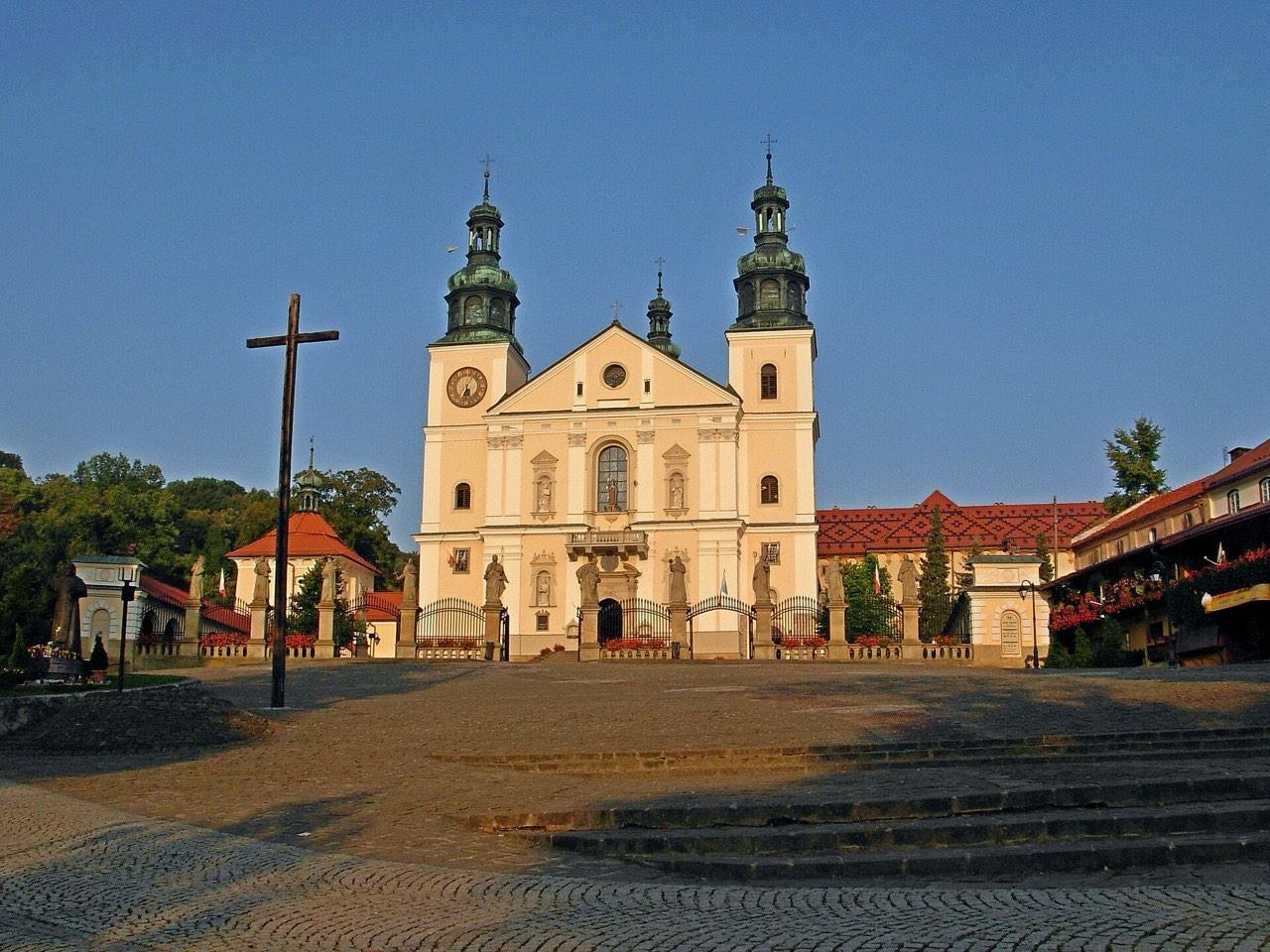
The highlights are the basilica with the miraculous image of Our Lady of Kalwaria and the Paths of Our Lord and Our Lady, routes leading through chapels set in a landscape meant to evoke Jerusalem. Walking all the paths takes several hours and calls for comfortable shoes, as the trails go up and down through woods and fields. If you have less time, choose a section, for example the Way of the Cross near the monastery.
During Holy Week the famous Passion Play takes place here, and in August the Marian celebrations. These are beautiful but very crowded days, so if you want quiet, choose an ordinary week.
Kraków: the Divine Mercy Sanctuary in Łagiewniki
The heart of the Kraków stage of the John Paul II trail is in Łagiewniki. The Divine Mercy Sanctuary grew up around the convent of the Congregation of the Sisters of Our Lady of Mercy, where St Faustina Kowalska lived and died in 1938. The convent chapel holds the famous image of the Merciful Jesus with the words "Jesus, I trust in You" and the saint's relics.
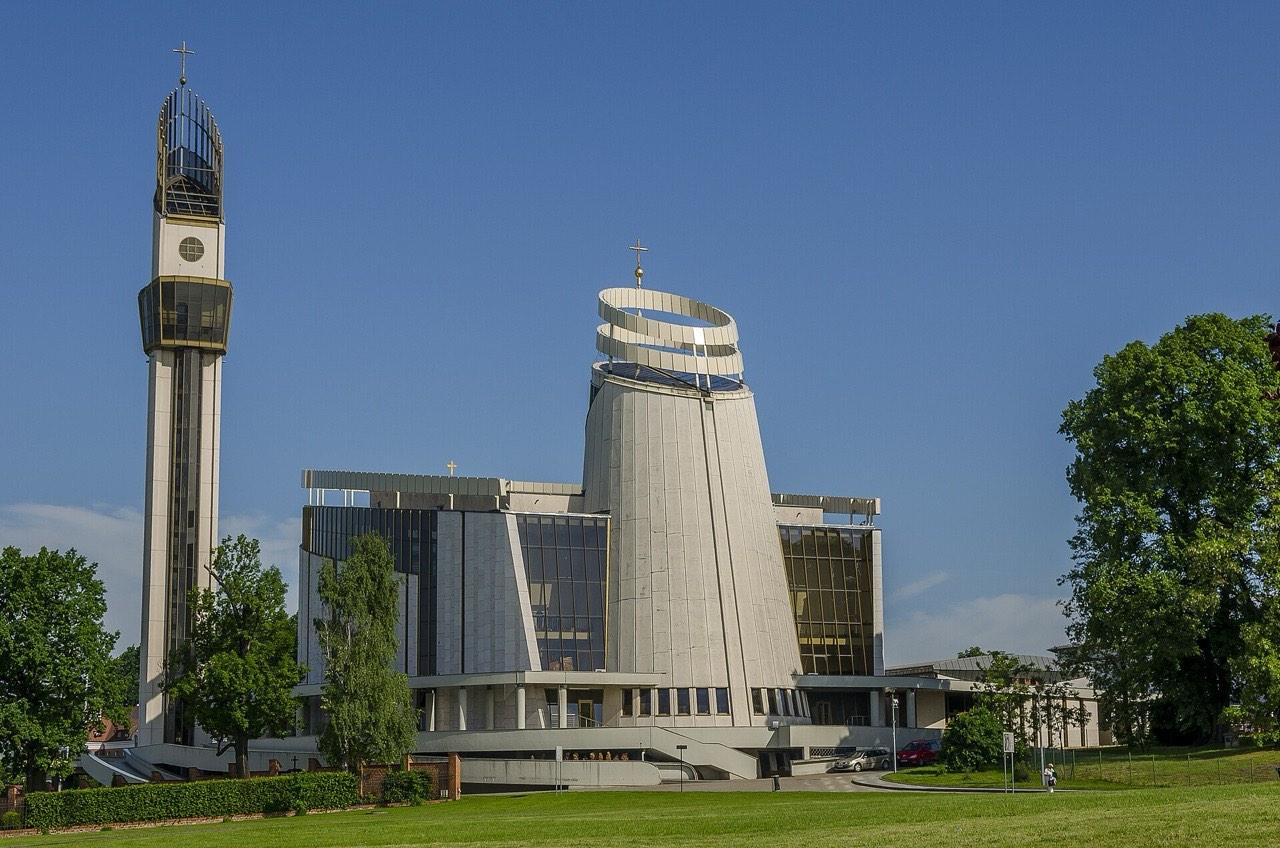
The bond between this place and John Paul II is very strong. During the war the young Karol Wojtyła did manual work at the nearby Solvay plant and walked past the convent. As pope he canonised Sister Faustina in 2000, established Divine Mercy Sunday, and on 17 August 2002 consecrated the new basilica in Łagiewniki and entrusted the world to Divine Mercy.
Inside the sanctuary grounds, be sure to see:
- the convent chapel with the miraculous image and the tomb of St Faustina;
- the Basilica of Divine Mercy with its viewing tower overlooking Kraków;
- places of silence and adoration where you can quietly pray the Divine Mercy Chaplet.
The best time to come is 3 pm, the Hour of Mercy, when the chaplet is prayed together. Before you travel, however, check the current schedule of services.
The Sanctuary of St John Paul II in Kraków
Only a few hundred metres from Łagiewniki, on the site of the former "White Seas" (the old Solvay lime ponds), stands the Sanctuary of St John Paul II, part of the John Paul II Centre "Do Not Be Afraid!". The location is no accident: it was here, near the former Solvay works, that Karol Wojtyła worked during the occupation while secretly preparing for the priesthood.
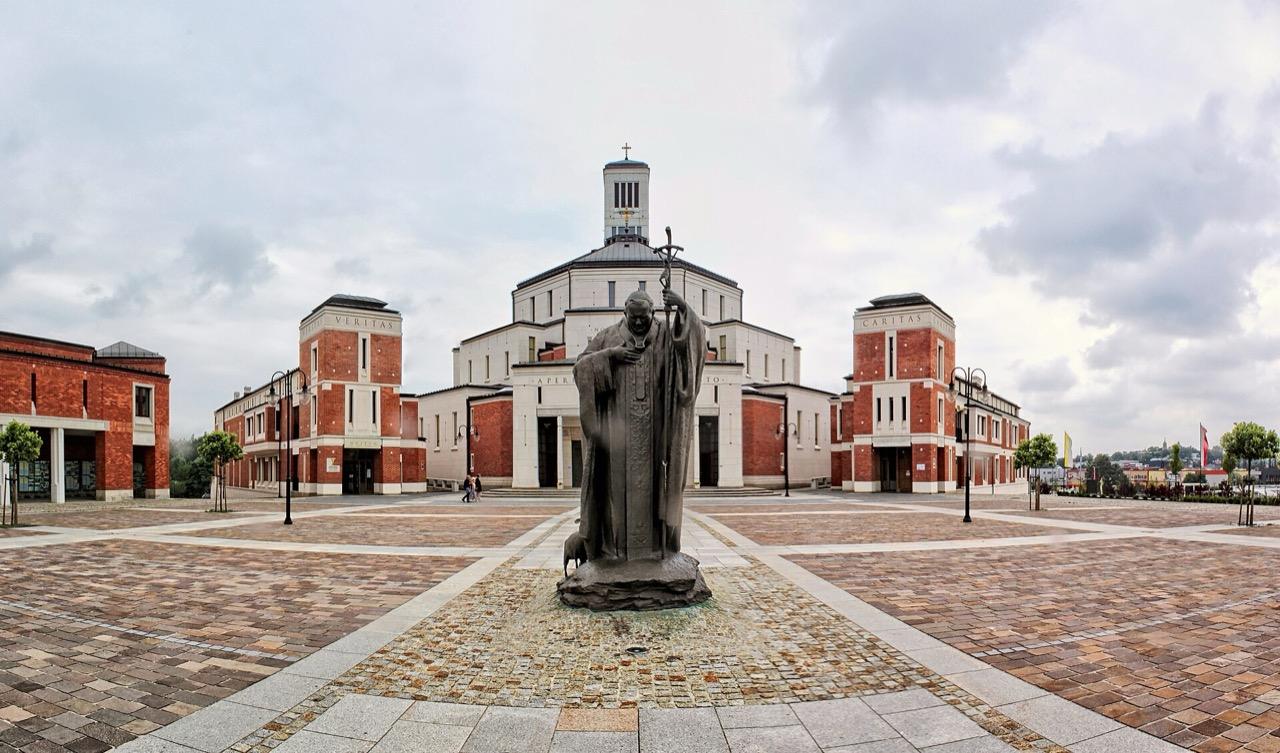
The church venerates a relic of the holy pope's blood. Pilgrims come here to give thanks for his life, to ask for his intercession and to pray for intentions that are often very personal. The lower church has chapels, and the centre also has exhibition spaces devoted to the pope's life and teaching.
Łagiewniki and the papal sanctuary are best visited on the same day. Walking between them is a good idea, because the short stroll shows how close together these places are, places that John Paul II himself connected.
Other papal places in Kraków
If you have more time, add Wawel to your plan, where Karol Wojtyła celebrated his first Mass in the crypt of St Leonard and was ordained bishop, as well as the Papal Window at 3 Franciszkańska Street, from which he talked with young people during his pilgrimages. These places are in the historic centre and are easy to link on foot.
Jasna Góra: the Marian culmination of the pilgrimage
The last stop on the trail is Jasna Góra in Częstochowa, the spiritual capital of Poland. John Paul II prayed many times before the Miraculous Image of Our Lady of Częstochowa, both as a pastor from Kraków and during his papal pilgrimages to his homeland. His motto Totus Tuus, "Totally Yours", is understood most fully right here.
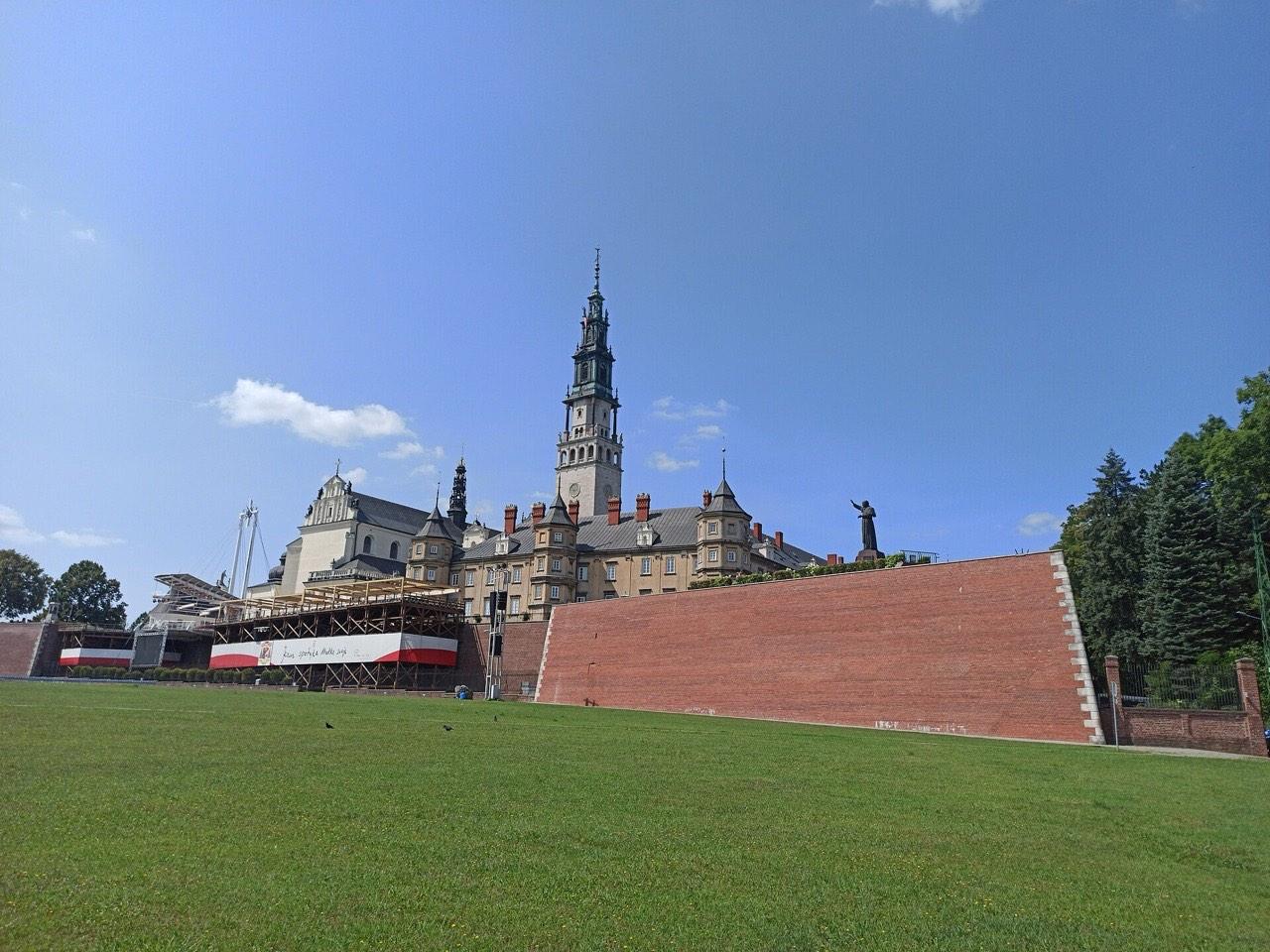
Plan at least half a day at Jasna Góra. The most important place is the Chapel of the Miraculous Image, but pilgrims also visit the basilica, the Way of the Cross on the ramparts and the monastery collections. Among the mementoes of the pope kept here is the sash of his cassock pierced by a bullet during the assassination attempt of 13 May 1981, which John Paul II offered to Our Lady of Jasna Góra. The schedule of services, including the unveiling of the Miraculous Image and the evening Jasna Góra Appeal, is on jasnagora.pl.
If you dream of reaching Częstochowa on foot, read our guide to the walking pilgrimage to Jasna Góra. For wider background, see our guide to Marian shrines in Poland.
A 2, 3 or 4-day John Paul II pilgrimage itinerary
The plans below assume travel by car or a combination of train and local transport. Journey times depend on the time of day and traffic, so allow some margin.
2-day version
- Day one: Wadowice in the morning (basilica, museum, market square), Kalwaria Zebrzydowska in the afternoon with a short section of the paths, overnight in Kraków.
- Day two: Łagiewniki and the Sanctuary of St John Paul II in the morning, travel to Jasna Góra in the afternoon and the evening Jasna Góra Appeal.
This is an intensive version, good for people who already know some of the places or have very little time.
3-day version
- Day one: Wadowice with time for Mass and an unhurried museum visit.
- Day two: Kalwaria Zebrzydowska with a longer walk along the paths, Kraków in the evening.
- Day three: Łagiewniki, the Hour of Mercy at 3 pm, the papal sanctuary, then travel to Częstochowa that evening or the next morning.
4-day version
- Day one: Wadowice.
- Day two: Kalwaria Zebrzydowska.
- Day three: Kraków, meaning Łagiewniki, the Sanctuary of St John Paul II and, if you still have the energy, Wawel and the Papal Window.
- Day four: Jasna Góra, with time for confession, Mass and prayer in the Chapel of the Miraculous Image.
The four-day option lets you stay longer in each place rather than living the pilgrimage on the run. You can break your route into stages in the pilgrimage planner, add notes and photos, and after you return share the story of your journey with your family.
Practical tips for the papal trail
Most pilgrims come around anniversaries linked to John Paul II, on Divine Mercy Sunday and in the summer holidays. If you want quiet, choose weekdays outside the high season. Groups should notify the shrines of their arrival in advance and book museum entries.
A few tips to make the journey easier:
- Bring comfortable shoes, especially for the Kalwaria paths, and something waterproof.
- Dress appropriately for a holy place; covered shoulders and knees are a good habit.
- Book accommodation ahead, especially in Kraków and Częstochowa during major feasts.
- Keep a prayer book or songbook to hand; it will be useful on the road and for praying together as a group.
If you are travelling with a larger group, look through our pilgrimage packing list. Many of the items will also come in handy on a car journey.
The John Paul II trail with other pilgrims
Many people set out on this journey alone and discover along the way that they would gladly share it with someone experiencing the same thing. In Bratnio you can turn on the Find a travel companion feature. Your visibility is off by default, and when you switch it on for 1, 2 or 4 hours, others see only an approximate zone, never your exact position. An invitation must be accepted, the chat opens only after that, and blocking and reporting are free. We write more about doing this wisely in our article how to find a pilgrimage companion.
If you prefer an organised trip, browse pilgrimages and trips and the events calendar, which lists celebrations at the shrines. And if after the papal trail you want to discover another Polish shrine, take a look at our guide to the pilgrimage to Licheń.
Frequently asked questions
How many days do you need for the John Paul II trail?
The main places, Wadowice, Kalwaria Zebrzydowska, Łagiewniki and Jasna Góra, can be visited in 2 days, but the pace will be fast. Three or four days is ideal, giving you time to attend Mass, walk the Calvary paths and pray calmly at each shrine.
Where is the best place to start?
Wadowice is the natural starting point, because Karol Wojtyła was born and baptised there. This order lets you follow his life chronologically, from childhood through Kraków to the Marian entrustment at Jasna Góra.
Do you need to book the museum in Wadowice?
The Family Home of John Paul II Museum has limited capacity, so booking is usually advisable and practically essential for groups. You can check the current rules and tickets on the museum's official website.
Is the papal trail suitable for families with children?
Yes, as long as you adjust the pace. Wadowice, Łagiewniki and Jasna Góra are easily accessible, and on the Kalwaria paths it is better to choose a shorter section. Children usually remember the pope's family home and the shared prayer at 3 pm very well.
Where in Kraków is the Sanctuary of St John Paul II?
The sanctuary is in the Łagiewniki district, close to the Divine Mercy Sanctuary, within the John Paul II Centre "Do Not Be Afraid!". Both places are easy to visit in a single day.
Can part of the route be walked?
Yes. Many people walk the Kalwaria paths, the stretch between Łagiewniki and the papal sanctuary, or the whole pilgrimage to Jasna Góra with a parish group. Just remember that sections between towns are best planned along marked trails rather than busy roads.
The John Paul II trail is a journey you can walk in a few days and keep living for years. If you want to plan it your way, create a free account on Bratnio. You can save your chosen shrines on the map of pilgrimage places, break the route into stages in the journey planner, add photos to your story and share it with loved ones, and, if you wish, find a travel companion on the way.