Pilgrimage routes
Via Francigena: A Guide to the Route from Canterbury to Rome
Published October 21, 2026 · 12 minute read
The medieval road from Canterbury to the tombs of the Apostles in Rome. History, main sections, the credenziale, waymarking, seasons and a comparison with the Camino.
Machine translation of an article written in Polish.
The Via Francigena is one of the oldest and most beautiful pilgrimage routes in Europe. It leads from Canterbury in England through France, Switzerland and Italy all the way to the tombs of the Apostles in Rome. Anyone who has heard of pilgrims coming down from the Great St Bernard Pass or walking among the Tuscan hills usually starts dreaming of a stretch of their own. In this guide we describe the history of the route, its main sections, the credenziale, waymarking, the best seasons and how the Via Francigena differs from the Camino de Santiago. At the end you will find tips on planning your finish in Rome and preparing for the journey with Bratnio.
The history of the Via Francigena: Archbishop Sigeric and the road to Rome
The name Via Francigena means roughly "the road coming from the land of the Franks". In the Middle Ages it was a network of routes along which merchants, armies and pilgrims crossed Europe towards Rome. For Christians, Rome was, alongside Jerusalem and Santiago de Compostela, one of the three great pilgrimage destinations: the place of martyrdom and the tombs of Saints Peter and Paul.
Today's route is based primarily on the travel record of Sigeric, Archbishop of Canterbury. Around the year 990 he went to Rome to receive the pallium from the Pope, the sign of a metropolitan's unity with the Successor of Peter. On the way back his entourage wrote down the successive stopping places between Rome and the English Channel. This short list, preserved in a manuscript, became centuries later the basis for reconstructing the route. Thanks to it, today's pilgrim walks largely through the same towns where Sigeric stopped more than a thousand years ago.
At the end of the 20th century the route began to come back to life. The Council of Europe recognised the Via Francigena as a European Cultural Route, and regions and municipalities on both sides of the Alps began waymarking it and developing a network of pilgrim accommodation. Today it is a living road, though still much quieter than the most popular sections of the Camino.
The route: from Canterbury through France to the Alps
The classic Via Francigena begins at Canterbury Cathedral. The first short section crosses Kent to Dover, from where pilgrims cross the Channel to Calais. Here the longest part of the route, the French section, begins.
In France the route crosses the plains of Artois and Picardy, past fields that remember the battles of the First World War, to Arras and on to Reims, the coronation city of the kings of France with its magnificent cathedral. Then it leads through Champagne, among vineyards and wide fields, and on through Lorraine and Franche-Comté towards Besançon and the Jura. This stretch can be lonely: the villages are small, shops and accommodation are scarcer, and the days of walking are long. For many people this is exactly where the inner silence they were seeking when they set out is born.
After Pontarlier the route enters Switzerland. It leads to Lake Geneva, through Lausanne and Vevey, and then along the Rhône valley to Saint-Maurice, home since the early Middle Ages to an abbey commemorating the martyrs of the Theban Legion. After Martigny the climb begins towards the most important point of the whole route.
If you are also interested in French shrines off the route, take a look at our guide to shrines in France. Some can be combined with travel to the start or with a rest day along the way.
The Great St Bernard Pass: the heart of the Via Francigena
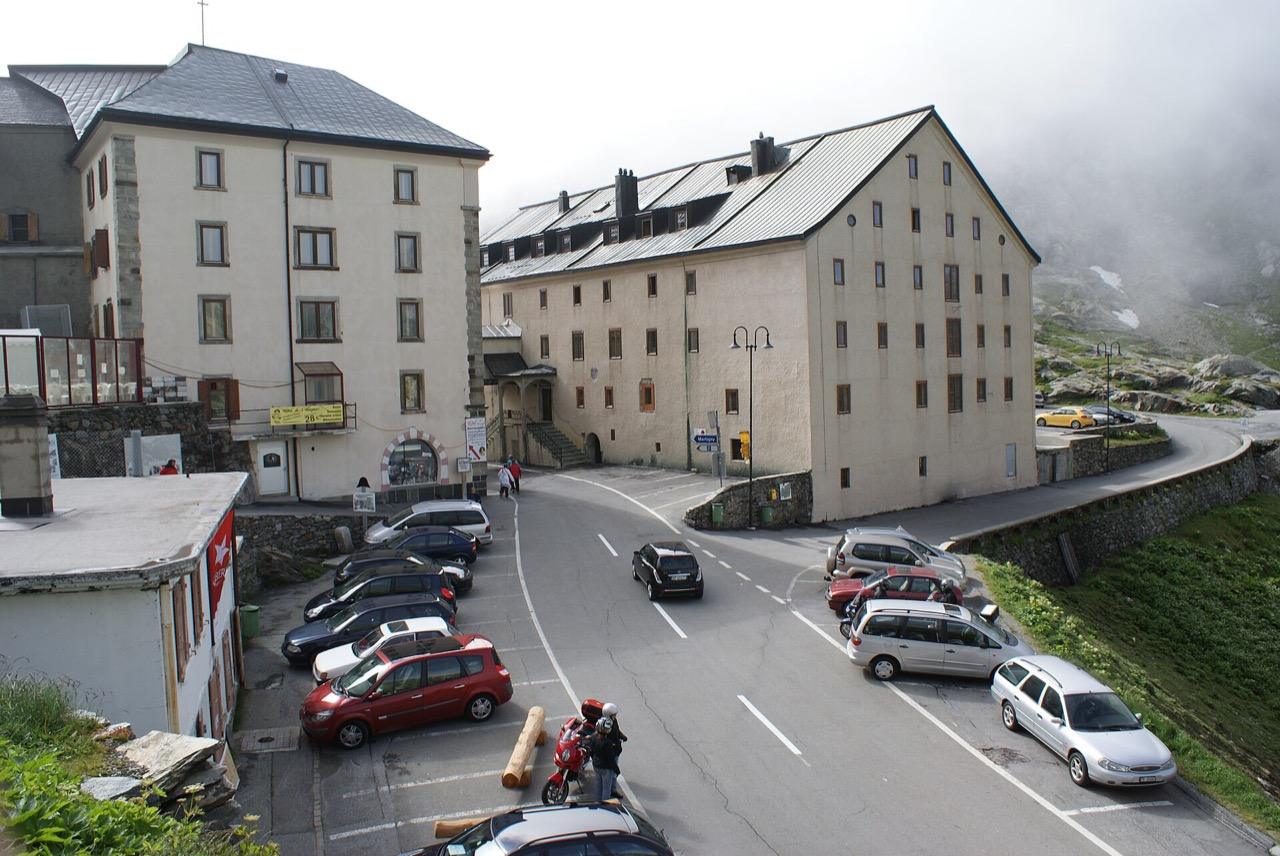
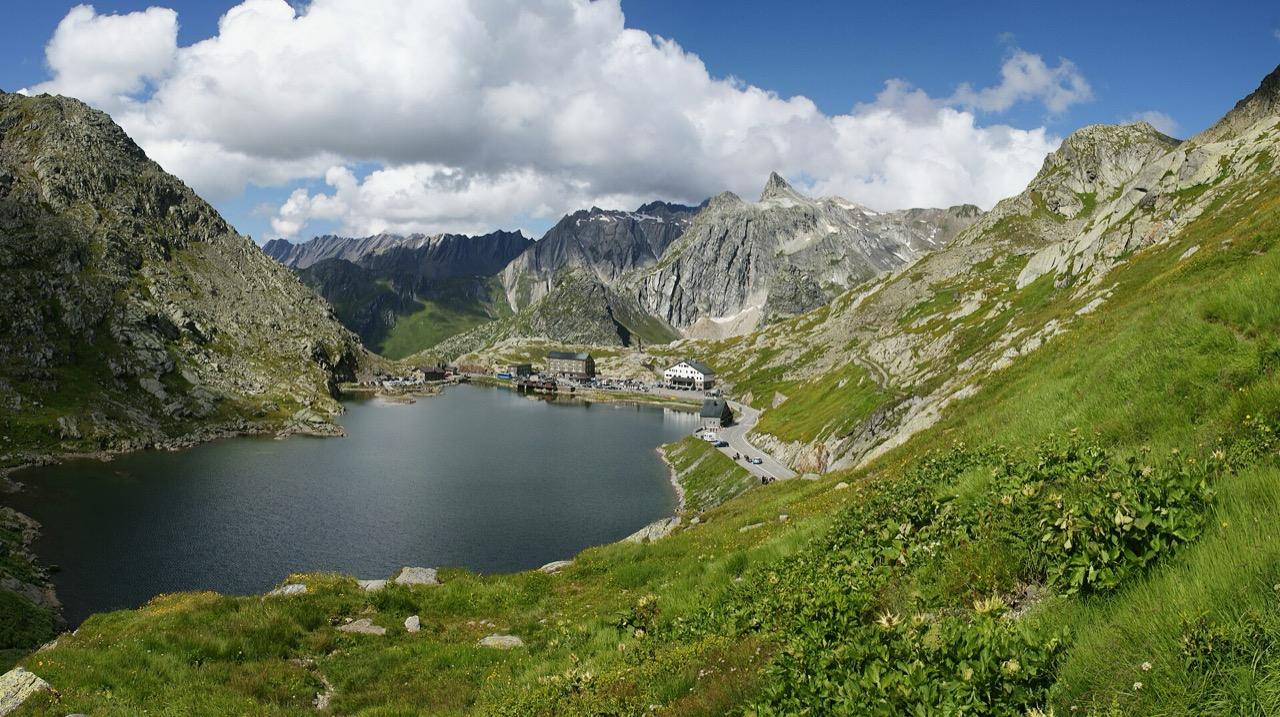
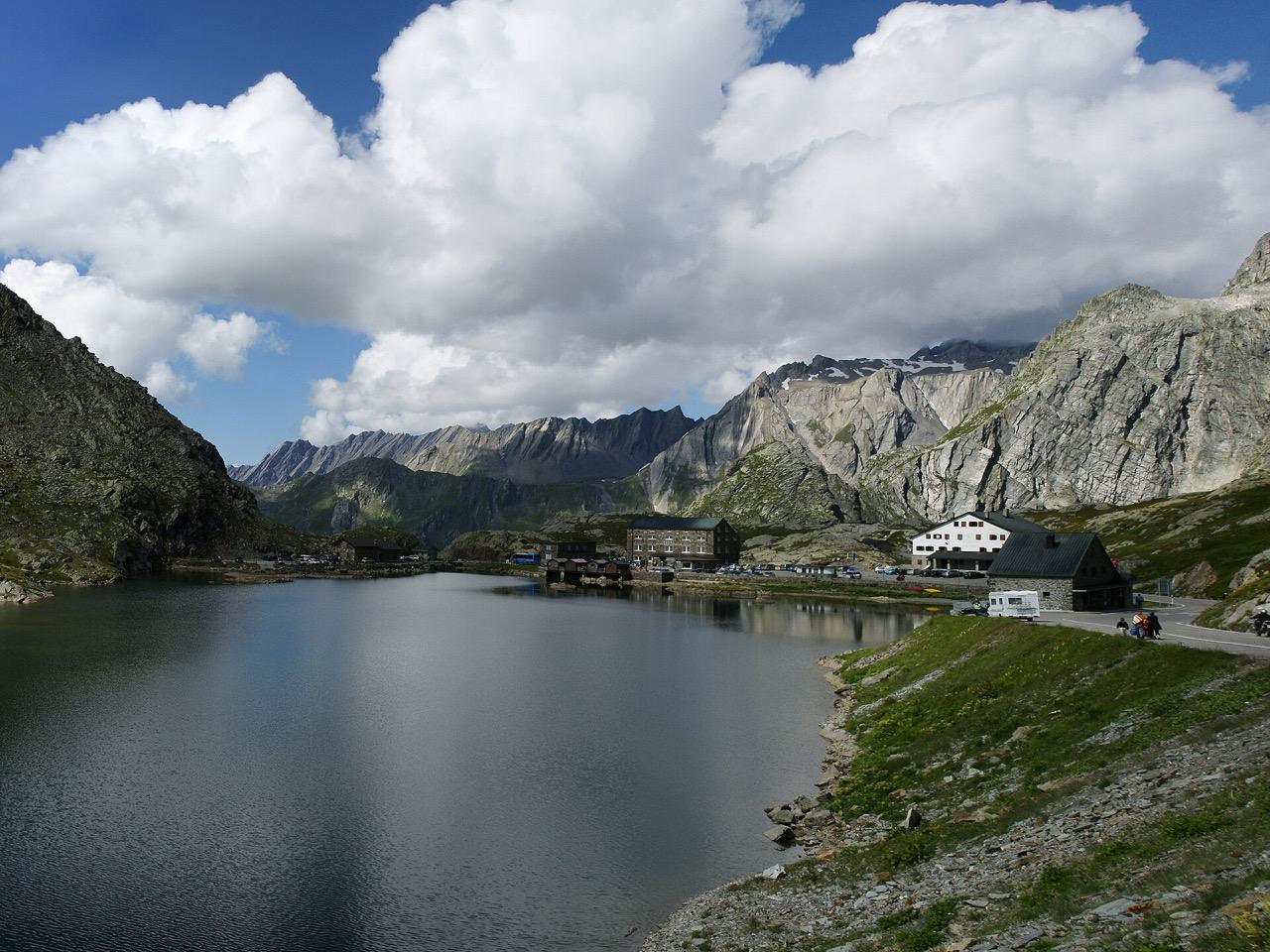
Crossing the Alps was a real test for medieval pilgrims. At an altitude of almost 2,500 metres stands the hospice on the Great St Bernard Pass, founded in the 11th century by St Bernard of Menthon. For centuries it has been run by canons regular who took in travellers in snow and fog, and their rescue dogs became a symbol of Alpine hospitality.
For today's pilgrim the pass is a moment of transition: beyond it lies Italy, and the road, though still long, now leads towards Rome. The hospice has a chapel and a church where you can stop to pray. Remember that the weather in the high mountains changes quickly, and snow can lie here for much of the year. Before leaving the valley, always check current conditions and the availability of the road and accommodation directly with the hosts.
The Italian section: from Aosta to Rome
After descending from the pass, the route follows the Aosta Valley among castles and vineyards, then comes out onto the Po plain. Pilgrims pass Ivrea, Vercelli with its Romanesque basilica, Pavia and Piacenza, and then cross the River Po. This section is flat, often hot in summer, but rich in history.
The next obstacle is the Apennines. Over the Cisa Pass the route descends to Pontremoli and the Lunigiana valley, and from there into Tuscany. Lucca, San Gimignano with its towers, and Siena are among the most picturesque stages of the whole route. Many people with only a week or two choose the Tuscan section, because it combines beautiful scenery, good infrastructure and proximity to Rome.
After Tuscany the route enters Lazio: through Radicofani, Bolsena on its volcanic lake, Viterbo and Sutri. The final stage passes over Monte Mario, from where medieval pilgrims first saw the Eternal City. From there only a few hours' walk separate you from St Peter's Square.
The credenziale, Testimonium and waymarking on the Via Francigena
The credenziale and Testimonium: the pilgrim's documents
As on the Camino, the Via Francigena uses a pilgrim passport, here called the credenziale. You collect stamps in it from parishes, hostels, tourist offices and places where you stay. The credenziale is not an official document, but it confirms that you are a pilgrim, which opens the door to many low-cost walkers' lodgings run by parishes, communities and associations.
You can order the credenziale from, among others, the European Association of the Via Francigena Ways, and also at some points along the route. At the end of the road, in Rome, pilgrims can receive the Testimonium, a commemorative certificate of completing the route. It usually requires walking at least the last 100 kilometres or so, or cycling a longer stretch, but check the detailed conditions and where the document is issued on the official website before you set off.
Waymarking and navigation on the route
Waymarking is much better today than it was a decade or so ago, but it is still uneven. In many places you will see a sign with the silhouette of a pilgrim with a staff and bundle, as well as red-and-white or brown signs. In Italy, especially in Tuscany and Lazio, the markings are usually frequent and clear. In France and some less-travelled regions it varies: signs can be sparse, faded or follow a variant that is not in your guidebook.
So carry an up-to-date GPS track of the route on your phone, a charged power bank and a paper guide or map as a backup. Remember that there are variants: walking, cycling and sometimes alternative paths avoiding busy roads. Before you set off each morning, check which variant you are following and where the nearest accommodation is. You can break your stages down in the pilgrimage planner, adding accommodation and notes for each day.
When to go? The best seasons on the Via Francigena
The choice of dates depends on which section you want to walk.
- Spring (April, May, June) is for many the best time for Tuscany and Lazio: green hills, moderate temperatures and still few tourists. There may still be snow in the Alps.
- Summer favours crossing the Great St Bernard, but on the Po plain and in central Italy the heat can be very tiring. Set off early in the morning and plan shorter stages.
- Autumn (September, October) is the time of the grape harvest, gentler sun and beautiful light. On the high passes, however, the weather can turn earlier than you expect.
- Winter is better suited to short, lower-lying sections. Some pilgrim accommodation is closed at this time.
If you plan to walk the whole route in one go, you will usually need several months. Many people therefore divide the route into sections walked over successive years. Before each trip, go through the checklist in our article what to pack for a walking pilgrimage; most of the tips also apply to the Via Francigena.
Via Francigena vs Camino de Santiago: what's the difference?
Both routes share medieval origins, a pilgrim passport and a spiritual goal. But there are plenty of differences.
- Number of pilgrims. The Camino Francés is much busier. On the Via Francigena, especially in France, you may not meet another pilgrim for days. That is an advantage for those seeking silence, but a challenge for those who need company.
- Infrastructure. On the Camino the network of albergues is very dense. On the Via Francigena pilgrim accommodation exists, but it can be scarcer and more often needs booking ahead by phone.
- Landscape. The Via Francigena crosses four countries, the high Alps, the Po plain, the Apennines and Tuscany. That means more variety, but also tougher climbs on some sections.
- Destination. The Camino ends at the tomb of St James in Santiago de Compostela Cathedral, the Via Francigena at the tombs of Saints Peter and Paul in Rome.
If you are just starting out on long-distance pilgrimage, read our guide Camino de Santiago for beginners. Many pilgrims walk to Santiago first and only then set out for Rome.
The finish in Rome: basilicas at the end of the road
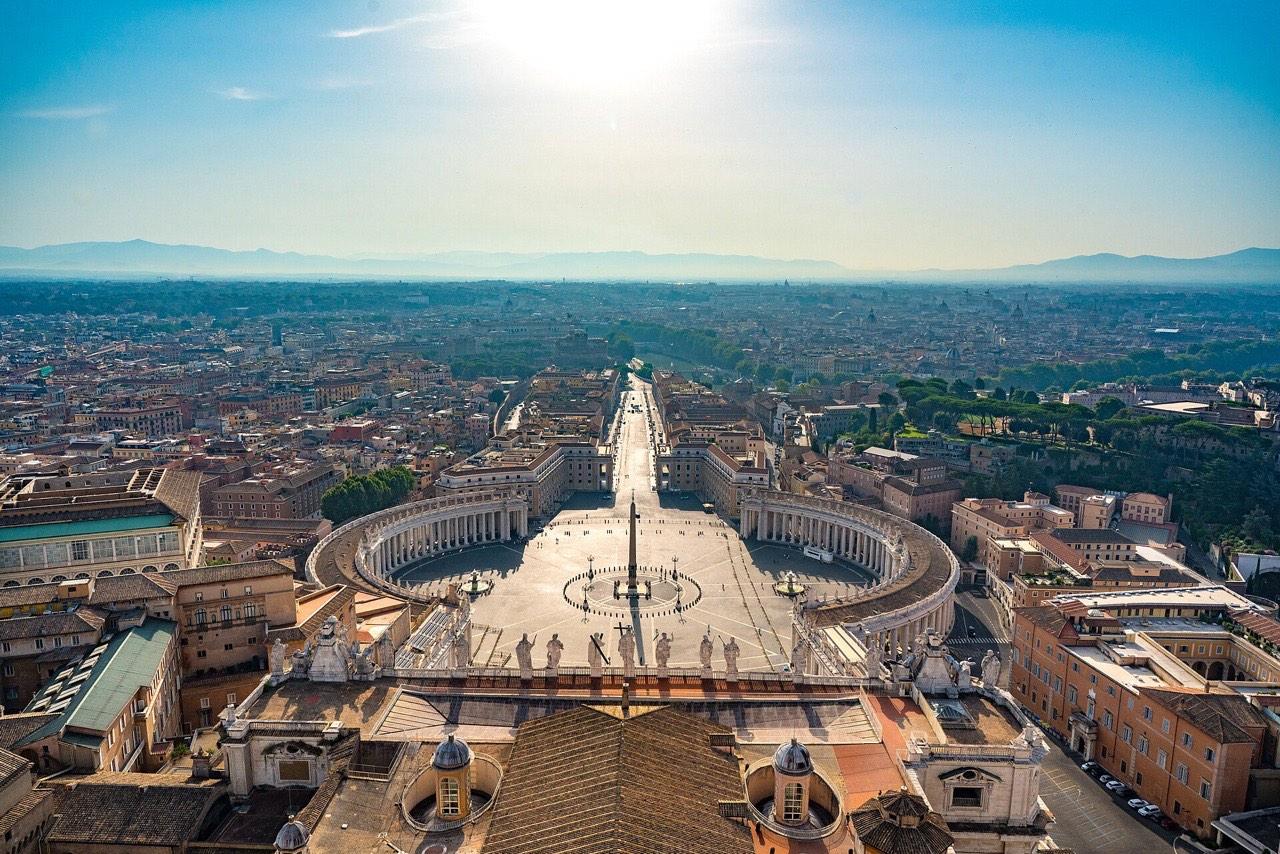
The last steps of the Via Francigena lead to St Peter's Square. Entering St Peter's Basilica and praying at the Apostle's tomb is, for most pilgrims, the most moving moment of the whole journey. Leave yourself at least one or two days in Rome to visit the other major basilicas at a calm pace.
- The Basilica of St John Lateran is the cathedral of the Bishop of Rome, known as the mother of all churches in the world.
- The Basilica of St Mary Major is Rome's oldest Marian church, a place of prayer before the icon of Salus Populi Romani.
- The Basilica of St Paul Outside the Walls holds the tomb of the Apostle of the Nations and completes the pilgrimage to the tombs of both Apostles.
You will find a several-day plan for the Eternal City in our article pilgrimage to Rome: the basilicas and the Vatican. Remember that basilica opening hours and security check rules can change, especially during major celebrations, so check them close to the date.
How to prepare for the Via Francigena with Bratnio
A long journey needs a good plan, but also openness to surprises. In Bratnio you can save places along the route in the catalogue and on the map of pilgrimage places, break the route into stages in the journey planner, and after you return publish a story with photos for family and friends. If you do not want to walk alone, browse organised pilgrimage trips or use the Find a travel companion feature. Your visibility is off by default; when you switch it on for 1, 2 or 4 hours, others see only an approximate zone, and a conversation begins only after an invitation is accepted. We write about looking for companions sensibly in our article how to find a pilgrimage companion.
Frequently asked questions
How long does it take to walk the whole Via Francigena?
The whole route from Canterbury to Rome is a walk of several months, depending on your fitness, the number of rest days and the variants you choose. Most pilgrims divide it into sections. The most popular choice for a shorter trip is the Tuscan section ending in Rome.
Do you need a credenziale on the Via Francigena?
It is not compulsory, but it is very useful. It makes it easier to use pilgrim accommodation and is required if you want to receive the Testimonium in Rome. You can order it from, among others, the European Association of the Via Francigena Ways.
Is the Via Francigena good for beginners?
Short sections in Tuscany or Lazio are manageable for people of average fitness who have already done a few longer walks. Crossing the Alps and the long, lonely sections in France require more experience. A good introduction is a walking pilgrimage closer to home or a short Camino.
How is the route waymarked?
You will most often see a sign with the silhouette of a pilgrim and signs in regional colours. In Italy the waymarking is usually good; in France it can be uneven. Always carry the GPS track on your phone and a backup map.
When can you cross the Great St Bernard Pass?
On foot, the pass is usually crossed in the summer months, when the trail is free of snow. The road's opening date and conditions vary from year to year, so check current information in the valley and with the hospice hosts before you set off.
Can I cycle the Via Francigena?
Yes, there are cycling variants that partly differ from the walking route. Cyclists also have different minimum distances for the Testimonium. Check the details on the route's official website before you go.
The Via Francigena teaches patience, simplicity and trust. Start with one section, and the road itself will show you what comes next. Create a free account on Bratnio, save places along the route, break it into stages in the planner, and when you are ready, briefly switch on your visibility in the Find a travel companion feature, then share your story and photos after you return.