Guides
Pilgrimage to Rome: basilicas, the Vatican and a 3-5 day plan
Published October 21, 2026 · 12 minute read
The four papal basilicas, tips for visiting the Vatican, the general audience, the catacombs and a ready-made 3-5 day pilgrimage itinerary for Rome.
Machine translation of an article written in Polish.
For many Catholics, a pilgrimage to Rome is a lifelong dream. The Eternal City brings together the tombs of the apostles Peter and Paul, the memory of the first martyrs, the catacombs, the four papal basilicas and a living Church gathered around the successor of Saint Peter. In this guide we suggest how to plan a 3 to 5 day itinerary, how to prepare for a visit to the Vatican, what to know about the general audience and which Italian shrines are easy to add to your trip.
We do not give ticket prices or opening hours here, because they change with the seasons and around Church events. Always check them directly on the official websites of the basilicas and the Holy See shortly before you travel.
Why a pilgrimage to Rome is so special
Since antiquity Rome has drawn pilgrims who came to the thresholds of the apostles, ad limina Apostolorum. Here Saint Peter and Saint Paul were martyred, here the first Christians prayed in the catacombs and here the Bishop of Rome has carried out his ministry for centuries. For Poles, and for many Catholics around the world, it is also the city of Saint John Paul II, whose tomb is in Saint Peter's Basilica.
A pilgrimage to the Eternal City does not have to be a sightseeing marathon. It is best lived when, alongside the monuments, there is time for Mass, confession, adoration and silence. A good practice is to choose one intention for the whole trip and entrust it in turn at the tombs of the apostles and in each basilica.
The four papal basilicas in Rome
The traditional pilgrim route includes the four major basilicas, known as the papal basilicas. Each of them has a Holy Door, opened in jubilee years. It is worth spreading the visit to all four over two days, as they lie in different parts of the city.
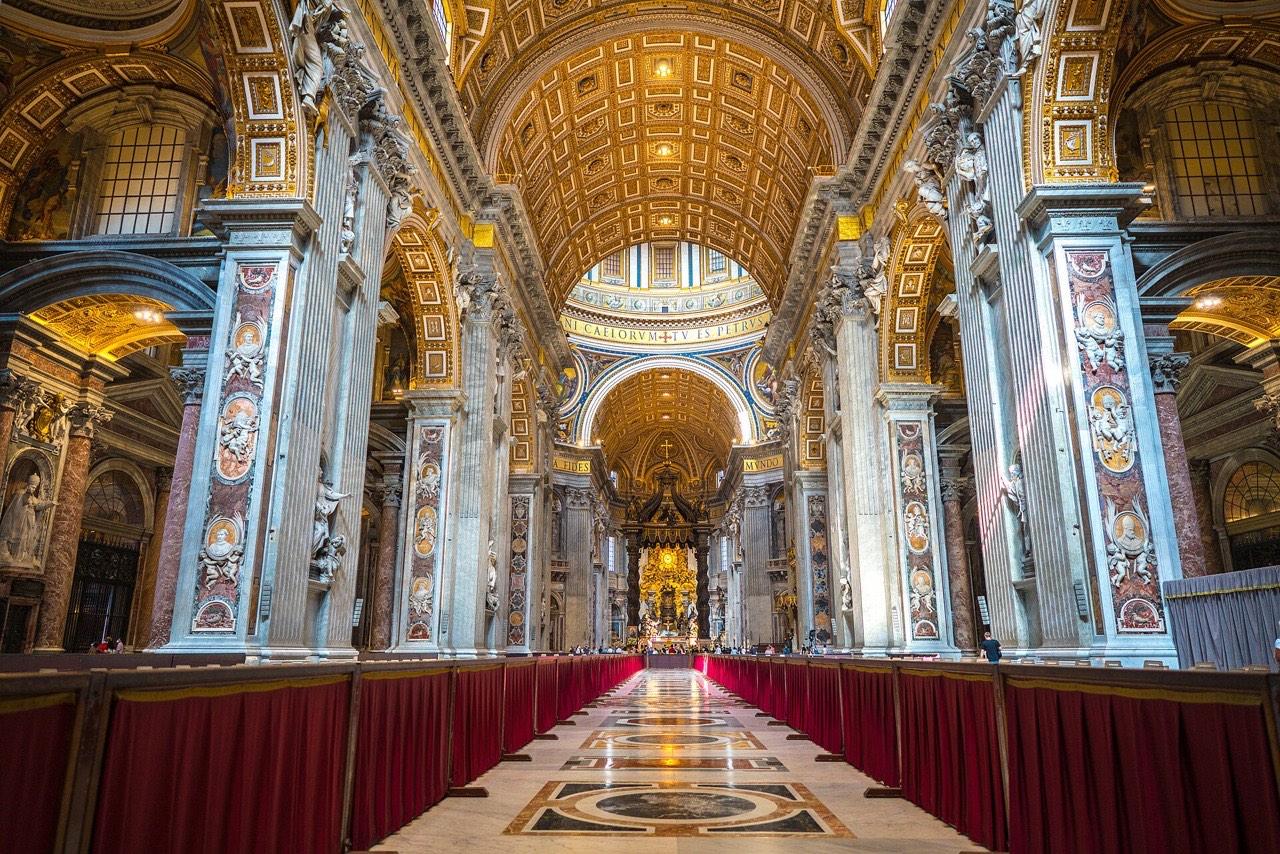
Saint Peter's Basilica in the Vatican
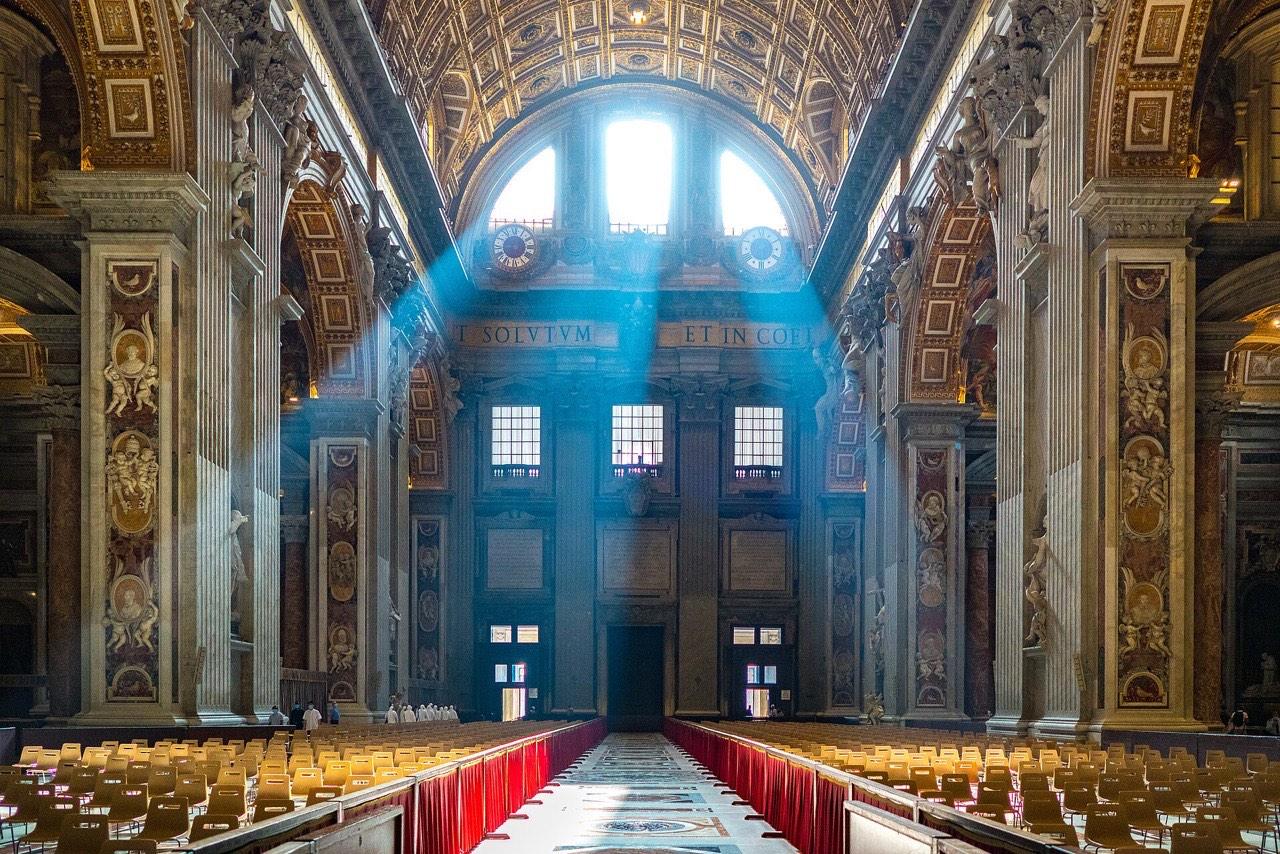
Saint Peter's Basilica rises over the place that tradition and archaeological research associate with the Apostle's tomb. It is the heart of the pilgrimage: beneath the confessio lies the tomb of Saint Peter, and many popes are buried in the basilica, including Saint John Paul II, whose tomb is in the Chapel of Saint Sebastian. Take time to stop at Michelangelo's Pietà and at the Altar of the Chair of Saint Peter.
You enter the basilica after a security check, and queues can be long, especially in the morning in high season and before papal events. Climbing the dome and visiting the Vatican Grottoes are separate options; the current rules are best checked on site or on the basilica's website.
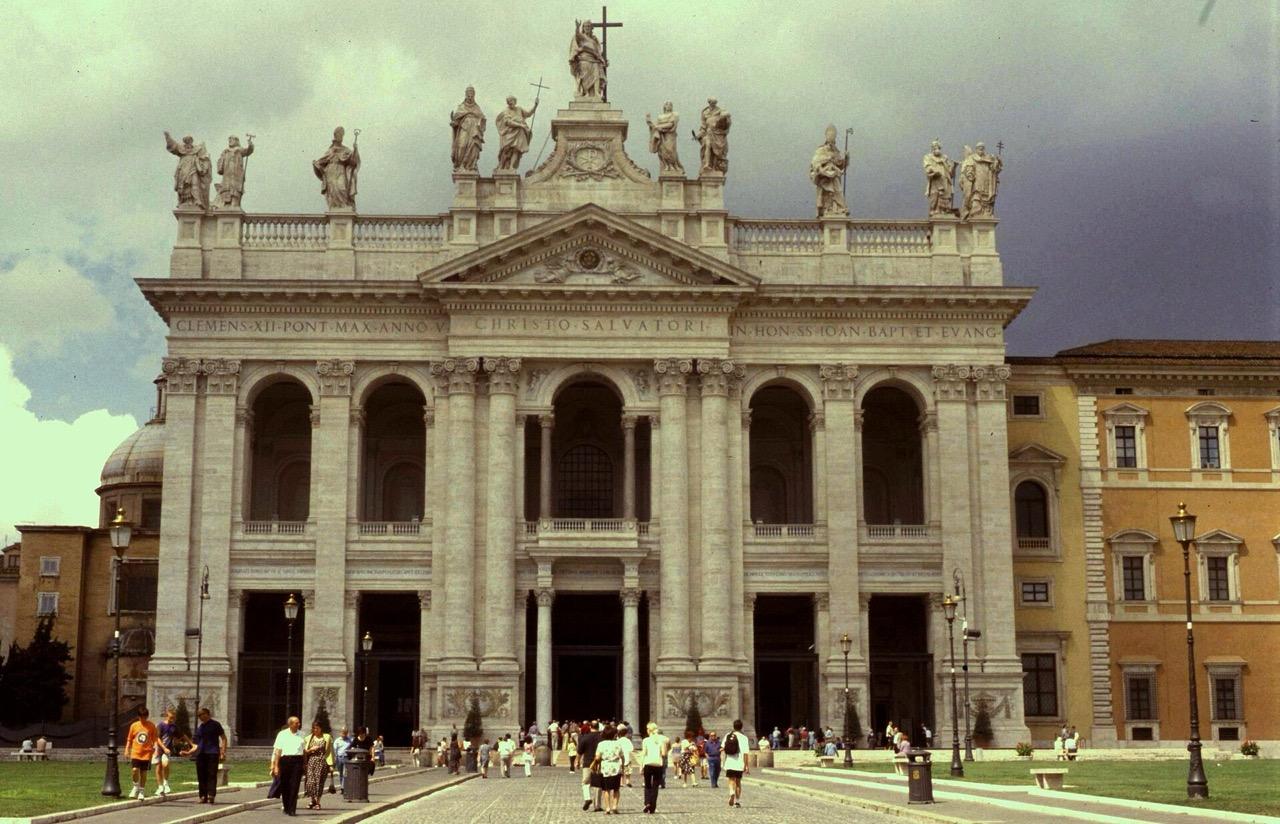
The Archbasilica of Saint John Lateran
The Lateran Basilica is the cathedral of the Bishop of Rome, called the mother and head of all the churches of the city and the world. It is this basilica, not Saint Peter's, that is the Pope's cathedral. Pilgrims often visit it together with the nearby Scala Santa shrine, which we describe below.
The Basilica of Saint Mary Major
The Basilica of Santa Maria Maggiore is the oldest and most important Marian church in Rome. The icon of Salus Populi Romani kept here has been venerated by Romans for centuries. Relics of the Bethlehem manger are also venerated in the basilica. Since 2025 Santa Maria Maggiore has held the tomb of Pope Francis, who often prayed before this icon during his life.
The Basilica of Saint Paul Outside the Walls
The Basilica of Saint Paul Outside the Walls stands over the tomb of the Apostle of the Gentiles, outside the old city walls. It is known for its long series of medallions with portraits of the popes and for its beautiful cloister. It lies a little further from the centre, so plan your journey by metro or bus and leave a calm hour here for prayer.
The Vatican: practical tips for pilgrims
The Vatican is the smallest state in the world, but visiting it requires a little preparation. A few rules will save you stress at the entrance.
- Dress code: you enter the basilicas in clothing that covers your shoulders and knees. This applies to both women and men. In summer it is worth carrying a light scarf or a shirt with sleeves in your backpack.
- Security check: there is an airport-style security check at the entrance to the square and the basilica. Do not bring sharp objects or large luggage.
- Hours and closures: the basilica and the Vatican Museums may be partly closed during papal liturgies. Check before your visit.
- Vatican Museums and the Sistine Chapel: tickets are booked on the official Vatican Museums website. Buying from random street resellers risks an inflated price.
- Silence and prayer: silence is required and photography is forbidden in the Blessed Sacrament Chapel in Saint Peter's Basilica. It is a good place to step away from the crowd for a moment.
The general audience and the Angelus with the Pope
Many people planning a pilgrimage to Rome want to see the Holy Father. The general audience usually takes place on Wednesdays, in Saint Peter's Square or in the Paul VI Audience Hall. Tickets for the audience are free, but you must request them in advance through the Prefecture of the Papal Household. Do not pay anyone for an audience ticket.
You will find up-to-date information about dates, how to submit requests and how to collect tickets on the official website of the Holy See, vatican.va. The papal calendar can change, and audiences may be suspended in summer, so check it closer to your departure.
On Sundays at noon the Pope usually prays the Angelus with the faithful from the window of the Apostolic Palace. No tickets are needed for this; just come to Saint Peter's Square early enough.
The Roman catacombs: in the footsteps of the first Christians
The catacombs are underground cemeteries where the first Christians and martyrs were buried. The best known lie along the Via Appia Antica, including the Catacombs of Saint Callixtus and Saint Sebastian, as well as the Catacombs of Domitilla and Priscilla in other parts of the city. They can only be visited with a guide, in groups, often in several languages.
A visit to the catacombs reminds us that the Church's faith grew from the courage of ordinary people who were not afraid to confess Christ. It is worth combining it with a walk along the Via Appia and Mass in a nearby church. Remember that it is cool underground and the ground can be uneven.
The Scala Santa and other places of prayer in the Eternal City
Opposite the Lateran Basilica is the Scala Santa shrine, the Holy Stairs. According to tradition, these are the stairs from Pilate's praetorium in Jerusalem, which Jesus climbed during his Passion, brought to Rome by Saint Helena. Pilgrims climb them on their knees, meditating on the Passion of the Lord. Next to them are ordinary stairs for those who want to reach the Sancta Sanctorum chapel without kneeling.
Besides the four basilicas, it is worth planning a few smaller places too, for example the church of Santa Croce in Gerusalemme with relics of the Passion, the Colosseum as a place of remembrance of the martyrs, or the national churches, including the Polish church of Saint Stanislaus. If you want to see all these points on one map, open the map of pilgrimage sites in Bratnio.
How to plan a 3-5 day pilgrimage to Rome
Rome can be exhausting: heat, crowds and long distances between the basilicas. A plan with time set aside for rest and prayer is better than trying to see everything.
A 3-day itinerary
- Day 1: Saint Peter's Basilica, the tomb of Saint John Paul II, Saint Peter's Square. In the afternoon, a calm walk through the centre.
- Day 2: the general audience (if it falls on a Wednesday and you have tickets) or the Vatican Museums. In the afternoon, Santa Maria Maggiore.
- Day 3: the Lateran and the Scala Santa in the morning, the Basilica of Saint Paul Outside the Walls in the afternoon.
A 4-5 day itinerary
- Days 1-3: as above, at a calmer pace.
- Day 4: the catacombs on the Via Appia Antica and smaller churches, e.g. Santa Croce in Gerusalemme.
- Day 5: a day trip to Assisi or another shrine outside Rome.
You can prepare your own plan with stages, notes and photos in the My journey feature. After you return, you can easily turn it into a story to share with your family.
Day trips: Assisi and other shrines in Italy
Rome is a good base for excursions. The most popular destination is Assisi, which you can reach by train. There you will find the Basilica of Saint Francis with the tomb of the Poverello and, in the valley below, the Basilica of Santa Maria degli Angeli with the Porziuncola. One day is enough for the main sites, though many pilgrims stay overnight to experience Assisi in the quiet of the evening.
Other destinations you can add to your stay in Rome:
- Monte Cassino Abbey, connected with Saint Benedict and close to Polish hearts because of the 1944 battle and the Polish War Cemetery.
- The Shrine of Saint Rita in Cascia in the mountains of Umbria, better as a longer outing than a quick trip.
- Pompeii and the Shrine of Our Lady of the Rosary, if you are heading towards Naples.
We describe more ideas and regional routes in a separate guide to shrines in Italy.
When to go to Rome
Spring and autumn are usually the most comfortable seasons: warmer than winter but without the summer heat. Summer in Rome can be very hot, and in August part of the city's life slows down. Easter and the great feasts offer extraordinary liturgical experiences, but also mean crowds and harder-to-find accommodation.
If you want to attend a particular papal celebration, check the liturgical calendar on the Holy See's website and book accommodation well in advance. You will find organised trips to Rome in the Bratnio trips catalogue, along with upcoming events.
A pilgrimage to Rome in a group or on your own
A trip with a parish or pilgrimage agency provides a guide, a priest and a ready-made programme. An independent pilgrimage gives more freedom but requires planning and familiarity with public transport. Many people choose a middle way: they travel independently and join a shared Mass or prayer once there.
If you are travelling alone but would like to share the road with someone, use the Find a travel companion feature. You switch on visibility voluntarily for 1, 2 or 4 hours, others see only an approximate zone, and contact requires you to accept an invitation. For praying together, the texts in the Bratnio pilgrim songbook will come in handy.
Frequently asked questions
Do general audience tickets cost anything?
No, tickets for the general audience are free. However, you need to request them in advance through the Prefecture of the Papal Household, following the rules described on the official website of the Holy See. Avoid anyone offering these tickets for money.
How should I dress for Saint Peter's Basilica?
Shoulders and knees should be covered, for both women and men. Shorts, short skirts and strappy tops may be a reason to be refused entry. In summer, a light scarf or a shirt with sleeves is enough.
How many days do I need for a pilgrimage to Rome?
Three days are enough to visit the four papal basilicas and the Vatican. With 4-5 days you can fit in the catacombs, the Scala Santa at a relaxed pace and a day trip to Assisi. It is better to plan less and leave time for prayer.
Can I visit the catacombs on my own?
The Roman catacombs are visited with a guide, in organised groups. Check current hours, tour languages and closing days on the website of the catacombs you choose before your visit.
Can I visit Assisi from Rome in one day?
Yes, Assisi is accessible by train and many pilgrims visit it as a day trip. Leave early in the morning, as the basilicas are in different parts of town. If you can, stay overnight so you can also visit the Porziuncola calmly.
Where is the tomb of Saint John Paul II in Rome?
The tomb of Saint John Paul II is in Saint Peter's Basilica, in the Chapel of Saint Sebastian in the right-hand aisle. Polish pilgrims often pray at the tomb, and Masses are celebrated there during the day.
Plan your pilgrimage to Rome with Bratnio
Bratnio helps you go from an idea to a story of your return. Start with the map of pilgrimage sites in Europe, check trips to Italy and plan your route in the My journey planner. Create a free account or download the Bratnio app and find companions who make the road to the thresholds of the apostles easier.