Guides
Shrines in Italy: a pilgrim's guide beyond Rome
Published October 21, 2026 · 11 minute read
Assisi, Padua, Loreto, San Giovanni Rotondo, Pompeii, Turin and Syracuse: sixteen important shrines in Italy and suggested routes by region.
Machine translation of an article written in Polish.
Shrines in Italy are much more than Rome and the Vatican. From Alpine Piedmont to Sicily, the country holds the tombs of great saints, miraculous images of Mary and places of Eucharistic miracles to which pilgrims have travelled for centuries. In this guide we have gathered sixteen important pilgrimage destinations beyond the Eternal City, with a short description of each place and suggested routes by region.
Opening hours, entry rules and the calendar of celebrations change, so always check the shrines' official websites before you travel. You will also find all the places described here on the map of pilgrimage sites in Bratnio.
How to plan a pilgrimage to Italy's shrines
Italy is long and mountainous, and journeys between shrines often take longer than the map suggests. A good approach is to choose one region and plan two or three places a day rather than crossing the whole country. Many shrines have pilgrim houses run by religious orders, which are worth booking in advance.
Remember to wear clothing that covers your shoulders and knees, to allow for the lunch break when some churches close, and that sightseeing may be restricted during Mass. If you are starting from the capital, also read our guide to the pilgrimage to Rome.
Umbria and Tuscany: in the footsteps of Saint Francis and Saint Rita
Central Italy is a land of saints. Umbria is called the green heart of Italy, and its shrines are best discovered slowly, with pauses for silence.
Assisi: the Basilica of Saint Francis
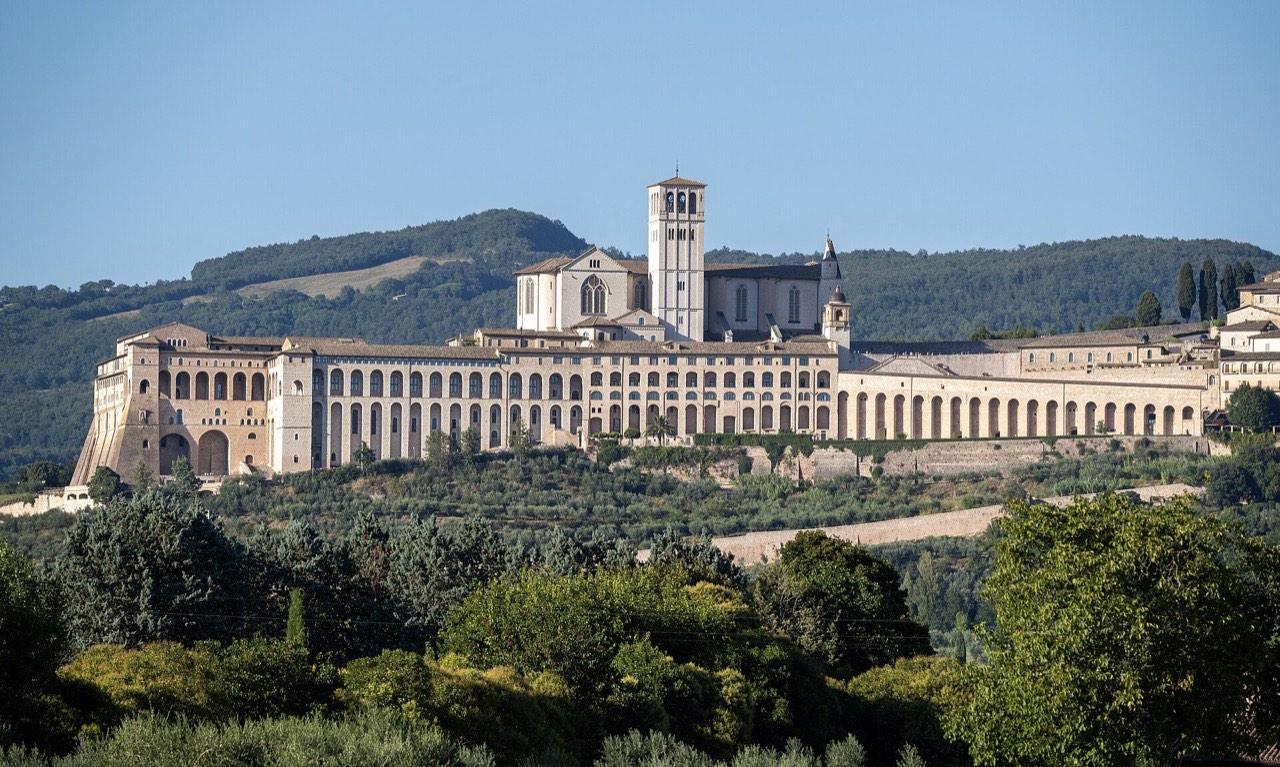
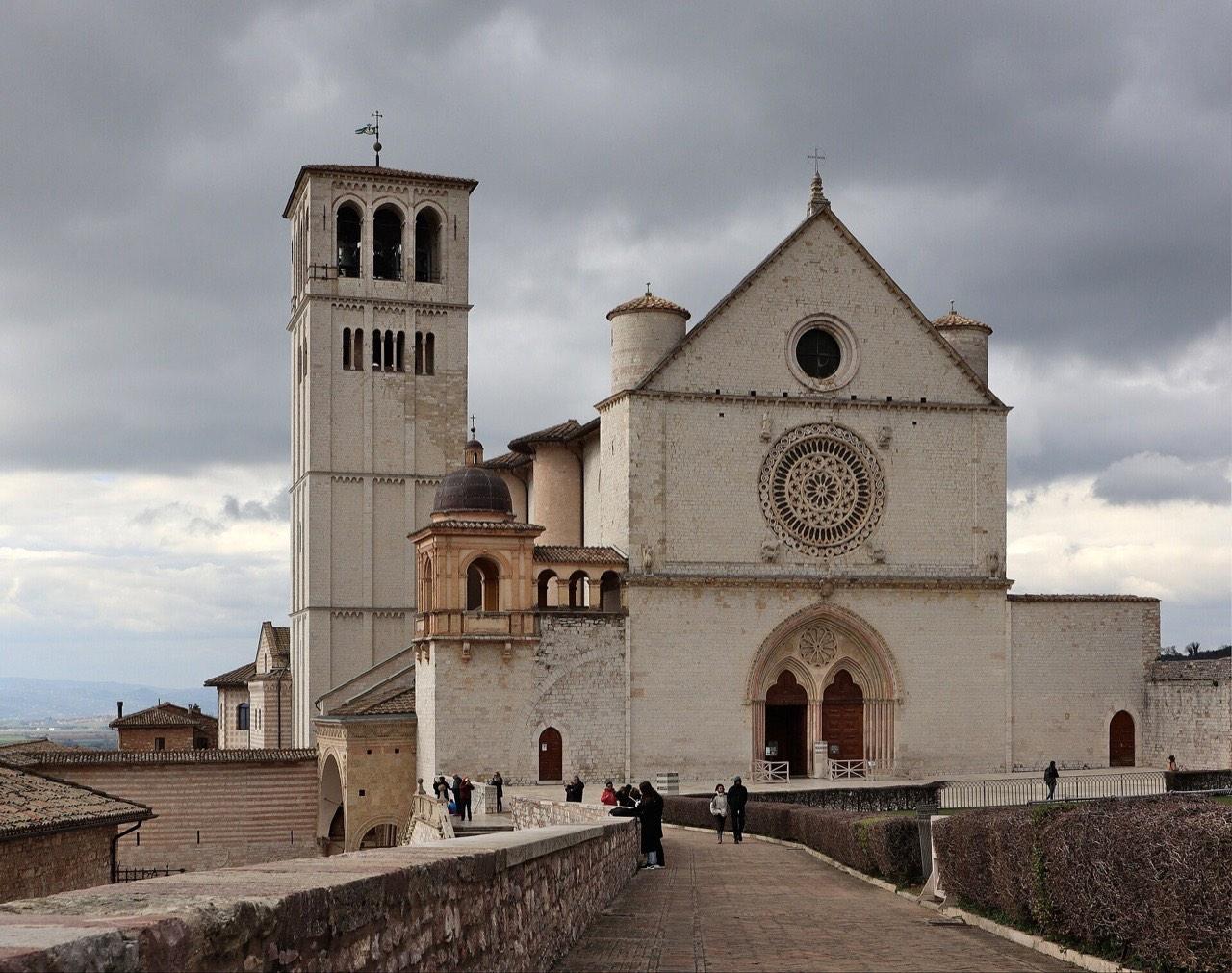
The Basilica of Saint Francis in Assisi consists of two churches, the lower and the upper. The crypt of the lower basilica holds the tomb of Saint Francis, and the walls are decorated with famous frescoes depicting scenes from his life. The basilica complex and the town are inscribed on the UNESCO World Heritage List. In Assisi it is also worth visiting the Basilica of Saint Clare and the church of San Damiano, as well as the Sanctuary of the Renunciation (Santuario della Spogliazione), where Saint Carlo Acutis rests.
Assisi: Santa Maria degli Angeli and the Porziuncola
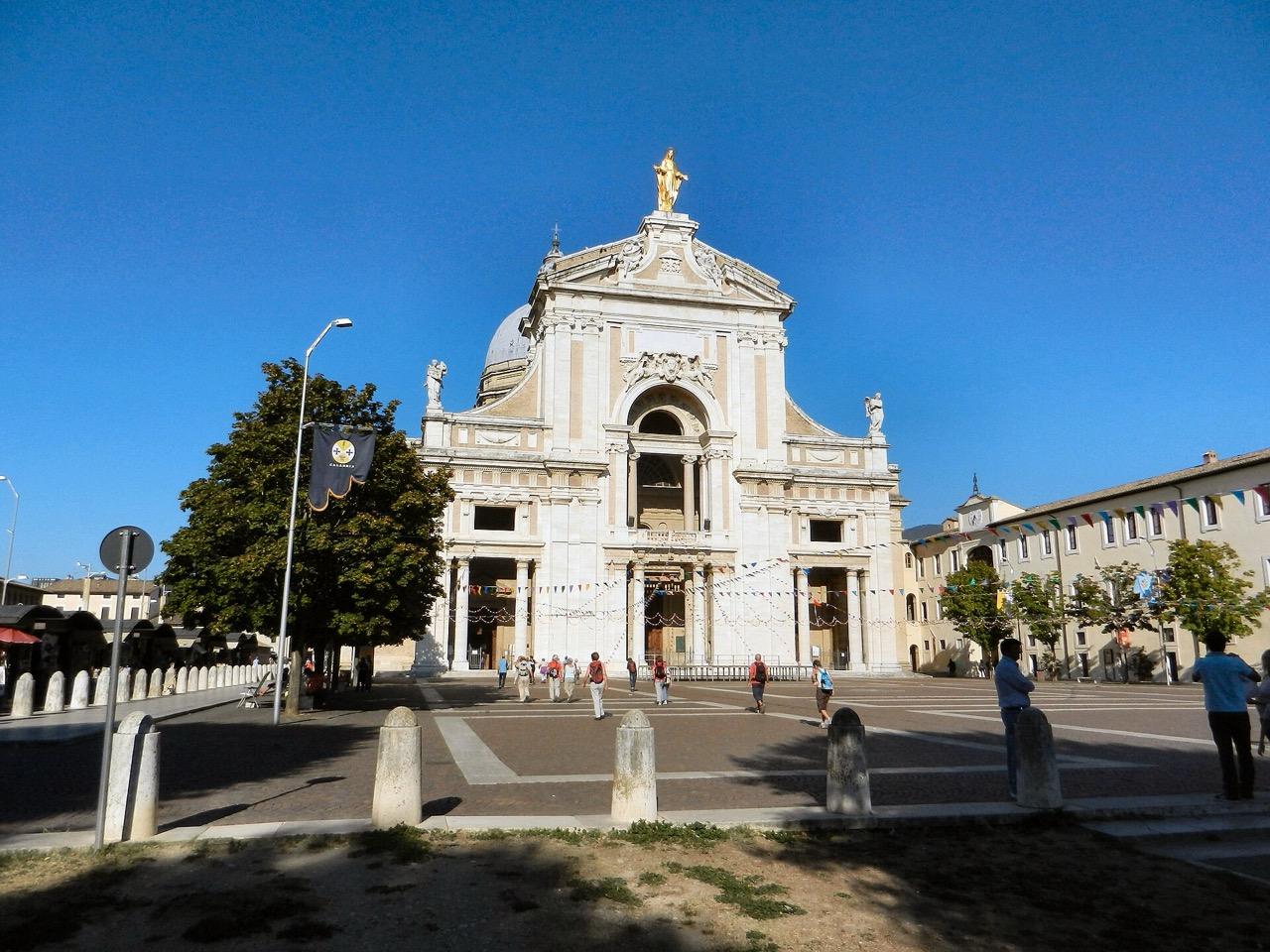
In the valley below the town stands the Basilica of Santa Maria degli Angeli. Inside it is the small chapel of the Porziuncola, Saint Francis' beloved place and the cradle of the Franciscan order. Next to it is the Transitus chapel, where the Poverello died in 1226. The place is linked to the Porziuncola indulgence, celebrated at the beginning of August.
La Verna: the mountain of the stigmata
The Sanctuary of La Verna lies in the Tuscan Apennines, among forests. According to tradition, Saint Francis received the stigmata here in 1224. The sanctuary has kept its austere, contemplative character, and the Franciscans lead a daily procession to the Chapel of the Stigmata. It is a good place for a day of recollection.
Cascia: Saint Rita, patron of difficult causes
The Shrine of Saint Rita in Cascia draws those who come with difficult family intentions. The saint's body rests in the basilica, and in nearby Roccaporena you can see places connected with her childhood and family life. Saint Rita's feast falls on 22 May, when the most pilgrims come to Cascia.
Marche and Abruzzo: Loreto, Manoppello and Lanciano
This lesser-known region on the Adriatic combines one of Europe's most important Marian shrines with places of miracles connected with the face of Christ and the Eucharist.
Loreto: the Holy House
The Shrine of the Holy House in Loreto venerates, according to tradition, the walls of Mary's house in Nazareth. The Holy House is surrounded by a marble screen inside a great basilica, and inside it the statue of the Black Madonna of Loreto is venerated. Our Lady of Loreto is the patron saint of aviators. The Litany of Loreto, prayed especially in May, takes its name from this place.
Manoppello: the Holy Face
At the Sanctuary of the Holy Face in Manoppello the Capuchins keep a delicate veil bearing the image of a face, venerated as the Volto Santo. Pope Benedict XVI visited the sanctuary in 2006. It is an intimate place in Abruzzo, conducive to quiet contemplation.
Lanciano: the Eucharistic miracle
The Sanctuary of the Eucharistic Miracle in Lanciano keeps the relics of a miracle which, according to tradition, took place in the 8th century. A monk who doubted the real presence of Christ in the Eucharist saw the Host turn into Flesh and the wine into Blood during Mass. The relics are displayed in the church of Saint Francis.
Apulia: Gargano, Padre Pio and Saint Nicholas
South-eastern Italy is a region of great popular pilgrimages. Three Apulian shrines are easy to combine into one route.
San Giovanni Rotondo: Saint Padre Pio
The Shrine of Saint Padre Pio in San Giovanni Rotondo is one of the most visited pilgrimage sites in Italy. Padre Pio, a Capuchin friar and stigmatic, lived here for decades and died in 1968, and in 2002 Saint John Paul II declared him a saint. Pilgrims pray at his body, visit the old church and Capuchin friary, and the confessional where he heard confessions. Nearby is the hospital he founded, the Home for the Relief of Suffering.
Monte Sant'Angelo: the grotto of Saint Michael
The Shrine of Saint Michael the Archangel on Monte Gargano is housed in a grotto which, according to tradition, was consecrated by the Archangel himself. From the Middle Ages it was one of the most important stops for pilgrims crossing Italy on their way to the Holy Land. The sanctuary is among the sites inscribed on the UNESCO list as part of the Lombard heritage in Italy. From San Giovanni Rotondo you can get here relatively quickly.
Bari: the Basilica of Saint Nicholas
The Basilica of Saint Nicholas in Bari guards the relics of the Bishop of Myra, brought to Bari in 1087. Saint Nicholas is venerated by both Catholics and Orthodox, so in the crypt you will meet pilgrims from many countries. The basilica is an outstanding example of Apulian Romanesque architecture.
Campania and Lazio: Pompeii and Monte Cassino
Pompeii: Our Lady of the Rosary
The Shrine of Our Lady of the Rosary in Pompeii was built through the efforts of Bartolo Longo, a lawyer who devoted his life to spreading the Rosary. The Supplication to the Queen of the Holy Rosary is prayed here with special solemnity in May and October. The shrine lies next to the excavations of ancient Pompeii, so it is easy to combine prayer with sightseeing.
Monte Cassino: the Abbey of Saint Benedict
Monte Cassino Abbey was founded by Saint Benedict, father of Western monasticism and patron of Europe. The abbey basilica venerates his tomb and that of his sister, Saint Scholastica. The abbey was destroyed during the Second World War and rebuilt. At the foot of the mountain lies the Polish War Cemetery, where soldiers of the Polish II Corps rest, so for Poles it is also a place of prayer for the fallen.
Northern Italy: Padua, Bologna, Turin and Oropa
Padua: the Basilica of Saint Anthony
The Basilica of Saint Anthony in Padua, known to locals simply as Il Santo, holds the tomb of one of the Church's best-loved saints. Pilgrims touch the tomb slab and leave their petitions there. The Chapel of the Relics venerates, among other things, the tongue of the saintly preacher. Saint Anthony died in 1231, and his feast is celebrated on 13 June.
Bologna: Madonna di San Luca
The Sanctuary of the Madonna di San Luca stands on a hill above Bologna. A very long portico, several kilometres in length, leads up to it, and pilgrims climb it praying along the way. The porticoes of Bologna are inscribed on the UNESCO list. The sanctuary venerates an icon of Mary that tradition attributes to Saint Luke.
Turin: the Shroud of Turin
Turin Cathedral keeps the Shroud of Turin, the linen cloth which, according to tradition, wrapped the body of Jesus laid in the tomb. The Shroud is not on display day to day. The original is shown to the faithful only during special expositions, announced in advance by the Archdiocese of Turin. Outside those periods you can see the chapel where it is kept and a faithful reproduction in the cathedral. Information about expositions is published on the official website sindone.org.
Oropa: the Black Madonna of Piedmont
The Sanctuary of Our Lady of Oropa lies in the mountains near Biella. It is one of the most important Marian shrines in the Alps, with a statue of the Black Madonna venerated for centuries. The Sacro Monte di Oropa belongs to the group of Sacred Mountains of Piedmont and Lombardy inscribed on the UNESCO list. Its mountain setting makes it an excellent destination for pilgrims who enjoy hiking.
Sicily: Our Lady of Tears in Syracuse
The Shrine of Our Lady of Tears in Syracuse commemorates the events of 1953, when a plaster image of Our Lady in the home of a young married couple shed tears. The modern church with its distinctive conical shape was dedicated by Saint John Paul II in 1994. It is a good stop for those combining a pilgrimage with discovering Sicily.
Suggested pilgrimage routes by region of Italy
The routes below are outlines that you can adapt to your pace, transport and number of days. Always check current connections and opening hours.
The Franciscan route: Umbria and Tuscany (4-5 days)
- Assisi: Basilica of Saint Francis, Basilica of Saint Clare, San Damiano.
- Assisi: the Porziuncola in Santa Maria degli Angeli.
- Cascia and Roccaporena: Saint Rita.
- La Verna: a day of recollection on the mountain of the stigmata.
The Adriatic and Apulian route (5-7 days)
- Loreto: the Holy House.
- Lanciano and Manoppello: the Eucharistic miracle and the Holy Face.
- San Giovanni Rotondo: Saint Padre Pio.
- Monte Sant'Angelo: the grotto of Saint Michael.
- Bari: Basilica of Saint Nicholas.
The northern route (4-5 days)
- Padua: Saint Anthony.
- Bologna: Madonna di San Luca.
- Turin: the cathedral and the Chapel of the Shroud.
- Oropa: a mountain Marian shrine.
The southern route from Rome (3-4 days)
- Monte Cassino: the abbey and the Polish War Cemetery.
- Pompeii: the Rosary shrine.
- Optionally, a flight or ferry to Sicily and Syracuse.
You can save any of these routes as stages in the My journey feature. If you prefer an organised trip, browse pilgrimage trips and upcoming events at the shrines.
Frequently asked questions
Which shrines in Italy are the most visited?
Outside Rome, the most visited include Assisi, San Giovanni Rotondo, Padua, Loreto and Pompeii. Each welcomes pilgrims all year round, with the biggest crowds on the feast days of their patrons and in the summer season.
Can I see the Shroud of Turin at any time?
No. The original Shroud is kept in Turin Cathedral but is displayed only during special expositions announced by the archdiocese. On ordinary days you can see the Chapel of the Shroud and a reproduction. The official website sindone.org provides current information.
How can I combine a pilgrimage to Rome with other shrines?
From Rome, Assisi, Monte Cassino and Pompeii are the easiest to reach. For Apulia and northern Italy it is better to plan separate routes of several days. You will find details in our guide to the pilgrimage to Rome.
When is the best time to go to San Giovanni Rotondo?
The shrine welcomes pilgrims all year round. Many people come around the feast of Saint Padre Pio on 23 September, but that is when it is busiest. Spring and autumn outside the feast days offer more silence for prayer.
Do shrines in Italy require special clothing?
Yes, most churches require clothing that covers your shoulders and knees. In large basilicas such as Assisi or Padua, the rules are enforced at the entrance. It is worth carrying a light scarf.
Can I make a pilgrimage around Italy on my own?
Yes, many shrines have good rail or bus connections, and pilgrim houses take individual guests. For mountain places such as La Verna or Oropa, a car is often more convenient. If you do not want to go alone, look for a travel companion on Bratnio.
Discover the shrines of Italy with Bratnio
You will find all the places described here, as well as shrines in other European countries, on the Discover map. Plan your route in My journey, take hymns from the songbook with you and find a travel companion to share the pilgrim road with. Create a free account or download the Bratnio app to your phone.