
Spirituality
A Pilgrim's Prayer: How to Pray on the Way to a Shrine
Published October 21, 2026 · 13 minute read
A simple rhythm of prayer for a pilgrimage: from the blessing before you set off, through the Rosary while walking and the Angelus, to thanksgiving at the shrine.
Machine translation of an article written in Polish.
A pilgrim's prayer does not have to be long or elaborate. It is enough for it to accompany the journey from the first step over the threshold of your home to the moment you stand before the altar of the shrine. What makes a pilgrimage different from an ordinary trip is that we walk with someone and towards Someone, and simple daily prayer gives this time its shape: it gives meaning to tiredness, teaches gratitude and helps you live the journey as a retreat on the move. In this guide you will find practical suggestions on how to pray morning and evening, how to pray the Rosary while walking, when to stop for the Angelus, what to say to God before you leave and when you arrive, and how to carry the intentions entrusted to you by loved ones.
What is a pilgrim's prayer and why plan it
A pilgrim prays not only with words. The very effort of the journey offered to God is prayer, as is the silence on a forest path or a conversation with a companion about what really matters. Even so, it is good to have a few fixed points in the day that you return to without thinking. When your legs ache and your thoughts drift towards the night's lodging and dinner, a simple rhythm of prayer gives you something to lean on.
Before you set off, answer three questions:
- Which prayers do I want to say every day, however tired I am?
- Who will I pray with: alone, with family, with a parish group, with a newly met companion?
- Which intentions am I taking on the road, and how will I remember them?
You can write down this simple prayer plan for your pilgrimage in a notebook or in the description of the stages when you plan your own pilgrimage. That way you know each day what intention you are walking for, and after you return you can see what the journey looked like spiritually.
Prayer before setting off on a pilgrimage
The Church's tradition has a special blessing for pilgrims before they set out. If you are travelling with a parish group, the priest usually gives it at the start of the trip, often after Mass. If you are going on your own, you can ask your priest for a blessing after Sunday Mass.
At home, before you leave, a moment of silence and a few words from the heart are enough. It is good to:
- Make the sign of the cross and thank God for the chance to set out.
- Entrust to Him the safety of the journey, your health and the people you will meet.
- Name the intentions you are carrying, including those entrusted to you by others.
- Pray to your Guardian Angel, to whose care travellers have commended themselves for centuries.
The traditional prayer to the Guardian Angel, which many of us learned as children, goes:
Angel of God, my guardian dear, to whom God's love commits me here, ever this day be at my side, to light and guard, to rule and guide. Amen.
Many pilgrims also turn to Psalm 121, known as the pilgrim's psalm, which speaks of God guarding our going out and our coming in. Read it from your own Bible before the first stage.
Morning prayer on the road
Mornings on a pilgrimage can be hurried: packing your backpack, breakfast, checking the weather and the route. All the more reason to begin with God before the rushing starts. A pilgrim's morning prayer can last just a few minutes.
Tried and tested elements of morning prayer:
- the sign of the cross and the offering of the whole day to God, with its hardships and joys;
- a short reflection on a passage from the Gospel of the day;
- prayer for the people you will spend the day with;
- a request for patience, kindness and good sense on the road.
If you know the Liturgy of the Hours, Morning Prayer (Lauds) is the natural choice to begin the day. Walking groups often start with shared prayer and a morning hymn. You will find the texts of traditional hymns, including morning and Marian ones, in the Bratnio songbook, which contains public domain works.
Another good habit is to offer the journey itself in the morning: every kilometre, every blister and every climb for a particular intention. It is a simple form of prayer that turns tiredness into a gift.
The Rosary while walking
The Rosary is a prayer almost made for pilgrims. Its rhythm is similar to the rhythm of your steps, it needs no book, and the beads guide you even when your attention fades. On walking pilgrimages to Jasna Góra, the Rosary prayed by the whole group is one of the most characteristic sounds of the road.
How to pray the Rosary while walking so that it is prayer and not just recitation:
- Before each decade, briefly recall the mystery and picture the scene from the Gospel.
- You can offer each decade for a different intention: for your family, for the sick, for the dead, for people who asked you to pray for them.
- On climbs, slow the pace of your prayer along with your step. There is no need to hurry.
- When you are walking alone along a busy road, pray silently and keep your full attention on the traffic.
Traditionally there are four sets of mysteries: Joyful, Luminous, Sorrowful and Glorious. On a longer pilgrimage it is easy to spread them across the day. A special place for those who love this prayer is the Shrine of Our Lady of the Rosary in Pompeii, linked to Blessed Bartolo Longo and to the Pompeii novena, which is very popular in Poland.

The Angelus at noon
The Angelus recalls the mystery of the Incarnation. It is traditionally prayed three times a day: morning, noon and evening, and in many towns church bells still ring for it. For a pilgrim, noon is a good moment to stop, catch your breath and turn to Mary.
The short, traditional form of the prayer goes:
- The Angel of the Lord declared unto Mary. And she conceived of the Holy Spirit. Hail Mary.
- Behold the handmaid of the Lord. Be it done unto me according to thy word. Hail Mary.
- And the Word was made flesh. And dwelt among us. Hail Mary.
- Pray for us, O holy Mother of God. That we may be made worthy of the promises of Christ.
It ends with a short concluding prayer said by the priest or the leader. In Eastertide the Regina Caeli, "Queen of Heaven, rejoice", is prayed instead of the Angelus. On Sundays the Pope prays the Angelus with the faithful in St Peter's Square, and the texts of his reflections are published on the official website of the Holy See.
A pilgrim's evening prayer
Evening on the route brings relief, but also a tiredness that easily turns into irritability. A pilgrim's evening prayer helps you close the day in peace.
The simplest outline for evening prayer:
- An examination of conscience: what I am grateful for, what went wrong, whom I should apologise to.
- Thanksgiving for the distance covered and the people met along the way.
- Prayer for those who stayed at home and are waiting for your return.
- A request for good rest and strength for tomorrow.
Those who pray the Liturgy of the Hours end the day with Evening Prayer (Vespers) and Night Prayer (Compline). In the evening it is also worth writing a few sentences about the day: what moved you, which word from the Gospel stayed in your heart, who showed you kindness. In Bratnio you can do this in the description of a stage of your journey, privately or visible to your loved ones. After you return, such notes become a precious keepsake and a testimony.
In the evening the Jasna Góra Appeal or traditional Marian hymns are often sung as well. It helps to have the texts with you, especially when the group includes people who do not know all the verses.
We Fly to Thy Patronage: the oldest Marian prayer for the road
Among the short prayers worth knowing by heart, the Sub tuum praesidium, "We fly to thy patronage", has a special place. It is one of the oldest known prayers to the Mother of God, and its Greek text survives on a papyrus usually dated to the 3rd or 4th century. For centuries it has been said by people on the road, in danger and in everyday needs.
We fly to thy patronage, O holy Mother of God; despise not our petitions in our necessities, but deliver us always from all dangers, O glorious and blessed Virgin. Amen.
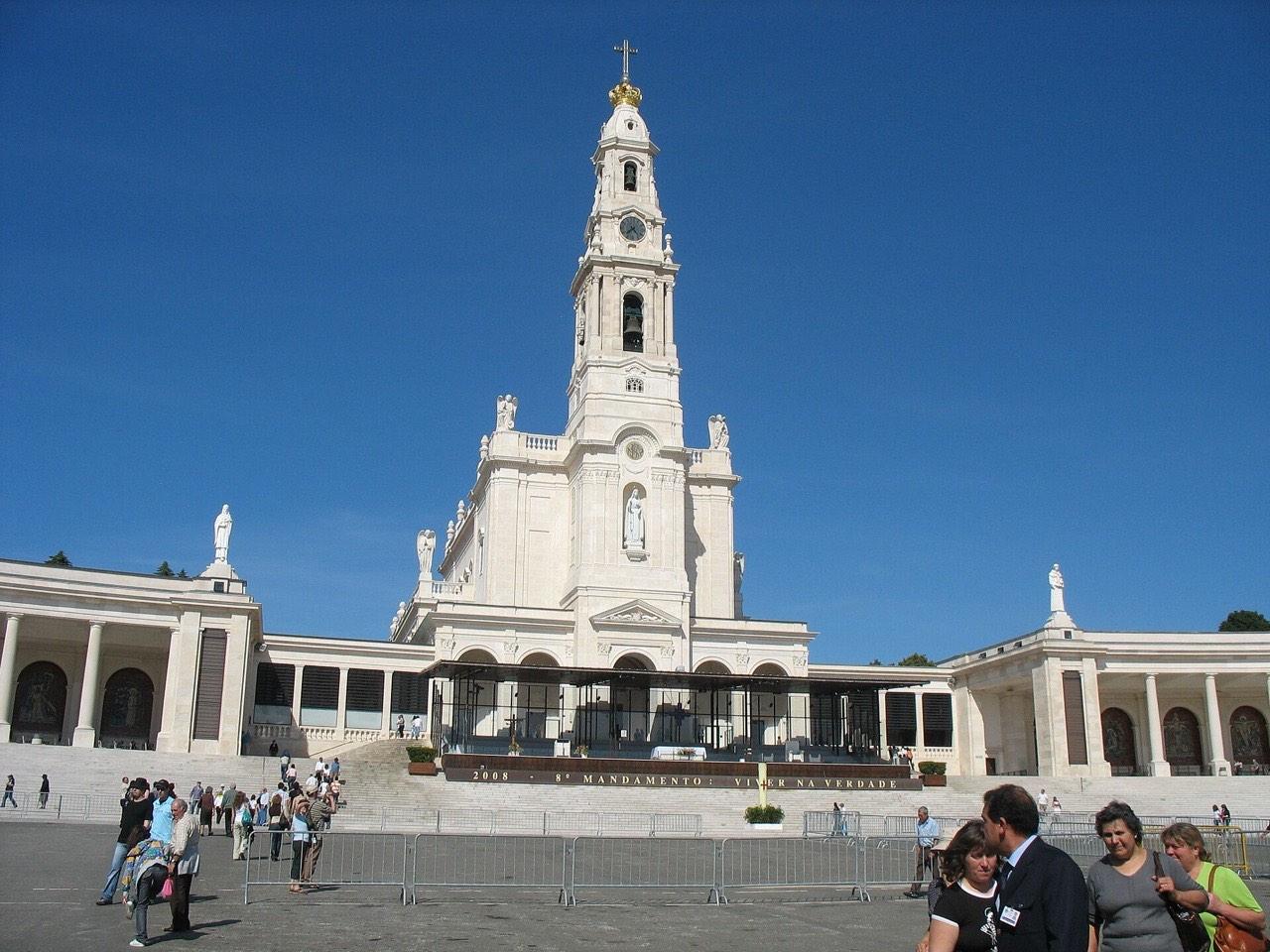
This prayer is easy to say at a rest stop, before crossing a busy road, before entering an unfamiliar town or at the start of a coach journey. It suits every Marian pilgrimage, from the Marian shrines of Poland to Fatima and Lourdes.
A pilgrim's intentions: how to gather and carry them
Before setting off, many people hear: "Pray for me." It is an act of trust worth taking seriously. A few practical rules:
- Write the intentions in a notebook or on your phone, without details that could embarrass anyone. Sometimes a first name is enough.
- Divide them among the days or the decades of the Rosary so that each has its own time.
- At the shrine you can leave a written intention if the place accepts such requests. Check the rules on site or on the shrine's official website.
- Do not promise more than you can carry. One sincere prayer is better than a long list ticked off in a hurry.
Intentions are also an opportunity for reconciliation. A pilgrimage is a good time to pray for people with whom your relationship is difficult. Many pilgrims receive the sacrament of penance on the way or at the shrine, because that is where it is easier to stop and look at your life in truth.
Prayer on arrival at the shrine
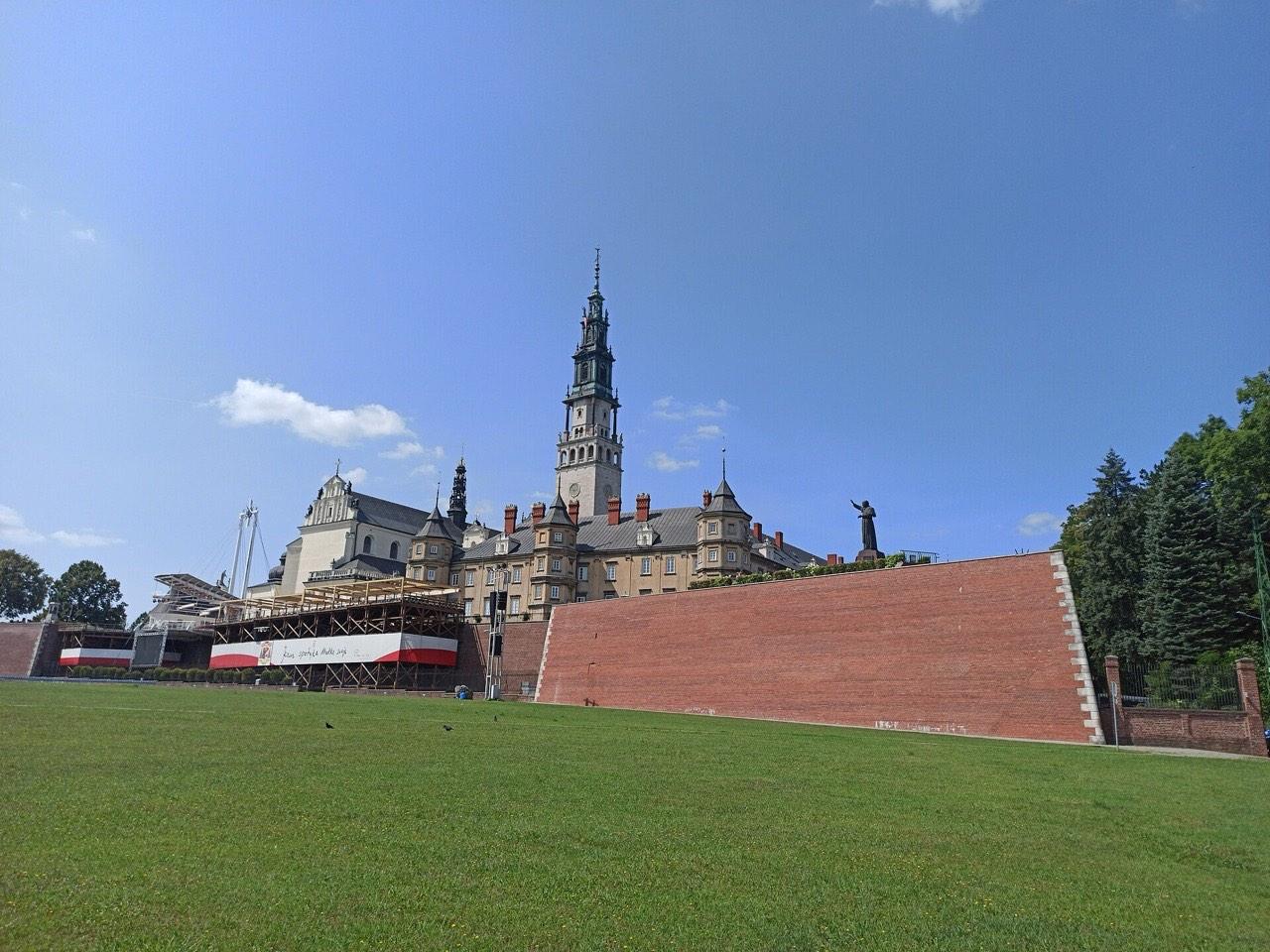
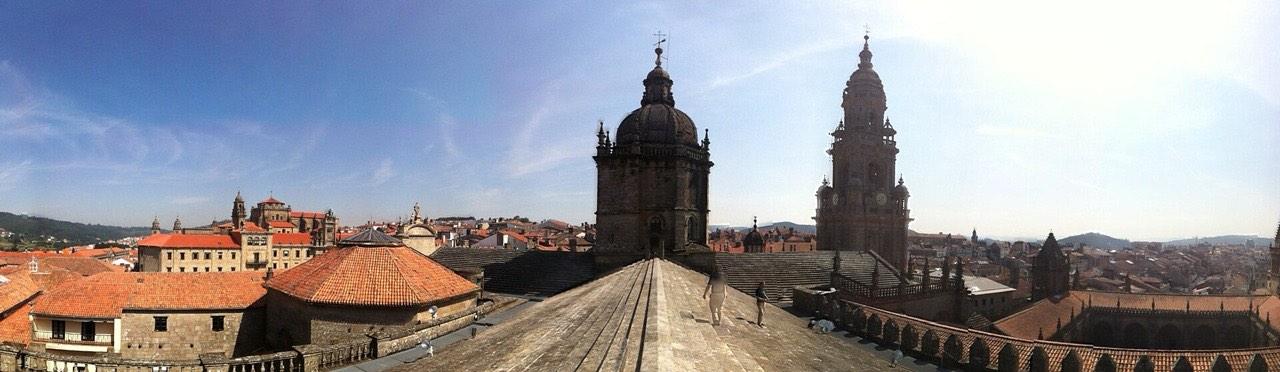
The moment of reaching your destination is unique. Pilgrims walking to Jasna Góra often fall to their knees at the sight of the monastery tower, and those finishing the Camino stop in silence in the Praza do Obradoiro before Santiago de Compostela Cathedral. There is no single required pattern, but a few gestures help you live this moment consciously:
- Pause for a moment of silence before you start taking photos.
- Give thanks for the journey, for the people met along the way and for protection in difficult moments.
- Lay before God all the intentions you have carried.
- If possible, attend Mass and go to confession.
- Pray for those who wanted to come but could not.
Times of Masses, confessions and services change with the season, so always check them on the shrine's official website. You will find practical tips on specific places in our guides, for example on the walking pilgrimage to Częstochowa or the Camino de Santiago for beginners.
Prayer and song in community
Praying together has its own power. A pilgrim group learns to listen to one another, to wait for the slower ones, to pray for those carrying heavier crosses. Singing helps keep the rhythm and binds together people who did not know each other a few days earlier.
If you are setting out alone, you might consider looking for a companion. In Bratnio, the Find a travel companion feature lets you briefly, for 1, 2 or 4 hours, show the approximate zone you are in and invite someone to walk with you. Among the purposes of meeting you can choose prayer or music. Visibility is off by default, an invitation must be accepted, and the chat opens only after that. Read more about finding fellow pilgrims sensibly in our article how to find a pilgrimage companion.
A pilgrimage with your family can also become a school of prayer. We write about adapting the pace and prayer to the youngest and oldest participants in our guide pilgrimage with children and seniors.
Frequently asked questions
What is the best pilgrim's prayer for the road?
There is no single required prayer. Many pilgrims choose the Rosary because it matches the rhythm of their steps, and for short moments the Sub tuum praesidium and the Guardian Angel prayer. The most important thing is that prayer is sincere and regular.
Can you pray the Rosary while walking?
Yes, it is one of the most natural forms of prayer on the road. On busy sections, pray silently and keep your attention on the traffic. Safety matters more than finishing a decade at a particular spot.
At what time is the Angelus prayed?
Traditionally in the morning, at noon and in the evening. The noon Angelus is the best known and is often accompanied by the ringing of bells. In Eastertide the Regina Caeli replaces it.
How do you pray when you are very tired?
A few words are enough, or simply offering your tiredness to God. Short aspirations, a single decade of the Rosary or a moment of silence all have value. A pilgrimage is not a competition in the number of prayers said.
Where can I find hymn texts for a pilgrimage?
In the Bratnio songbook you will find traditional public domain hymns that can be sung on the road and at the shrine. Parish groups also often prepare their own songbooks for a particular trip.
How can I remember the intentions others have entrusted to me?
Write them down before you leave and assign them to specific days or decades of the Rosary. You can also add them to the notes on the stages of your journey. That way each intention has its own time.
A pilgrim's prayer begins at home, continues with every step and does not end at the shrine, because it comes back with us into everyday life. If you want to prepare your journey better, create a free account on Bratnio. You can find the shrine on the map of pilgrimage places, plan your stages with an intention for each day, open the songbook of traditional hymns, and after you return share your story and photos with the loved ones who prayed with you.