Camino de Santiago
Camino de Santiago for beginners: routes, credencial, Compostela
Published October 21, 2026 · 12 minute read
Your first Camino? Which route to choose, how to get a credencial and the Compostela, where to sleep, when to set off and how to prepare.
Machine translation of an article written in Polish.
Dreaming of the road to the tomb of Saint James but not sure where to start? This guide to the Camino de Santiago for beginners brings together what you should know before your first step: which route to choose, what a credencial is, how to earn the Compostela, where to sleep and when to set off. The Camino is not a race or a sporting feat. It is a road walked since the Middle Ages by people seeking prayer, silence, answers or simply time for themselves. You can walk it in full or in sections, alone or in a group, and you will always reach the same destination: the cathedral of Santiago de Compostela.
What the Camino de Santiago is and why it is worth setting out
The Camino de Santiago, the Way of Saint James, is a network of pilgrimage routes leading from all over Europe to Santiago de Compostela in Galicia, in north-western Spain. According to tradition, the cathedral there holds the relics of Saint James the Greater, apostle and one of Jesus' closest disciples. Since the 9th century, when his tomb was discovered, pilgrims from many countries have made their way to Santiago, and the routes through France and Spain have been inscribed on the UNESCO World Heritage List.
For many people the Camino is a retreat on the move. The daily rhythm of walking, the simplicity of the accommodation and encounters with people from all over the world make it easier to hear your own thoughts and prayer. You do not have to be an experienced mountain hiker. Good preparation, a sensible pace and openness to what the road brings are enough.
The symbol of the pilgrim is the scallop shell, which many hang on their backpack. Yellow arrows and shell markers guide you through villages, towns and forests, so getting lost on the main routes is unlikely.
Camino de Santiago routes: which way to choose first
There is no single Camino. There are many routes, each with its own character. Here are the four most popular among first-timers.
Camino Francés: the classic from Saint-Jean-Pied-de-Port
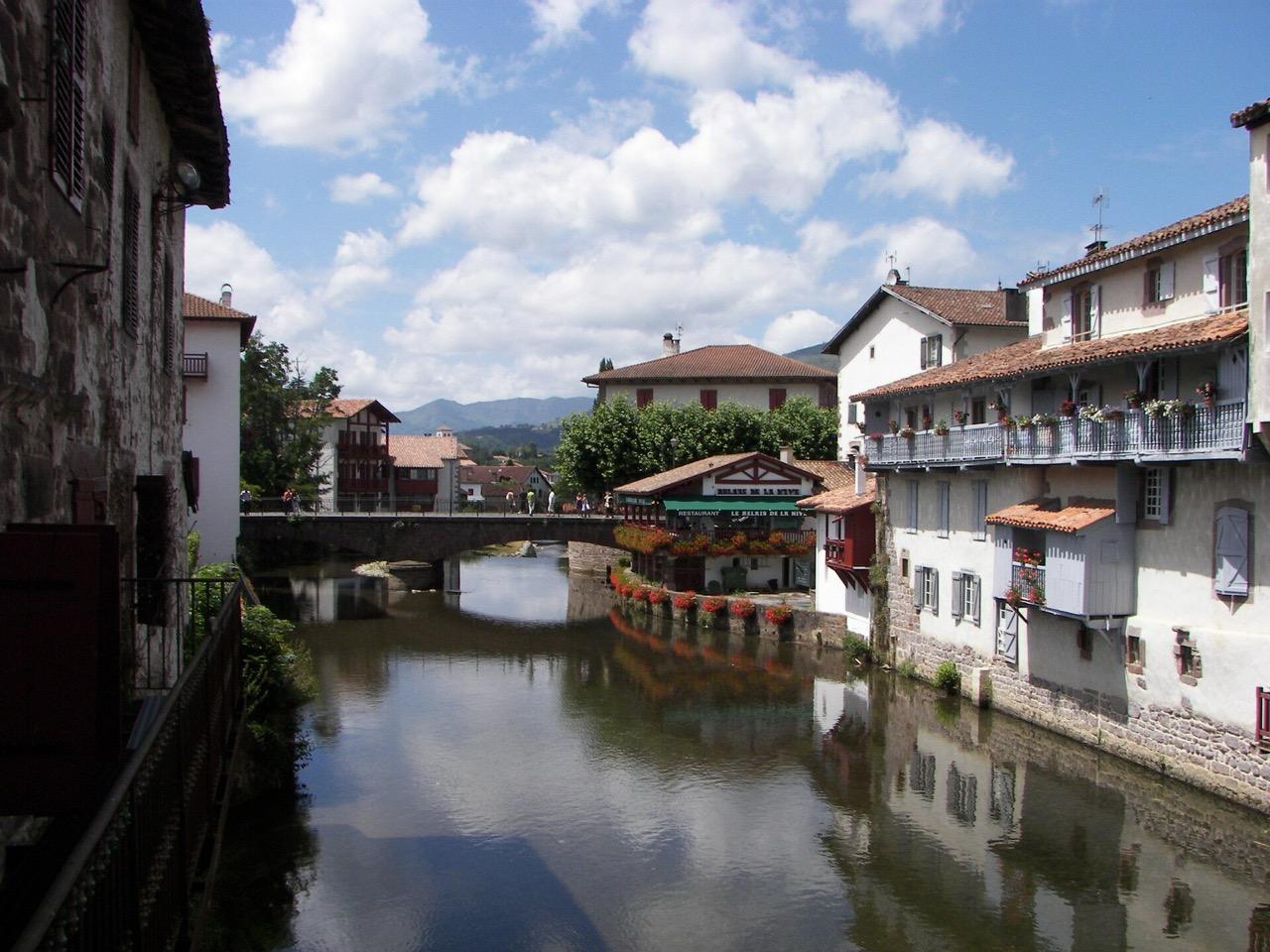
The French Way is the best-known and best-equipped route. It traditionally begins in the small town of Saint-Jean-Pied-de-Port at the foot of the Pyrenees, on the French side of the border. The first stage crosses the mountains to Roncesvalles, where a collegiate church and pilgrim hostel have operated for centuries. It is one of the hardest days of the whole route, so take it calmly.
From there the trail runs through Pamplona, Logroño, Burgos, the Meseta plateau and León, all the way to Galicia. On the edge of that region lies O Cebreiro, a mountain village with the pre-Romanesque church of Santa María la Real and traditional round pallozas houses. For many pilgrims it is one of the most beautiful moments of the journey. The whole French Way from Saint-Jean-Pied-de-Port is about 800 km and usually takes several weeks, but many people split it into sections walked over successive years.
Camino Portugués: from Lisbon or Porto
The Portuguese Way comes from the south, most often from Porto, and for the more determined even from Lisbon. It has an inland and a coastal variant. Across the Minho river, on the Portuguese-Spanish border, lies Tui, a popular starting point for those who want to walk the last 100-plus km. This route combines well with a visit to Fatima, which we cover in our article on the pilgrimage to Fatima.
Camino del Norte: along the coast
The Northern Way runs along the Bay of Biscay, from Irún through San Sebastián, Bilbao and Santander. It delights with sea views and green landscapes, but has more climbs and a less dense network of hostels than the French Way. It is a good choice for those who already have some experience of long walks or who are looking for a quieter route.
Camino Primitivo: the oldest route
The Original Way starts in Oviedo in Asturias. Tradition links it with King Alfonso II, who in the 9th century is said to have set out for the apostle's tomb as one of the first pilgrims. The route is mountainous, demanding and beautiful. In its final section it joins the French Way. For beginners it may be too hard as a first Camino, unless you are in good shape and have time for shorter stages.
You will find all these places, together with the shrines along the way, on the map of pilgrimage sites. Take a look before you go and mark the spots where you want to stop and pray.
The credencial and stamps: the pilgrim passport
The credencial is the pilgrim passport, a document in which you collect stamps (sellos) from places along the route. You will find stamps in hostels, churches, parishes, cafés and town halls. The credencial has two functions: it gives you access to hostels reserved for pilgrims, and it is proof that you walked the route, which you need to receive the Compostela.
You can obtain a credencial through confraternities and associations of Saint James, in some parishes and at starting points on the route. Official information on issuing the document is published by the Pilgrim's Office in Santiago.
One rule to remember: on the last 100 km (or 200 km for cyclists) you must collect at least two stamps a day. On other days one stamp is enough. Check the current requirements before you leave, as the detailed rules are set by the Pilgrim's Office.
The Compostela: how to earn the pilgrim certificate
The Compostela is a Latin document issued by the cathedral of Santiago to those who have made the journey for religious or spiritual reasons. To receive it you need to:
- Walk or ride on horseback at least the last 100 km to Santiago.
- Cycle at least the last 200 km.
- Document the route with stamps in your credencial.
- Present yourself in person at the Pilgrim's Office in Santiago.
On the French Way, the most popular starting point for those who want to walk the minimum distance is Sarria. On the Portuguese Way, Tui plays that role. Remember that in high season the last stretch can be very crowded.
Those who set out for other reasons can receive a certificate of completion. The office also issues an additional document stating the distance walked. The official website of the office describes the current rules and how to register.
Albergues: where to sleep on the Camino
Pilgrim hostels, called albergues, are the heart of life on the route. They include:
- public hostels, run by municipalities or regional authorities, usually without reservations, taking pilgrims on a first-come, first-served basis;
- parish and community-run hostels, often on a donativo basis, meaning a voluntary donation, and with a shared dinner or prayer;
- private hostels, where you can usually book a bed in advance;
- guesthouses and hotels for those who need more privacy or rest.
You need a credencial for public and parish hostels. Accommodation is usually in shared dormitories, so earplugs, a light sleeping bag or liner and flip-flops will come in handy. Prices and rules vary by place and season, so do not plan your budget based on a single figure from the internet. Leave yourself a margin.
The best time to walk the Camino de Santiago
Ask experienced pilgrims when to walk the Camino and most will answer: spring or autumn.
- Spring (April, May, June) brings green landscapes, mild temperatures and fewer crowds than summer. It can still rain in the Pyrenees and Galicia, though.
- Summer (July, August) is peak season. It can be very hot on the Meseta, and hostels fill up quickly, especially on the last 100 km.
- Autumn (September, October) is ideal for many: pleasant weather, the grape harvest in La Rioja and a calmer atmosphere.
- Winter means silence and solitude, but also closed hostels, short days and possible snow on the passes. It is rather a choice for the experienced.
Crossing the Pyrenees from Saint-Jean-Pied-de-Port to Roncesvalles can be made difficult by weather in the colder months. Always check local advisories before setting off and ask at the pilgrim office in Saint-Jean which version of the route to take.
How to prepare for the Camino: training and gear
The most common problem for beginners is not a lack of fitness but blisters, a backpack that is too heavy and too ambitious a pace in the first days. A few tried and tested tips:
- Start training a few months beforehand. Walk regularly, gradually increasing the distance. A few times, walk a whole day with the backpack you will take on the route.
- Break in your shoes. Never set off in new footwear. Many people choose light hiking or trail shoes instead of heavy mountain boots.
- Limit your luggage. A common rule of thumb says your backpack should not weigh more than about 10 percent of your body weight. Pack and weigh everything before you leave.
- Look after your feet. Take blister plasters, cream and two or three pairs of good socks. React to the first signs of chafing.
- Plan shorter stages at the start. Your body needs a few days to get used to walking every day.
- Take something for the soul. A small prayer book, a rosary or your favourite hymns. In the Bratnio songbook you will find lyrics you can sing together with other pilgrims.
You can set out your own plan of stages, overnight stops and places of prayer in the My journey tab in Bratnio. There you can also keep a journal with photos to share with your family.
Santiago Cathedral and the Pilgrims' Mass
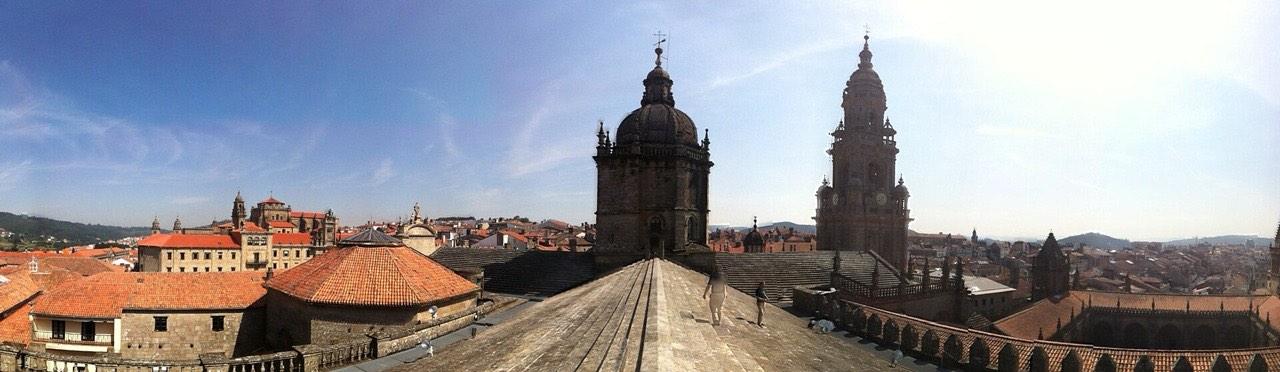
Arriving in the Plaza del Obradoiro in front of the cathedral's western façade is a moment many pilgrims never forget. Inside the cathedral itself, take time to stop at:
- the Portico of Glory (Pórtico de la Gloria), a masterpiece of Romanesque sculpture by Master Mateo;
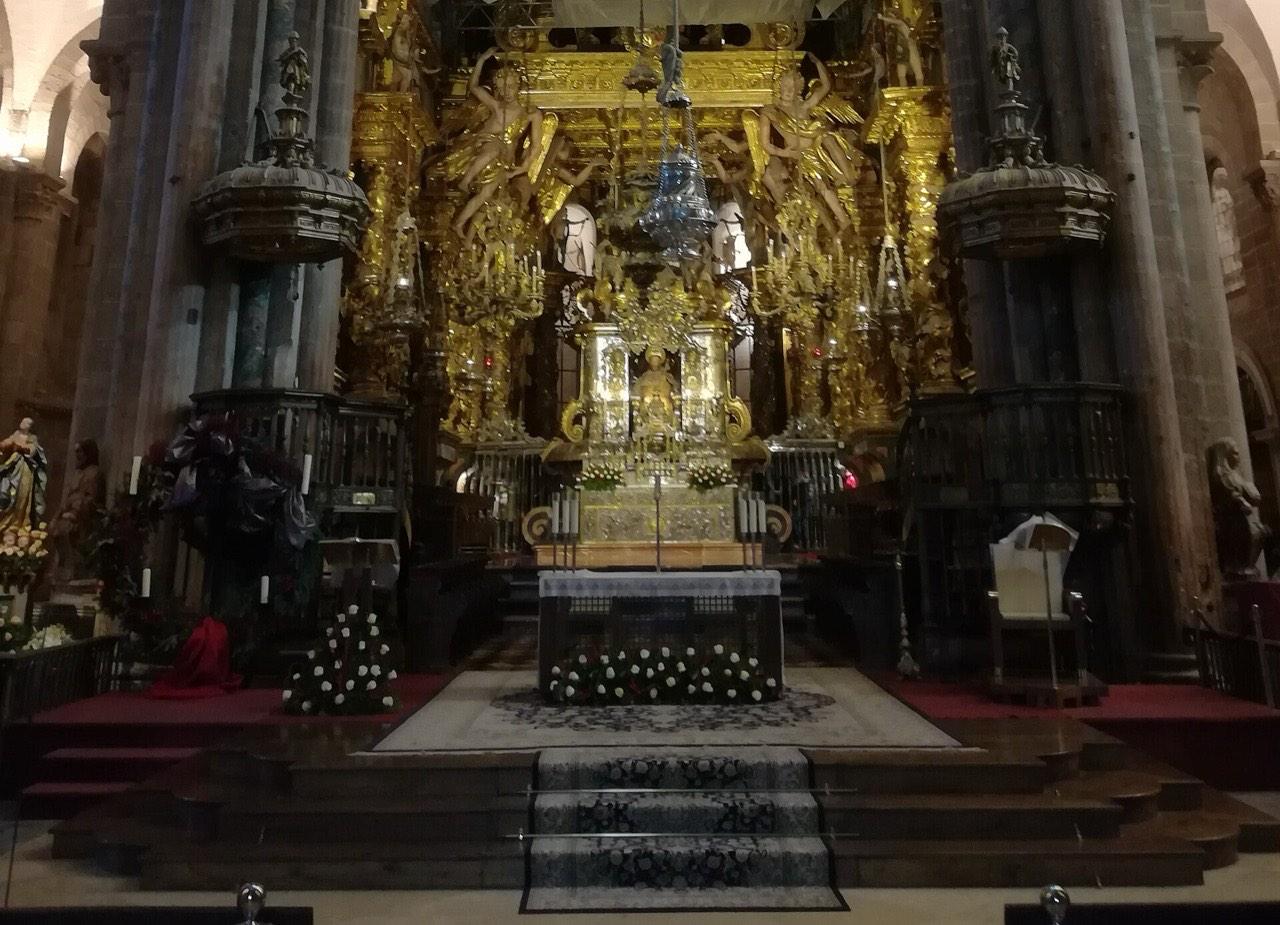
- the statue of Saint James above the high altar, which pilgrims traditionally embrace in thanksgiving for the journey;
- the crypt with the apostle's relics, where you can pray for a moment in silence.
A Pilgrims' Mass is celebrated in the cathedral every day, and at some liturgies the famous botafumeiro is used, a huge censer swinging above the nave. Mass times and the occasions when the censer is used can change, so it is best to check them on the official cathedral website. Many pilgrims continue on to Fisterra or Muxía on the Atlantic, but that is another story.
The Compostela Holy Year: when it falls
The Holy Year in Santiago, also called the Jubilee Year or Xacobeo, occurs when 25 July, the Solemnity of Saint James the Apostle, falls on a Sunday. In such a year the cathedral's Holy Door (Puerta Santa) is opened, and pilgrims can receive the jubilee indulgence under the usual conditions set by the Church.
The last Holy Year began in 2021 and, because of the pandemic, was extended into 2022. The next Holy Year falls in 2027, because 25 July will then be a Sunday again. It is a good opportunity to plan your first Camino, but also a sign that there may be exceptionally many pilgrims on the route and in Santiago. If you value quiet, consider spring or late autumn.
Frequently asked questions
Is the Camino de Santiago suitable for beginners?
Yes. Most people on the route have no experience of long-distance walking. The key is a sensible pace, broken-in shoes and a light backpack. For a start, the French Way or the Portuguese Way work well, as they have a dense network of hostels and good waymarking.
How long does it take to walk the Camino?
It depends on the route and the section. Pilgrims usually walk the whole French Way from Saint-Jean-Pied-de-Port in several weeks. The last 100 km, enough to earn the Compostela, can be walked in about a week, though this depends on your pace and fitness.
Can I walk the Camino alone?
You can, and many people do. On the popular routes you are rarely truly alone, because it is easy to meet other pilgrims in hostels and on the trail. If you would rather set out with someone, take a look at the Find a travel companion feature, where your visibility is always voluntary and limited to an approximate area.
Where can I get a credencial?
Credenciales are issued by confraternities and associations of Saint James, some parishes and points along the route, for example pilgrim offices at starting points. You will find up-to-date information about the official credencial on the website of the Pilgrim's Office in Santiago.
Do I need to book accommodation on the Camino?
Public hostels usually do not take reservations and work on a first-come, first-served basis. In high season, especially on the last 100 km, consider booking a private hostel or guesthouse. Out of season some hostels are closed, so check in advance.
When is the next Holy Year in Santiago?
The next Compostela Holy Year falls in 2027, because 25 July will be a Sunday. The one after that will be in 2032.
The Camino begins long before the first step: with a dream, a prayer and a plan. On the Bratnio map you will find all the places from this guide, from Saint-Jean-Pied-de-Port to Santiago Cathedral. In the My journey tab you can plan your stages and keep a journal, and in the Companions section you can meet people heading in the same direction. Create a free account and set out with us. Buen Camino!