
Marian shrines
Pilgrimage to Fatima: the apparitions and a practical guide
Published October 21, 2026 · 11 minute read
The story of the 1917 apparitions, the main places in the sanctuary, the candlelight procession, the 13 May and 13 October anniversaries, getting there and Braga.
Machine translation of an article written in Polish.
For many Catholics, a pilgrimage to Fatima fulfils a dream of standing where, in 1917, Our Lady appeared to three shepherd children. This small town in central Portugal has become one of the most important Marian shrines in the world, and its message of the Rosary, penance and conversion still moves millions of people. In this guide we cover the history of the apparitions, the main places in the sanctuary, the candlelight procession, the great anniversaries of 13 May and 13 October, and how to get to Fatima and combine it with the shrines of Braga.
The history of the Fatima apparitions in 1917
At the beginning of the 20th century Fatima was a quiet village in the region now called Centro. Its inhabitants lived from farming and sheep grazing. Three children, Lúcia dos Santos and her cousins Francisco and Jacinta Marto, tended flocks in the fields at Cova da Iria.
The apparitions of Our Lady were preceded in 1916 by encounters with an angel, who prepared the children for prayer and sacrifice. On 13 May 1917 Mary appeared to them for the first time above a small holm oak tree. She asked them to pray the Rosary every day for peace in the world, as the First World War was raging at the time. The apparitions were repeated on the thirteenth day of the following months, until October.
August was the exception. On 13 August the children were detained by the administrator of the Ourém district, so they could not go to Cova da Iria. Our Lady appeared to them a few days later, on 19 August, at a place called Valinhos, near their home village of Aljustrel.
The last apparition, on 13 October 1917, drew tens of thousands of people. Many of them, including sceptics and journalists, described an extraordinary phenomenon in the sky, known as the miracle of the sun. During this apparition Mary introduced herself as Our Lady of the Rosary.
Francisco and Jacinta died soon afterwards during the Spanish flu epidemic. Pope John Paul II beatified them in Fatima in 2000, and Pope Francis canonised them on 13 May 2017, the hundredth anniversary of the first apparition. Lúcia entered religious life, spent the last years of her life in the Carmel of Coimbra and died in 2005. Her cause for beatification is under way.
The Fatima message: the Rosary, penance and conversion
Fatima is not only a story from over a hundred years ago, but above all a message that the Church has recognised as worthy of belief and continues to remind the faithful of. At the centre of Our Lady's message is the call to pray the Rosary daily, to do penance, to offer up everyday difficulties for the conversion of sinners and to pray for peace in the world.
Fatima is also linked with devotion to the Immaculate Heart of Mary and the practice of the First Saturdays, which, according to Sister Lúcia's account, Our Lady requested in later apparitions in Pontevedra, Spain. Pilgrims often come to Fatima precisely to take up these simple practices again: the Rosary prayed as a family, confession, and entrusting themselves and their loved ones to Mary. Before you go, it is worth reading Sister Lúcia's memoirs, which help you understand how the children experienced their encounters with Our Lady.
The Sanctuary of Fatima: what to see
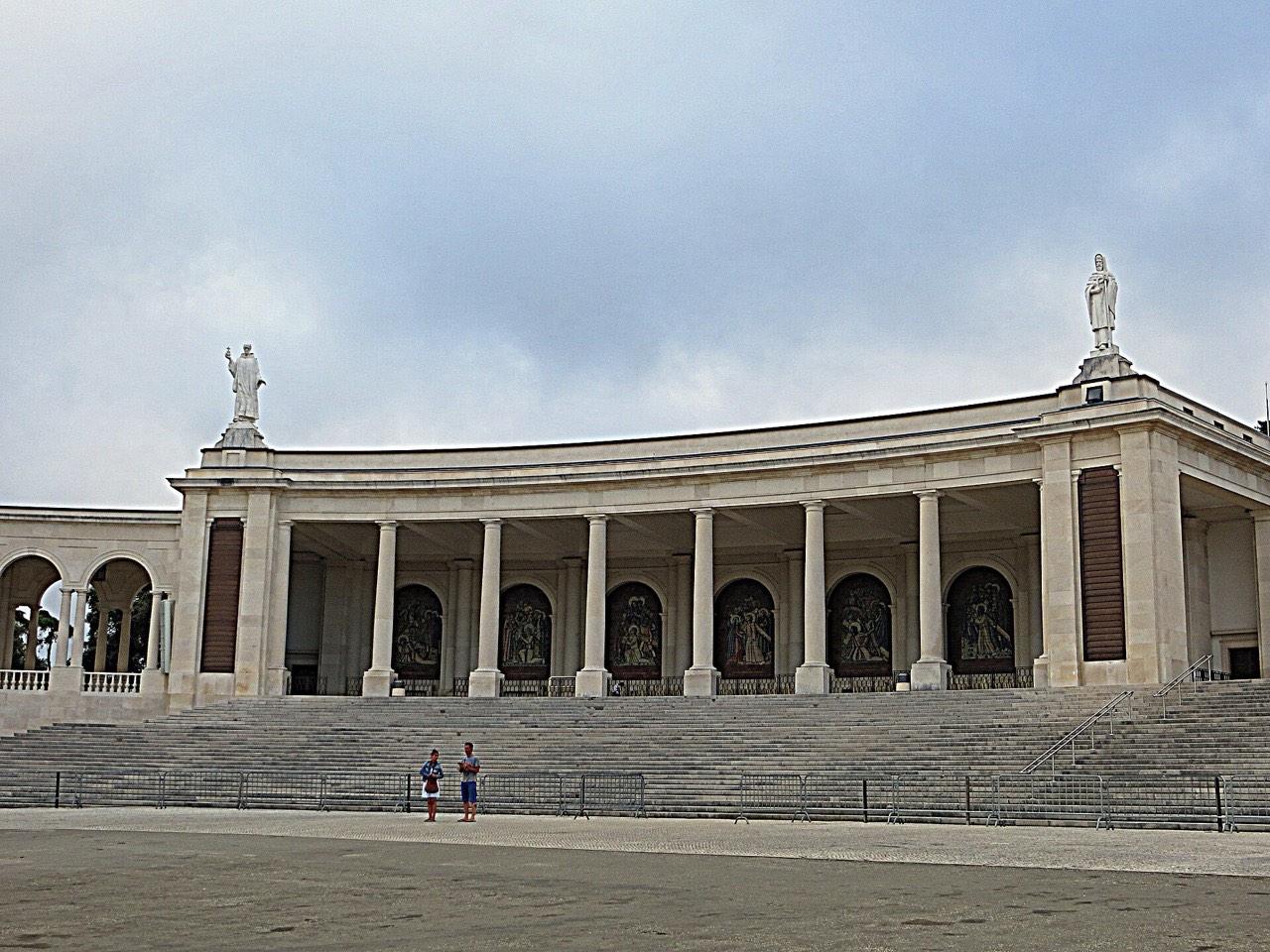
The Sanctuary of Fatima covers a vast area around an enormous prayer square. Each of its places has its own story, and it is worth giving them time without rushing.
The Chapel of the Apparitions
The Chapel of the Apparitions (Capelinha das Aparições) is the spiritual heart of Fatima. It stands exactly where the oak tree grew above which Mary appeared. Local people built the first small chapel here as early as 1919. Today the covered chapel houses the statue of Our Lady of Fatima, and the Rosary is prayed and Masses are celebrated here in various languages throughout the day.
The crown of the statue holds the bullet removed from the body of John Paul II after the assassination attempt in St Peter's Square on 13 May 1981. The Pope believed he owed his survival to the protection of Our Lady of Fatima, and in the following years he came to Fatima as a pilgrim several times.
The Basilica of Our Lady of the Rosary
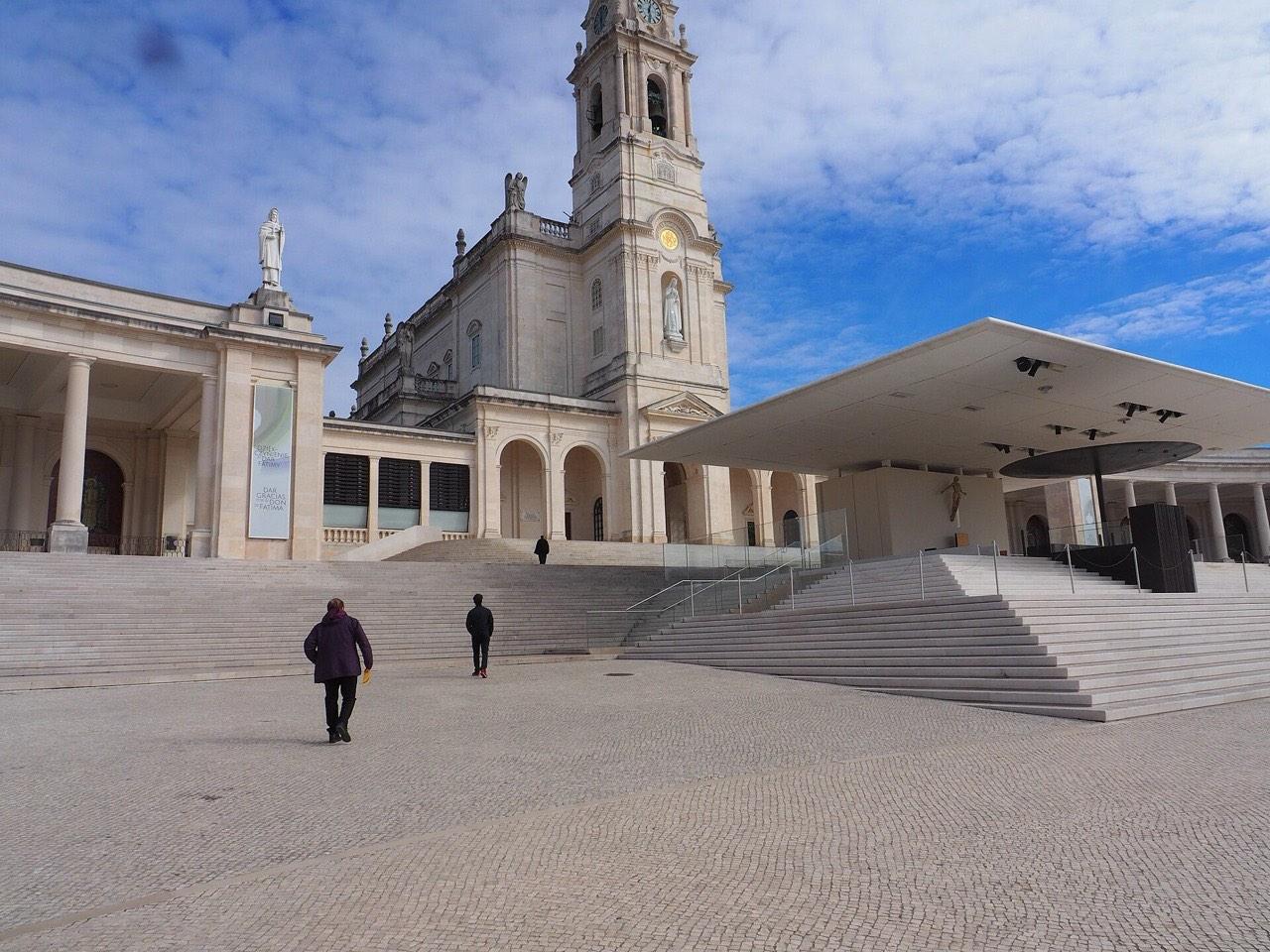
The neoclassical basilica with its tall tower closes the square to the north. Consecrated in 1953, it holds the tombs of the three shepherd children: Saints Francisco and Jacinta, and Lúcia. It is a place of quiet prayer and entrustment, especially for families and the sick.
The Basilica of the Most Holy Trinity
On the opposite side of the square stands the modern Basilica of the Most Holy Trinity, consecrated in 2007. It is one of the largest Catholic churches in the world, designed for large gatherings of pilgrims. Its simple, bright space is very different from the older basilica, yet it still invites recollection.
Aljustrel, Valinhos and the Way of the Cross
It is worth walking to Aljustrel, where the family homes of Lúcia and of Francisco and Jacinta have been preserved. From the village a path leads to Valinhos and Loca do Cabeço, the places of the angel's apparitions and of Mary's August apparition. Stations of the Cross are set among the olive trees, where pilgrims pray along the way. This part of the pilgrimage is usually much calmer than the sanctuary square itself.
The candlelight procession in Fatima
One of the most moving experiences of a pilgrimage to Fatima is the evening candlelight procession. After the Rosary at the Chapel of the Apparitions, thousands of pilgrims holding lit candles follow the statue of Our Lady around the square, singing a hymn with the refrain Ave Maria. The square becomes a sea of light, and prayer in many languages unites people from all over the world.
Processions take place regularly, especially in the pilgrimage season, but their schedule changes with the time of year and the liturgical calendar. The current programme of services is published on the official sanctuary website. If you want to sing along with others, look through the words of Marian hymns in the Bratnio songbook beforehand.
The anniversaries of 13 May and 13 October
Most pilgrims come to Fatima for the anniversaries of the apparitions, on the thirteenth day of each month from May to October. The celebrations of the first apparition (12 and 13 May) and the last apparition (12 and 13 October) are especially solemn.
On the evening of the 12th there is the Rosary and a great candlelight procession, followed by a night prayer vigil. On the morning of the 13th a solemn Mass is celebrated in the square, followed by the farewell procession. Pilgrims wave white handkerchiefs as they bid farewell to the statue of Our Lady as it returns to the Chapel of the Apparitions. It is one of the most moving moments of the pilgrimage.
Many Portuguese walk to these anniversaries, sometimes for several days, along the roadsides in reflective vests. If you plan to come in May or October, book accommodation well in advance and be ready for crowds. For quieter prayer it is better to choose an ordinary weekday outside the anniversaries.
How to get to Fatima from Lisbon and Porto
Fatima lies in central Portugal, between Lisbon and Porto, closer to the capital. The easiest way to get there is from one of the country's two main airports.
- From Lisbon there are regular long-distance buses to Fatima, and the journey time depends on the connection you choose.
- From Porto you can also travel by bus, though the journey takes longer.
- By train you can reach Fátima station, but it is some distance from the sanctuary, so you will need additional transport.
- By car the journey is easy thanks to the motorway linking Lisbon and Porto.
Timetables, prices and operators change, so check up-to-date information with the transport companies or the sanctuary's information office before you travel. For those who prefer an organised trip, a pilgrimage with a parish or travel agency is a convenient option. You will find current trip offers in the pilgrimage trips tab.
Nearby it is also worth seeing the monasteries of Batalha and Alcobaça, the town of Tomar with the former seat of the Knights Templar, and seaside Nazaré. All of them lie a short distance from Fatima.
Fatima and Braga: the shrines of northern Portugal
If you have a few extra days, combine your pilgrimage to Fatima with a visit to Braga, one of the oldest Christian cities on the Iberian Peninsula, called the Portuguese Rome because of its many churches. Braga lies north of Porto and is the seat of one of the oldest archdioceses in this part of Europe.
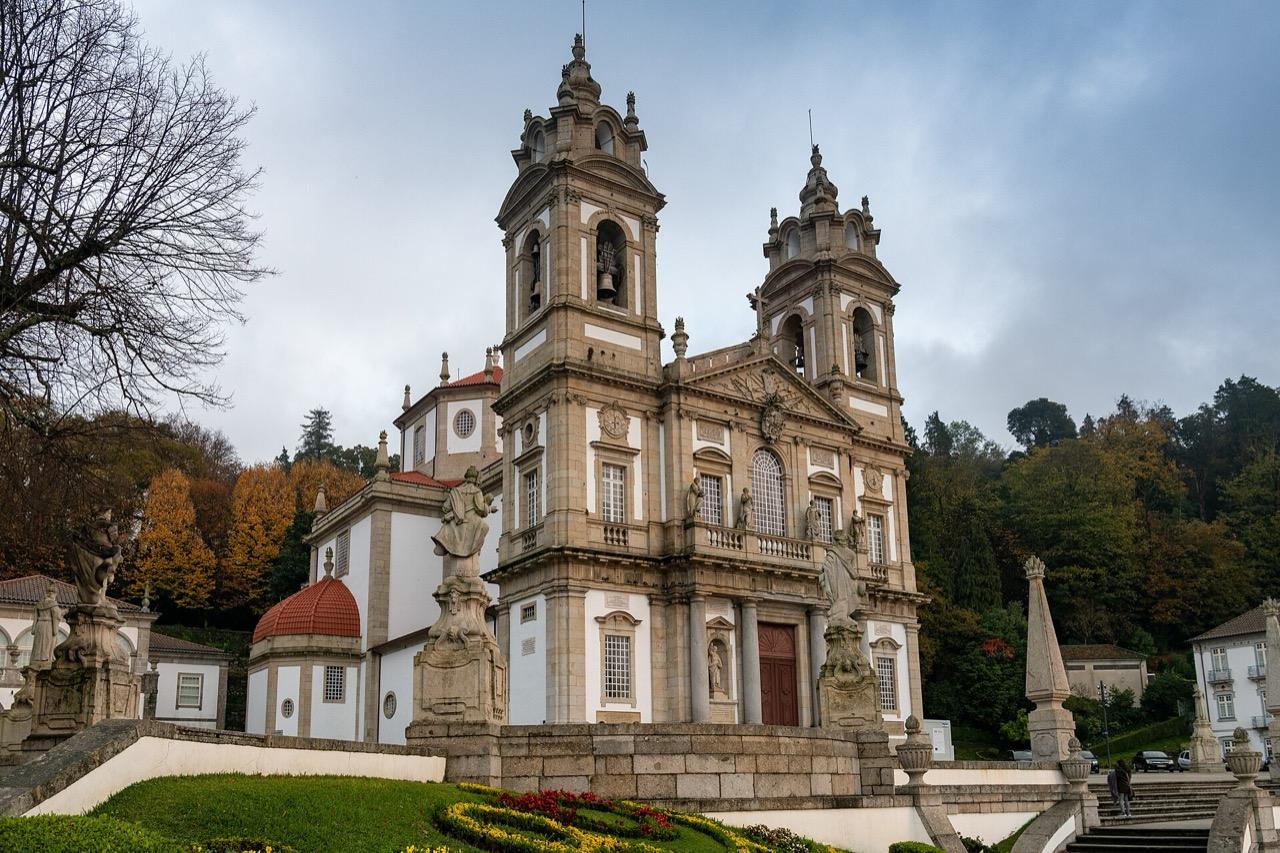
Bom Jesus do Monte
The Bom Jesus do Monte Sanctuary is famous for its monumental Baroque staircase zigzagging up the hill. Its successive terraces hold chapels and fountains depicting scenes from the Passion, the five senses and the virtues. For many pilgrims, climbing the stairs is a form of prayer and penance. You can also ride to the top on a historic funicular powered by a water counterweight. In 2019 the sanctuary was inscribed on the UNESCO World Heritage List.
The Sanctuary of Our Lady of Sameiro
Nearby, on a neighbouring hill, stands the Sanctuary of Our Lady of Sameiro, dedicated to the Immaculate Conception. It is one of the most important Marian shrines in Portugal, with a sweeping view over Braga and the surrounding area. Together, Fatima, Bom Jesus and Sameiro form a beautiful Marian route through the whole country.
The Portuguese Way of Saint James also starts from Porto. If you dream of a longer walking pilgrimage, read our guide Camino de Santiago for beginners and consider combining Fatima with the road to Santiago de Compostela.
How to prepare for a pilgrimage to Fatima
A few practical tips to make your stay easier:
- Plan your dates. The anniversaries have an extraordinary atmosphere, but ordinary days favour silence and personal prayer.
- Check the schedule of services. Masses in different languages, the Rosary and processions follow a timetable published by the sanctuary.
- Dress appropriately. The square is open, it can be hot in summer and cool in the evenings and in winter. Comfortable shoes will help on the way to Aljustrel and Valinhos.
- Remember to keep silence. The Chapel of the Apparitions is a place of prayer, not a tourist attraction.
- Prepare spiritually. Read the history of the apparitions, bring a rosary and the intentions of your loved ones.
You can record your daily plan, accommodation and places of prayer in the My journey tab, and after you return share a story with photos with your family.
Frequently asked questions
When is the best time to go on a pilgrimage to Fatima?
The anniversaries of the apparitions are the most solemn, especially 12 and 13 May and 12 and 13 October. At those times, however, Fatima is extremely crowded. If you value peace, choose an ordinary weekday in spring or autumn.
How many apparitions were there in Fatima?
Our Lady appeared to the shepherd children six times in 1917: on the thirteenth day of each month from May to October, except August, when the apparition took place on 19 August at Valinhos. Earlier, in 1916, the children saw an angel.
Where are the Fatima shepherd children buried?
The tombs of Saints Francisco and Jacinta and of Lúcia are in the Basilica of Our Lady of the Rosary in the Fatima sanctuary. Pilgrims can pray there.
Does the candlelight procession take place every day?
Candlelight processions take place regularly, especially during the pilgrimage season, but the schedule depends on the time of year and the calendar. You will find the most reliable information on the official sanctuary website before you travel.
How do I get to Fatima from Lisbon?
The simplest way is by long-distance bus from Lisbon to Fatima. You can also go by car or train, although the railway station is far from the sanctuary. Check current timetables with the operators.
Is there a shrine of Our Lady of Fatima in Poland?
Yes. One of the best known is the Shrine of Our Lady of Fatima at Krzeptówki in Zakopane, built in gratitude for John Paul II's survival of the 1981 assassination attempt.
Fatima welcomes everyone who wants to pause in prayer and entrust their concerns to Our Lady. On the map of pilgrimage sites you will find Fatima, Bom Jesus do Monte and Sameiro, and in the events tab you can check upcoming celebrations. Looking for someone to share this journey with? Use the Find a travel companion feature. Create a free account and start planning your pilgrimage today.