Shrines
Marian shrines in Poland: a guide to the most important places
Published October 21, 2026 · 12 minute read
From Jasna Góra to Gietrzwałd and Kodeń: the most important Marian shrines in Poland, their history and ideas for a pilgrimage by region.
Machine translation of an article written in Polish.
Marian shrines in Poland form a dense network of places of prayer, from Warmia to the Tatra Mountains and from Silesia to Podlasie. Each has its own history, its own image of Our Lady and a pilgrimage tradition that often goes back several centuries. In this guide we present the most important Polish Marian shrines, explain what makes each of them special and show how to plan a pilgrimage to several places in one region.
We do not give exact service times or feast-day dates, because they change from year to year. Before you go, always check the current programme on the shrine's website or with the parish.
Why visit Poland's Marian shrines
Pilgrimage to Our Lady is one of the most enduring features of Polish piety. People walk to shrines, travel by coach with their parish, come as a family for the weekend or alone, to reflect in silence on an important decision. Many of these places are bound up with the history of the whole nation, with the times of partitions, wars and communism.
Poland is also a convenient country for pilgrimage: the shrines are close to one another and it is easy to combine several in one route. The liturgy is mostly celebrated in Polish, so if you are visiting from abroad, a missal or the day's readings in your own language can help. You will find all the places described below on the Bratnio map of pilgrimage sites.
Marian shrines in central Poland: Częstochowa, Licheń, Niepokalanów
Jasna Góra in Częstochowa: the spiritual capital of Poland
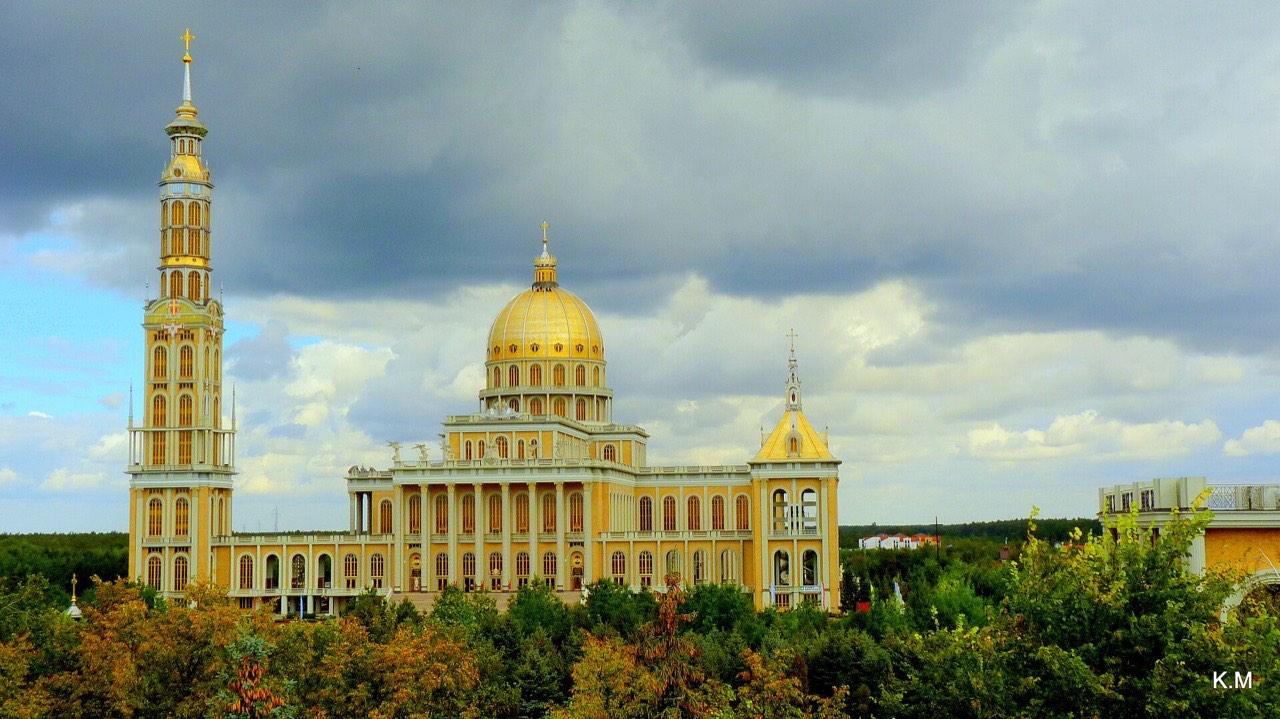
Jasna Góra is the most important Marian shrine in Poland. The Pauline Fathers have cared for it since 1382, and in the chapel of the miraculous image Our Lady of Częstochowa is venerated, known as the Black Madonna and Queen of Poland. For centuries Poles have read the monastery's defence against the Swedes in 1655 as a sign of Mary's special protection.
Jasna Góra is the destination of walking pilgrimages from all over the country, the oldest of which, the Warsaw Walking Pilgrimage, has set out without interruption since the 18th century. The Jasna Góra Appeal is prayed here every evening. The Solemnity of Our Lady of Częstochowa falls on 26 August. You will find details on the Jasna Góra page on Bratnio, and the current programme on the official website jasnagora.pl.
Licheń: the largest church in Poland
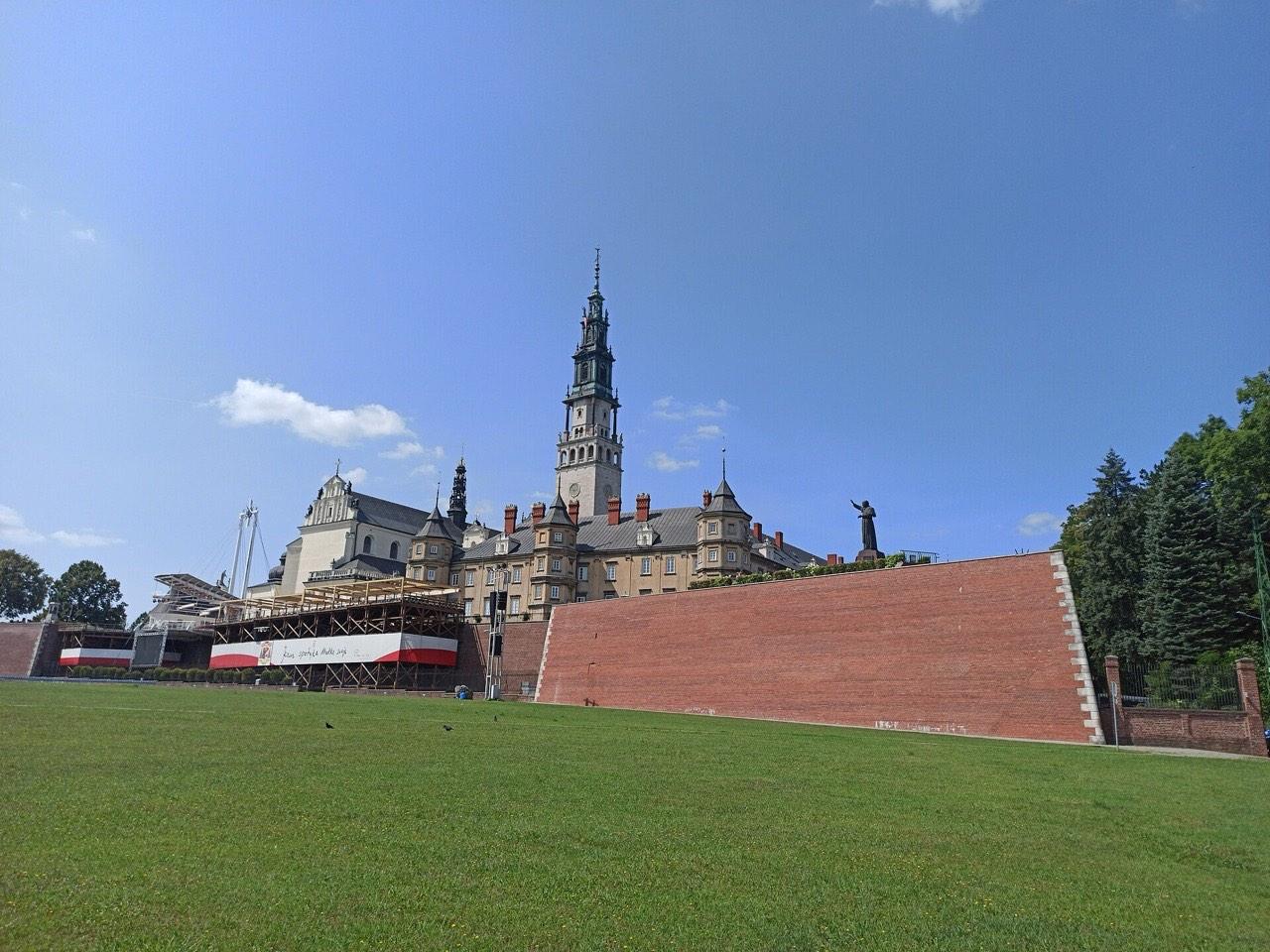
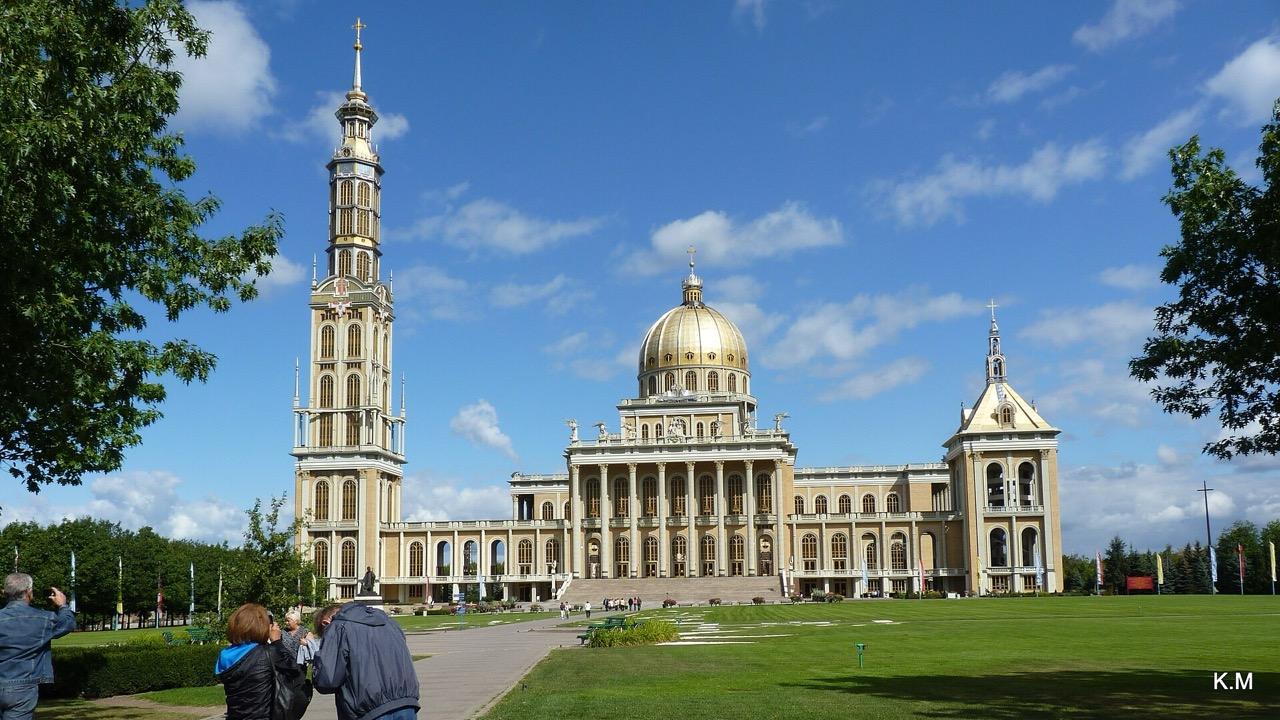
The shrine in Licheń Stary, in Greater Poland, is famous for the Basilica of Our Lady of Sorrows, Queen of Poland, the largest church in the country, consecrated in 2004. Devotion developed around a small image of Our Lady of Sorrows with an eagle on her breast, linked with apparitions to the shepherd Mikołaj Sikatka in the mid-19th century.
The shrine is run by the Marian Fathers. Besides the basilica, pilgrims visit the older church of Saint Dorothy, the Golgotha and extensive park grounds. It is a good place for a full day with the family. You will find more information on the page for the Sanctuary in Licheń.
Niepokalanów: Saint Maximilian's City of the Immaculata
Niepokalanów near Warsaw was founded in 1927 by Saint Maximilian Maria Kolbe. The Franciscan friary became the centre of the Militia of the Immaculata movement and of Catholic publishing. Father Maximilian gave his life for a fellow prisoner in Auschwitz in 1941, and in 1982 he was canonised by John Paul II.
Pilgrims pray in the basilica dedicated to the Immaculate Mediatrix of All Graces and visit places connected with the saint's life. It is a good day trip from Warsaw. Details on the Niepokalanów Sanctuary page.
Marian shrines in Warmia: Gietrzwałd and Święta Lipka
Gietrzwałd: the only approved Marian apparitions in Poland
Gietrzwałd in Warmia is unique on the map of Polish shrines. In 1877 Our Lady appeared here to two girls, Justyna Szafryńska and Barbara Samulowska, and spoke to them in Polish. Her main call was to pray the Rosary daily. In 1977, on the centenary of the events, the apparitions were officially recognised by the Church. They are the only approved Marian apparitions in Poland.
Pilgrims pray in the basilica with the miraculous image of Our Lady of Gietrzwałd and at the spring blessed by Mary. For this reason Gietrzwałd is sometimes called the Polish Lourdes. If you are interested in its French counterpart, read our guide to the pilgrimage to Lourdes. You will find the place page at Sanctuary in Gietrzwałd.
Święta Lipka: the Baroque pearl of Warmia
The shrine in Święta Lipka, on the border of Warmia and Masuria, is one of the most beautiful Baroque monuments in Poland. Its name, "Holy Linden", refers to the legend of a statue of Our Lady placed on a linden tree. The Baroque basilica, surrounded by cloisters, was built in the 17th century and for a long time was in the care of the Jesuits.
The best-known feature of the church is its organ with moving figures that come to life while it is played. Organ concerts draw both pilgrims and music lovers. Gietrzwałd and Święta Lipka lie in the same region, so they are easy to combine in one pilgrimage. See the Shrine of Our Lady in Święta Lipka.
Marian shrines in Lesser Poland and Podhale
Kalwaria Zebrzydowska: the Polish Jerusalem
Kalwaria Zebrzydowska in Lesser Poland was founded in 1602 by the voivode Mikołaj Zebrzydowski. A vast complex of chapels and paths recreates the places of Christ's Passion and the life of Our Lady. In 1999 Kalwaria was inscribed on the UNESCO World Heritage List. The shrine is run by the Bernardine Fathers, and the miraculous image of Our Lady of Kalwaria is venerated in the basilica.
The Passion plays during Holy Week and the celebrations of the Dormition and Assumption of Mary in August are especially well known. Kalwaria was close to the heart of Karol Wojtyła, who came here as a boy from nearby Wadowice. It is worth combining the two places and also visiting the Basilica of the Presentation of the Blessed Virgin Mary in Wadowice, where he was baptised. You will find the Kalwaria page at Kalwaria Zebrzydowska.
Ludźmierz: the Gaździna of Podhale
Ludźmierz is the oldest Marian shrine in the Podhale region. The highlanders call the statue of Our Lady of Ludźmierz venerated here the Gaździna (Lady of the House) of Podhale. In 1963 the statue was crowned by Cardinal Stefan Wyszyński. The shrine keeps a strong link with highland culture: costumes, music and dialect are a natural part of prayer here. See the Shrine of Our Lady of Ludźmierz.
Krzeptówki: Our Lady of Fatima in Zakopane
The Shrine of Our Lady of Fatima at Krzeptówki in Zakopane is run by the Pallottine Fathers. The church was built as a votive offering of thanksgiving for John Paul II's survival of the 1981 assassination attempt, and in 1997 the Pope himself visited the shrine. It combines Fatima devotion with the Tatra landscape and highland tradition. More on the Krzeptówki Sanctuary page.
Ludźmierz and Krzeptówki are a short distance apart, so many families visit both during a single stay in the mountains.
Marian shrines in Silesia: Piekary and Wambierzyce
Piekary Śląskie: the state-of-life pilgrimages of Upper Silesia
The shrine in Piekary Śląskie is the spiritual heart of Upper Silesia. The basilica venerates the image of Our Lady of Piekary, Mother of Justice and Social Love. Next to it rises the Piekary Calvary with chapels of the Way of the Cross.
Piekary is famous for its tradition of pilgrimages by state of life. The best known is the pilgrimage of men and young men at the end of May, and in August there is the pilgrimage of women and girls. These gatherings address questions of work, family and social life. Details on the Sanctuary in Piekary Śląskie page.
Wambierzyce: the Silesian Jerusalem
Wambierzyce in the Kłodzko Land is called the Silesian Jerusalem. A Baroque basilica with a monumental staircase towers over the village, and around it stretches a calvary with numerous chapels. The basilica venerates the statue of Our Lady of Wambierzyce, Queen of Families.
A highlight that children especially love is the historic mechanical nativity scene. Wambierzyce fits well into a pilgrimage through Lower Silesia and the Sudetes. See the Shrine of Our Lady in Wambierzyce.
Marian shrines in eastern Poland: Kodeń and Kalwaria Pacławska
Kodeń: Queen of Podlasie
Kodeń on the Bug River has an extraordinary history. The image of Our Lady of Kodeń, called the Queen of Podlasie, was brought from Rome in the 17th century by Mikołaj Sapieha. During the partitions the image was taken to Jasna Góra, from where it returned to Kodeń in the 20th century. The shrine is run by the Missionary Oblates of Mary Immaculate.
It is a place of silence, located in the borderlands, ideal for those seeking a peaceful pilgrimage away from the crowds. More on the Shrine of Our Lady of Kodeń page.
Kalwaria Pacławska: the Jerusalem of Subcarpathia
Kalwaria Pacławska, near Przemyśl, is a Franciscan shrine with an extensive calvary spread across the hills. The church venerates the miraculous image of Our Lady of Kalwaria. Pilgrims come here especially for the Passion plays and the August Marian celebrations, and the calvary paths lead through a beautiful, peaceful landscape. See the Kalwaria Pacławska Sanctuary.
How to plan a pilgrimage to Marian shrines by region
The easiest way is to plan your route by region. Here are a few tried and tested combinations:
- Warmia and Masuria: Gietrzwałd and Święta Lipka, two completely different experiences in one region.
- Lesser Poland and Podhale: Kalwaria Zebrzydowska, Wadowice, Ludźmierz and Krzeptówki, with the Divine Mercy Sanctuary in Kraków-Łagiewniki along the way.
- Silesia: Jasna Góra, Piekary Śląskie and Saint Anne's Mountain (Góra Świętej Anny), and further south-west Wambierzyce.
- Central Poland: Licheń and Niepokalanów, with the option of travelling on to Gniezno Cathedral.
- Eastern Poland: Kodeń on the Bug and Kalwaria Pacławska in Subcarpathia, for those seeking silence.
You can save your route in the My journey planner in Bratnio: add stages, note your intentions and, after you return, prepare a story with photos. You will find ready-made group trips and the dates of feast days and gatherings in the Bratnio catalogue, under the trips and events tabs.
Pilgrimage together: find a travel companion
The most beautiful memories of a pilgrimage are often connected with the people you meet on the way. In Bratnio, the Find a travel companion feature lets you voluntarily show, for 1, 2 or 4 hours, that you are near a shrine. Others see only an approximate zone, and every invitation to pray or talk together must be accepted. For singing together on the road, the songbook with Marian hymns available in Bratnio will come in handy.
Frequently asked questions
What is the most important Marian shrine in Poland?
Jasna Góra in Częstochowa, with the image of Our Lady of Częstochowa, Queen of Poland, is considered the most important. It is the destination of thousands of walking pilgrimages and the spiritual centre of Polish Catholicism.
Where in Poland did approved Marian apparitions take place?
The only Marian apparitions in Poland officially recognised by the Church are those in Gietrzwałd in 1877. They were recognised in 1977. Our Lady spoke to the visionaries in Polish and called for the praying of the Rosary.
Which Marian shrines are good to visit with children?
With children it is worth choosing places with room to walk and interesting attractions, for example Wambierzyce with its mechanical nativity scene, Licheń with its extensive grounds or Święta Lipka with its organ and moving figures. A short route and breaks in the programme also help.
How much time do I need for a pilgrimage to the shrines of one region?
For two or three shrines in one region, a weekend is usually enough, especially if you do not want to rush. For a longer route covering several regions, allow several days.
Can I make a walking pilgrimage to the shrines?
Yes, walking pilgrimages are a beautiful Polish tradition, especially on the way to Jasna Góra. Many parishes and dioceses organise groups you can join. Check the registration rules in advance and get yourself in shape.
When are the feast days (odpusty) at Marian shrines?
Most shrines hold their celebrations on Marian feast days, especially in May, in August around the Solemnity of the Assumption and in September. Exact dates depend on the place, so check them on the shrines' websites.
Set out for Poland's Marian shrines with Bratnio
Poland's Marian shrines welcome pilgrims all year round. Choose a region, plan your route in the My journey travel planner and find people worth walking with. Create a free Bratnio account and plan your first pilgrimage.