Guide
Pilgrimage to Lourdes: history, grotto, processions, planning
Published October 21, 2026 · 12 minute read
The 18 apparitions to Saint Bernadette, the Massabielle grotto, baths and processions, plus practical tips for planning a pilgrimage to Lourdes with Nevers and Lisieux.
Machine translation of an article written in Polish.
For many Catholics, a pilgrimage to Lourdes is a dream that matures over years. At the foot of the Pyrenees, in a small French town on the Gave de Pau river, Our Lady appeared in 1858 to fourteen-year-old Bernadette Soubirous. Today the sick, families, volunteers and ordinary pilgrims from all over the world come to the Massabielle grotto to pray, draw water from the spring and take part in the processions. In this guide we cover the history of the apparitions, what awaits you there and how to plan your trip calmly, including combining it with Nevers and Lisieux.
You will not find prices or service times here, because these change from season to season. Instead you will find tips to help you live your pilgrimage to Lourdes in a calm, mindful and unhurried way.
The Lourdes apparitions of 1858: the story of Saint Bernadette
Bernadette Soubirous came from a very poor family of millers. When the apparitions began, her family was living in a cramped room in a former prison, known as the "cachot". On 11 February 1858 Bernadette went with her sister and a friend to gather firewood by the river. In a rocky niche of the Massabielle grotto she saw a Lady dressed in white, with a blue sash and a rosary.
This was the beginning of a series of eighteen apparitions that lasted until 16 July 1858. The key moments of this story are:
- 11 February 1858 - the first apparition, Bernadette prays the Rosary in the presence of the Lady;
- 25 February 1858 - at the Lady's request, the girl digs in the ground at the foot of the grotto and uncovers a spring that still flows today;
- calls to penance and prayer for sinners, and the request that people come to the grotto in procession and that a chapel be built here;
- 25 March 1858 - on the Solemnity of the Annunciation, the Lady introduces herself in the local dialect with the words "I am the Immaculate Conception";
- 16 July 1858 - the last, eighteenth apparition.
The words of 25 March were especially significant, because only four years earlier, in 1854, Pope Pius IX had proclaimed the dogma of the Immaculate Conception of the Blessed Virgin Mary. A simple, uneducated girl repeated an expression whose meaning she did not understand herself. In 1862 the local Bishop of Tarbes recognised the apparitions as authentic.
The Massabielle grotto and the spring: the heart of the sanctuary
The Massabielle grotto is the centre of the whole sanctuary. It is a remarkably simple place: rock blackened by candle smoke, the statue of Our Lady in the niche where she appeared to Bernadette, and a constant murmur of prayer. Pilgrims pass slowly through the grotto, often touching the damp rock with their hand. It is worth coming here several times at different hours, because the atmosphere early in the morning and late in the evening can be quite different from the middle of the day.
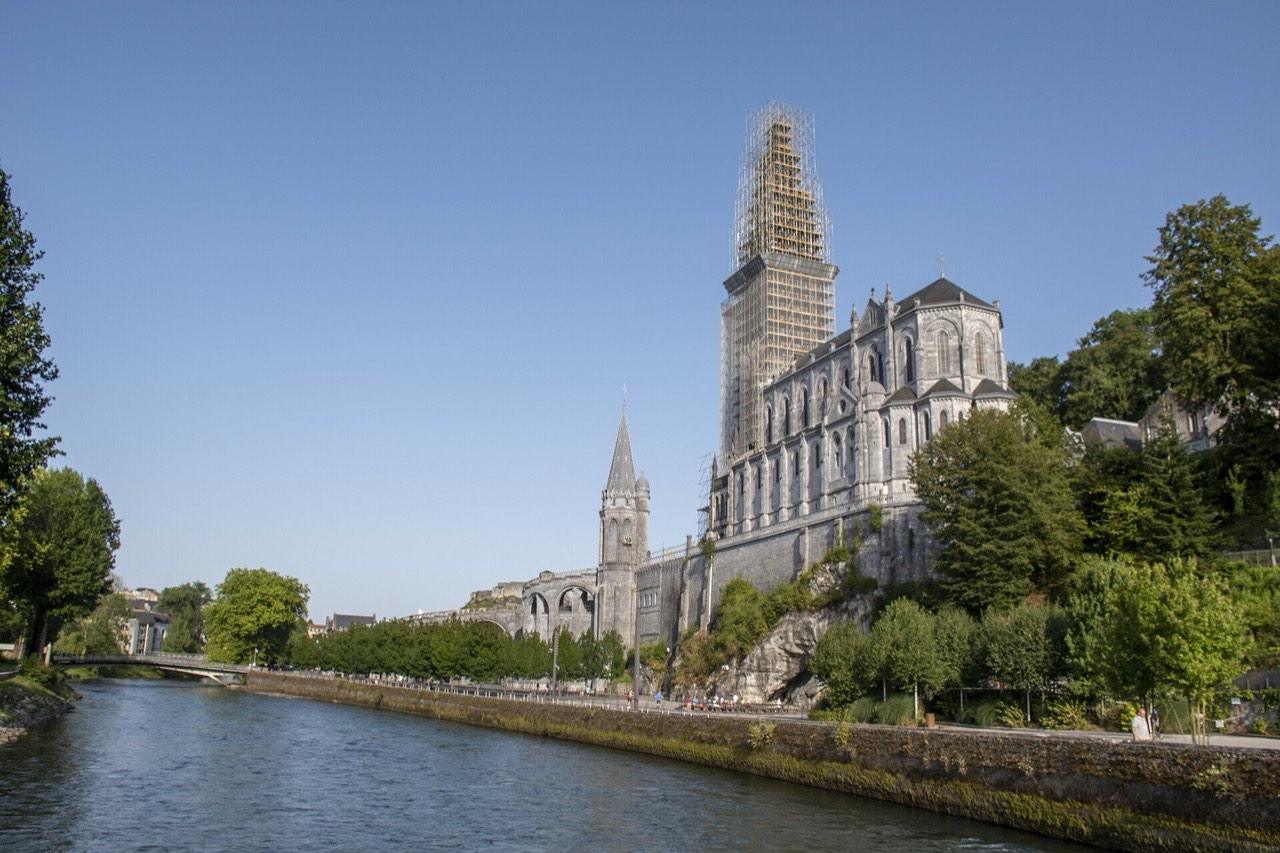
Next to the grotto flows the spring uncovered by Bernadette. Lourdes water is not magic water, and the sanctuary itself strongly emphasises this. It is a sign that invites conversion, trust and prayer. Along the walkway there are taps where you can draw water, drink it, wash your face or fill a bottle for your loved ones.
Many candles burn near the grotto, left by pilgrims as a sign of prayer for themselves and others. Many people bring lists of intentions from family and parishioners. It is a good idea to ask your loved ones before you go what they would like you to pray for.
The baths in Lourdes: a sign of water and cleansing
The baths, "piscines" in French, are one of the best-known places in the sanctuary. For decades pilgrims have come here to experience, in silence and prayer, the gesture of washing with water from the spring. The baths are served by volunteers who help with great gentleness, including the sick and people with disabilities.
The form of this gesture has been adapted in recent years, and opening hours depend on the season. Before you plan your day, check the current information on the official website of the Lourdes sanctuary. Be ready for a queue too: waiting can be an opportunity to pray the Rosary rather than wasted time.
The Eucharistic procession and the candlelight procession
During the pilgrimage season, two great processions set the rhythm of the day in Lourdes. Their times and exact format vary from month to month, so always check the sanctuary's current programme.
The Eucharistic procession
The procession with the Blessed Sacrament leads pilgrims through the sanctuary grounds and ends with adoration and the blessing of the sick. This is the moment when you see how much Lourdes is a place for those who suffer. The sick in wheelchairs and on stretchers come first, and everyone else prays together with them.
The Marian candlelight procession
The evening candlelight procession, also called the procession aux flambeaux, is for many the most powerful experience of the whole pilgrimage. Thousands of small flames move around the esplanade, and the Rosary is prayed in many languages. When everyone sings the refrain "Ave, Ave, Ave Maria", even those who do not know French feel part of one community. If you would like to prepare for singing together, take a look at the songbook of religious hymns in Bratnio.
Basilicas and key places in the Lourdes sanctuary
The sanctuary grounds are extensive, and it is worth spending at least one day getting to know them calmly. The main sites are:
- the Basilica of the Immaculate Conception rising above the grotto, built in response to the request for a chapel;
- the Crypt, the oldest part of the complex, located beneath the upper basilica;
- the Rosary Basilica with its distinctive ramps leading to the upper level;
- the underground Basilica of Saint Pius X, a huge space where large international celebrations take place;
- the Way of the Cross on the hillside, with large statues, and a separate Way of the Cross accessible to people with reduced mobility.
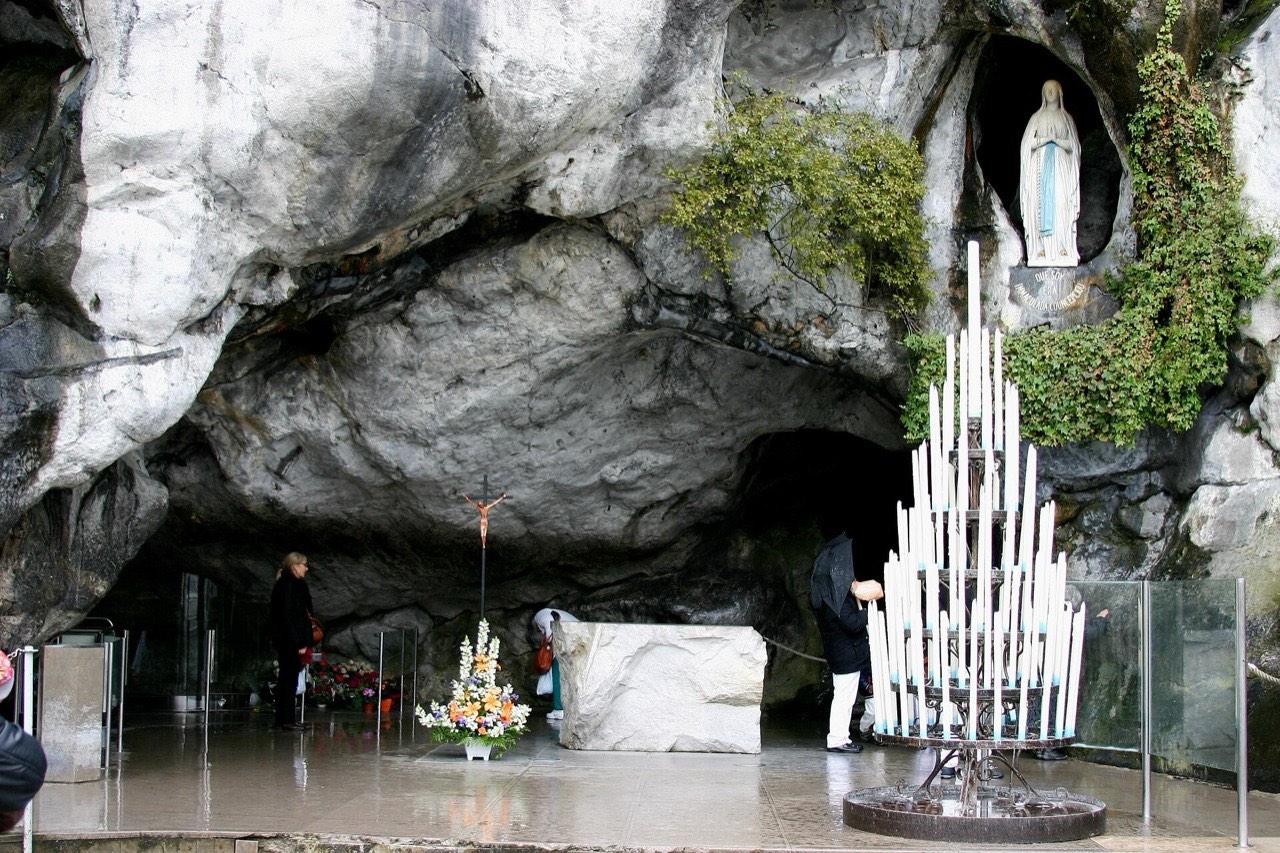
Outside the sanctuary, it is worth visiting places connected with Bernadette's life: the Boly mill where she was born, the "cachot" mentioned above and the parish church where she was baptised. They help you understand how humble the setting was in which Our Lady chose her confidante. You will find the place page with a map and description at Sanctuary of Lourdes on Bratnio.
The sick and volunteers: the spirit of Lourdes
Lourdes is not an ordinary tourist destination. It is a place where the sick are not on the margins but at the centre. The sanctuary has special facilities for the sick and people with disabilities, and many diocesan and religious pilgrimages come here precisely with the sick.
Volunteers play a huge role, organised among others in the Hospitalité Notre-Dame de Lourdes. They help with the processions, the baths, transporting the sick and welcoming groups. Many people come to Lourdes not to ask for something but to serve. If you are considering this kind of pilgrimage, ask your diocese or Catholic organisations whether they organise volunteer trips.
The sanctuary also has a Medical Bureau, which examines reported cases of healing. The Church has recognised several dozen of them as miraculous after a long and very careful process. More important than the numbers, however, is what many pilgrims speak of: healing of the heart, reconciliation, peace in illness.
11 February: Our Lady of Lourdes and the World Day of the Sick
On 11 February, the anniversary of the first apparition, the Church celebrates the memorial of Our Lady of Lourdes. In 1992 Saint John Paul II established this day as the World Day of the Sick, observed since 1993. In parishes and hospitals around the world, Masses are celebrated on that day with the sacrament of the Anointing of the Sick.
A pilgrimage to Lourdes in February therefore has a special dimension, but remember that it is the middle of winter. The weather at the foot of the Pyrenees can be cold and rainy, and part of the seasonal programme may not yet be running. Many people therefore choose the period from spring to autumn, when the rhythm of services is at its fullest.
How to plan a pilgrimage to Lourdes step by step
Planning a trip does not have to be complicated. Here is a simple outline to help you organise your preparations:
- Choose the type of trip. You can travel with a parish or diocesan group, with a pilgrimage travel agency or on your own. Browsing pilgrimage trips on Bratnio makes it easier to compare what is available.
- Set your dates. Consider whether you want to be there on 11 February, during the procession season, or at a quieter time outside the peak.
- Choose how to get there. Lourdes can be reached by train, coach or by plane via airports in the region. Check connections and timetables with the operators, as they change often.
- Plan at least two or three full days there. This lets you experience the grotto, the processions, the baths and the Way of the Cross without rushing.
- Prepare spiritually. Write down your intentions, read the story of Saint Bernadette, refresh your memory of Marian hymns.
- Record your travel plan. In the My journey feature you can set out stages, save places and, after you return, write about your pilgrimage with photos.
Practical details: comfortable shoes, a light rain jacket, a bottle for spring water and plenty of patience for queues. If you are travelling with someone who is ill, contact the organiser or the sanctuary in advance about assistance and suitably adapted accommodation.
Lourdes, Nevers and Lisieux: a pilgrimage in the footsteps of French saints
France is especially rich in holy places, so many people combine Lourdes with other shrines. Two combinations are particularly natural.
Nevers: the body of Saint Bernadette
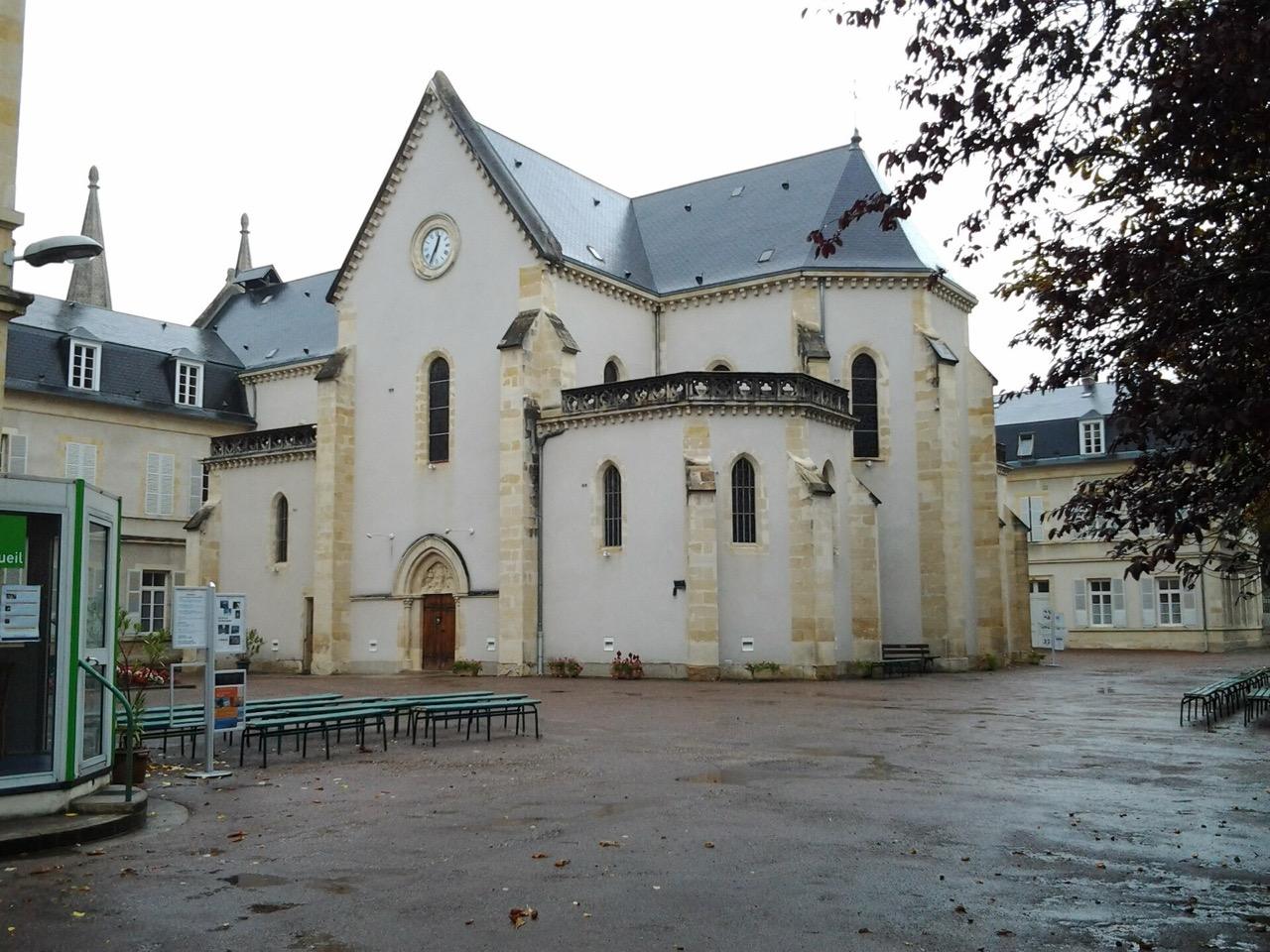
After the apparitions, Bernadette entered the Sisters of Charity of Nevers in 1866. She lived there in obscurity, suffered illness and died on 16 April 1879. She was beatified in 1925 and canonised in 1933. Her body rests in a glass reliquary in the chapel of the former convent of Saint-Gildard. Visiting the Sanctuary of Saint Bernadette in Nevers completes the story that began in the Massabielle grotto and shows that Bernadette's path to holiness was quiet and ordinary.
Lisieux: the little way of Saint Thérèse
Lisieux in Normandy is the town of Saint Thérèse of the Child Jesus, Doctor of the Church, whose "little way" of trust speaks to a great many pilgrims. Here you can visit the Carmel where she lived, the basilica built in her honour and her family home. You will find more information on the page for the Sanctuary of Saint Thérèse in Lisieux.
A route covering Lourdes, Nevers and Lisieux crosses a large part of France, so it needs sensible planning of the journeys between them. Along the way many groups stop in Paris at the Chapel of the Miraculous Medal on Rue du Bac, linked with the apparitions to Saint Catherine Labouré. You will find other shrines in France and Europe on the map of pilgrimage sites.
Who to go with? Community on the way to Lourdes
A pilgrimage is rarely a completely solitary experience. Even if you set out alone, in Lourdes you will meet people from all over the world. The Find a travel companion feature in Bratnio lets you voluntarily show for a while that you are in the area and invite someone to pray together, talk or have a coffee. Visibility is off by default, we show only an approximate zone, and every invitation must be accepted by the other person.
If after Lourdes you want to discover shrines in Poland, read our guide to Marian shrines in Poland. There you will find, among others, Gietrzwałd, sometimes called the Polish Lourdes.
Frequently asked questions
How many apparitions were there in Lourdes?
Our Lady appeared to Saint Bernadette Soubirous eighteen times. The apparitions lasted from 11 February to 16 July 1858. In 1862 the Bishop of Tarbes recognised them as authentic.
When is the best time to go on a pilgrimage to Lourdes?
The sanctuary runs its fullest programme, with the Eucharistic procession and the candlelight procession, during the pilgrimage season, usually from spring to autumn. 11 February has a special character, but you have to expect winter weather then. Always check the current programme on the official sanctuary website.
Can I take water from the spring in Lourdes?
Yes, there are taps near the grotto where pilgrims draw water from the spring. Many people take it home for sick relatives and family. Remember that the water is a sign of faith and prayer, not an object with magical power.
Can a sick person go to Lourdes?
Yes, Lourdes is especially well prepared to welcome the sick and people with disabilities. Volunteers help, and many diocesan pilgrimages organise trips with care provided. Before you go, discuss your needs with the organiser and your doctor.
Where does the body of Saint Bernadette rest?
The body of Saint Bernadette rests in the chapel of the former convent of Saint-Gildard in Nevers, where she lived as a religious sister and died in 1879. Many pilgrimages combine Lourdes with Nevers to discover the whole story of her life.
How many days should I plan in Lourdes?
It is good to allow at least two or three full days. This lets you take part in the processions calmly, visit the grotto at different times of day, walk the Way of the Cross and not rush at the baths.
Plan your pilgrimage to Lourdes with Bratnio
A pilgrimage to Lourdes begins long before departure: with a desire, an intention and a first plan. In Bratnio you can save Lourdes on the map, browse pilgrimage events, set out your stages in the My journey planner and meet people worth setting out with. Create a free account and find your travel companion.