
Pilgrim's guide
Mariazell - pilgrim's guide
Photos: Martin Cígler · CC BY-SA 3.0
Mariazell in alpine Styria is Austria's national shrine and one of the most important Marian sites in Central Europe. This guide is for pilgrims who want to come here by coach, by rail via Vienna or on foot along one of the historic pilgrim trails.
Machine-translated guide.
Why go
For centuries Mariazell has drawn not only Austrians but also Hungarians, Czechs, Slovaks, Croats and Poles. Our Lady of Mariazell is venerated as Magna Mater Austriae, the Great Mother of Austria, and Polish pilgrimage programmes often call her Mother of the Slavic Peoples as well. It is a place where the different nations of Central Europe pray together before one statue.
Add to that the landscape: a small town among the mountains, a Baroque basilica visible from afar and trails along which pilgrims have walked here for centuries. Mariazell is easy to combine with Vienna, and the basilica's website is available in several languages.
A short history
According to tradition, in 1157 the abbot of the Benedictine monastery of St. Lambrecht sent a monk named Magnus to this area, and he took with him a statue of Our Lady carved from limewood. On the evening of 21 December a rock blocked his way, and it split apart after he prayed. On that spot he set up the statue and built a cell that served as both chapel and dwelling. The name of the place comes from Mary in the cell (Maria in der Zelle).
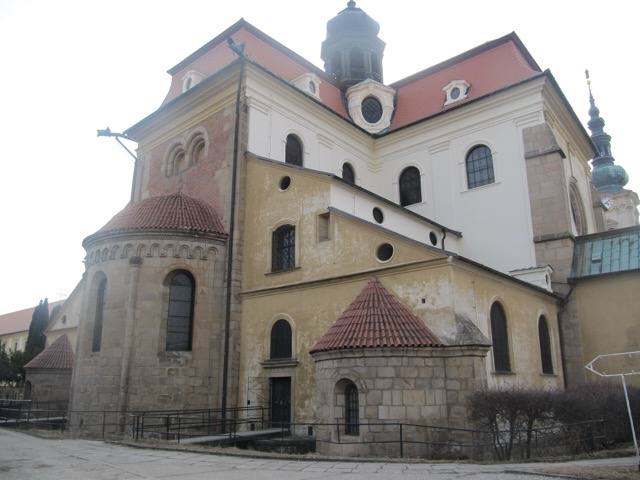
Around 1200 a Romanesque chapel was built, and from 1380 a Gothic church founded by King Louis I of Hungary. In 1644 a Baroque rebuilding designed by Domenico Sciassia began, completed in 1683. In 1907 Pius X granted the church the title of minor basilica. The shrine was visited by John Paul II in 1983 and Benedict XVI in 2007.
Getting there
Mariazell lies in the mountains, away from the main railway lines, so it is worth planning your journey in advance. Most pilgrims arrive by coach or car, or by train to Vienna and then on via St. Pölten.
- by rail: from Vienna to St. Pölten, and from there on the narrow-gauge Mariazellerbahn (about 91 km through the mountains); Mariazell station is about 1 km north of the town
- by car and coach: via Vienna or St. Pölten towards Styria; the last stretch follows winding mountain roads
- by air: the nearest major airport is Vienna, from where you continue by rail or car
- on foot: see the section on pilgrim trails
When to go
The basilica is open all year round. Most pilgrims come from spring to autumn, when the trails are accessible and the mountain weather is milder. In winter it is quiet and snowy, and the journey requires more care.
- Pentecost - a time of many pilgrimages
- 15 August - Solemnity of the Assumption of the Blessed Virgin Mary
- 8 September - Nativity of the Blessed Virgin Mary, the basilica's dedication
- August and September - many national pilgrimages, including Croats from Burgenland
- current calendar of services: the basilica's website
What to see and experience
- the Chapel of Grace (Gnadenkapelle) with the miraculous statue of Our Lady
- the Baroque high altar dedicated to the Holy Trinity
- the treasuries and collections of votive offerings, a testimony to the gratitude of many generations
- the candle grotto (Kerzengrotte), where you can light a candle for your intention
- church music and the basilica's organs
- a stroll through the town and a short walk up the surrounding hills with a view of the basilica
Practical information
- opening hours and Masses: check the basilica's website; they may differ between the season and winter
- groups and guided tours are booked via the form on the basilica's website
- the basilica's website is also available in Polish and other languages
- the basilica holds a blessing of vehicles, dates in the calendar
- mountain weather changes quickly; even in summer bring a warm layer and something waterproof
Accommodation and food
The basilica does not run its own pilgrim house and refers visitors to the local tourist information office, which lists hotels, guesthouses and inns. Regional cuisine is easy to find in town. In season and on days of large pilgrimages it is worth booking accommodation in advance.
Tips from pilgrims
- the journey on the Mariazellerbahn is an experience in itself; sit by the window and allow time for it
- if you arrive by train, remember there is still about a kilometre to walk from the station to the basilica
- the basilica is quietest early in the morning and in the evening, once the coaches have left
- it is worth staying overnight, as a day trip from Vienna can be tiring
- walking pilgrims advise breaking in your boots before you set off and booking overnight stops along the way in advance
On foot and on the trail
Many pilgrim trails lead to Mariazell, and their common axis is the Austrian long-distance trail no. 06, known as the pilgrim trail to Mariazell. The best known is the Via Sacra from the Vienna area, about 120 km long, passing the monasteries of Heiligenkreuz, Klein-Mariazell and Lilienfeld and going through Annaberg. It usually takes four to six days.
Another popular route is the Wiener Wallfahrerweg 06, about 110 km long and usually walked in four days. Detailed route descriptions are available from Austrian hiking clubs, and the basilica encourages pilgrims, where possible, to walk in a group or with a pilgrimage guide.
Frequently asked questions
How do I get to Mariazell by train?
By train to St. Pölten, and from there on the narrow-gauge Mariazellerbahn to Mariazell station, about a kilometre from the town centre.
Where does the name Mariazell come from?
From the cell that the monk Magnus built in 1157 and in which he placed the statue of Mary. Maria in der Zelle, meaning Mary in the cell, gave the whole place its name.
How long does the walking pilgrimage from Vienna to Mariazell take?
The Via Sacra is about 120 km and usually takes four to six days. The Wiener Wallfahrerweg 06 is about 110 km, usually covered in four days.
Is there a pilgrim house in Mariazell?
The basilica does not run its own guest house. Accommodation in hotels, guesthouses and inns can be found through the local tourist information office.
When did popes visit Mariazell?
John Paul II came here in 1983 and Benedict XVI in 2007, for the 850th anniversary of the shrine's foundation.