Shrines in Poland
Kalwaria Zebrzydowska: Calvary Paths, Passion Play and UNESCO
Published October 21, 2026 · 11 minute read
A guide to Kalwaria Zebrzydowska: the shrine's history, the Paths of Our Lord and Our Lady, Holy Week, the August celebrations and a trip plan with Wadowice and Kraków.
Machine translation of an article written in Polish.
Kalwaria Zebrzydowska is one of those places you keep coming back to all your life. The Bernardine monastery with its miraculous image of Our Lady and the chapels scattered across the hills form a landscape that for more than four hundred years has led pilgrims along the Passion of Christ and the life of Mary. You can walk the Calvary paths in silence with a rosary in hand, with a parish group, or in a crowd of the faithful during Holy Week. In this guide we describe the history of the shrine, the meaning of the paths, the main celebrations of the year, and how to plan a stay combined with Wadowice and Kraków.
Kalwaria Zebrzydowska: a short history of the shrine
The shrine's beginnings go back to 1600, when Mikołaj Zebrzydowski, Voivode of Kraków, began building the first chapel on his lands, dedicated to the Crucifixion. Over time the founder brought in the Bernardine Fathers and expanded the complex so that the layout of hills, streams and valleys resembled the topography of Jerusalem. This is how the calvary came into being: a complex of chapels and churches where pilgrims can live through the events of the Passion in the landscape, not only in their imagination.
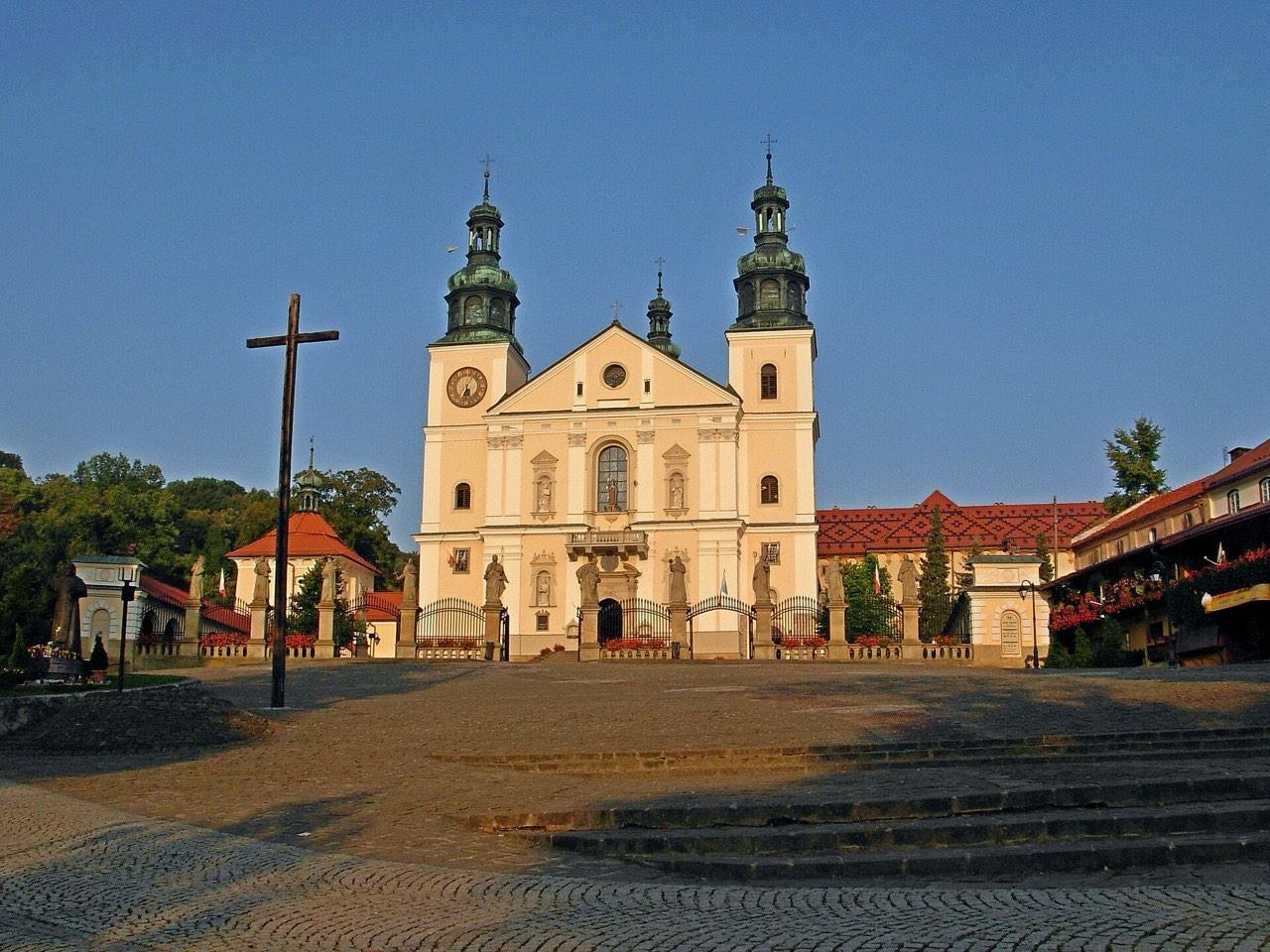
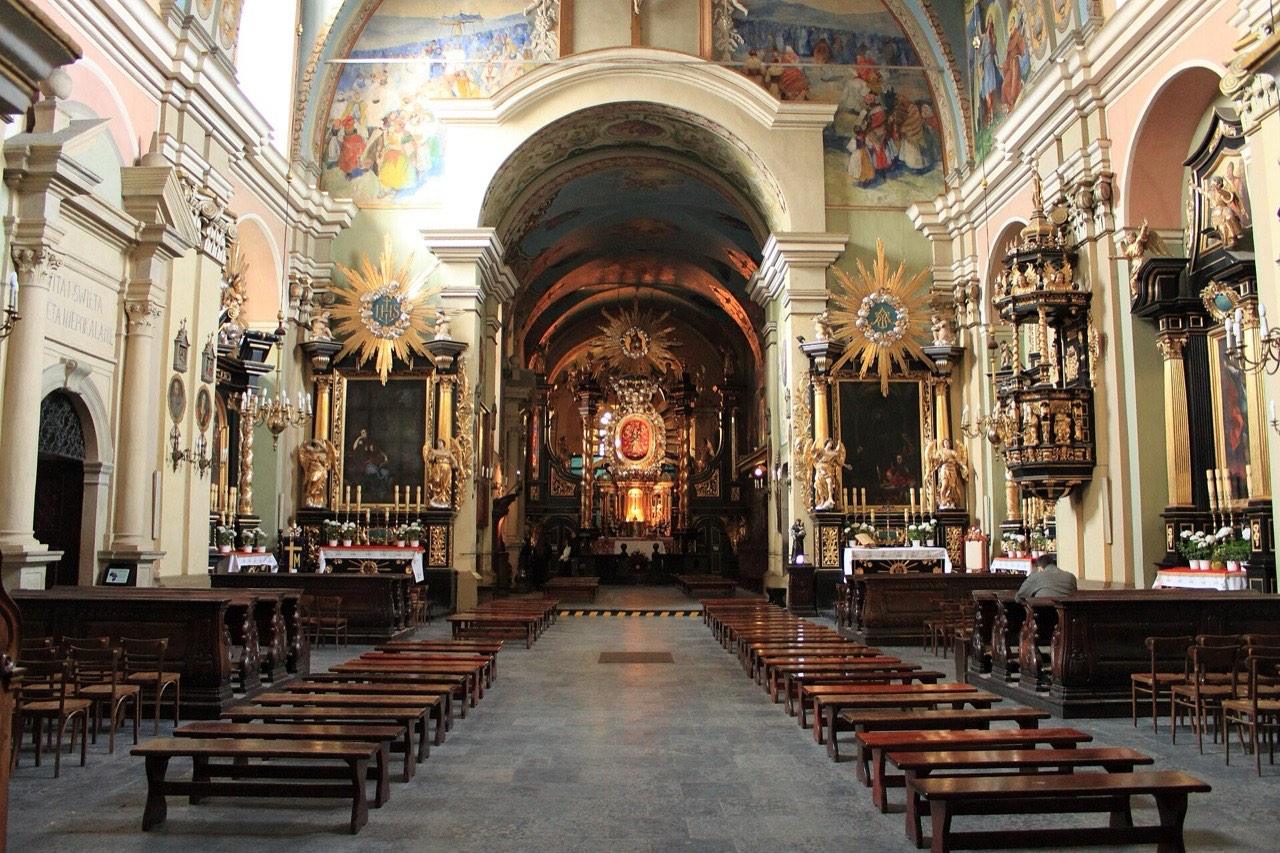
The heart of the shrine is the monastery church, now a basilica, which holds the image of Our Lady of Kalwaria. According to accounts, tears were seen on it in 1641, which gave rise to a special devotion. The image was crowned with papal crowns in 1887, and in 1980 the church was given the title of minor basilica. Many pilgrims come here above all to pray in silence before this image, leave their intentions and receive the sacrament of reconciliation.
Kalwaria is also closely linked to St John Paul II. As a boy, Karol Wojtyła came here with his father from nearby Wadowice, and as pope he visited the shrine in 1979 and 2002. He spoke many times about how much he owed to the Calvary paths.
The Calvary paths: what they are and how to walk them
The Calvary paths (dróżki kalwaryjskie) are a network of trails linking several dozen chapels and churches scattered across the surrounding hills. Each chapel commemorates a specific event, and its name often refers to places in Jerusalem: the Upper Room, the House of Caiaphas, Pilate's Praetorium, the Tomb of Our Lord or the Tomb of Our Lady. Some are small chapels, others are imposing churches built in the Mannerist and Baroque styles.
Traditionally there are two main cycles of devotion:
- The Paths of Our Lord, leading from the Upper Room through the arrest, the trial and the Way of the Cross to the Crucifixion and the laying in the tomb;
- The Paths of Our Lady, devoted to the life of Mary, especially her Dormition, funeral and Assumption.
Walking the paths is not a sightseeing stroll but a devotion. Pilgrims stop at each station, read passages from the Gospel, say prayers and sing hymns. The Bernardines publish prayer books with meditations for the individual stations, which you can buy on site or ask about at the monastery gate. The routes vary in length and run along field and forest paths, often uphill and downhill, so you need comfortable shoes and some time.
How to plan your walk on the paths
If you are coming for the first time, do not try to cover everything in one day. It is better to choose one cycle and walk it calmly, with prayer, than to rush from chapel to chapel. A few practical tips:
- begin with a visit to the basilica and prayer before the image of Our Lady of Kalwaria;
- take a map of the paths or a prayer book describing the stations;
- allow several hours, with a break for rest and a meal;
- after rain the paths can be muddy, so shoes with a good sole are useful;
- bring water, a rain cover and something for sore feet, as you would for a short walking pilgrimage.
You will find a useful checklist in our guide what to pack for a walking pilgrimage. Even if the paths are only one day, well-chosen shoes and layered clothing make a big difference.
The Passion Play in Holy Week
The best-known event of the shrine's liturgical year is the Passion Play (Misterium Męki Pańskiej), performed during Holy Week. The events of the last days of Jesus's life unfold outdoors, on the paths and at the chapels, with local residents and friars playing the roles. The faithful follow the successive scenes, praying and sharing in Christ's Passion in a very direct way.
The tradition of the Kalwaria mystery plays has a long history and is an important part of local devotion. During Holy Week huge crowds of pilgrims come to Kalwaria, so bear a few things in mind:
- the exact programme for each day is announced by the shrine, so check it on the official website before you travel;
- on Holy Thursday and Good Friday expect crowds and parking difficulties;
- be prepared for hours of standing and walking, often in the cold;
- if you come with children or older people, agree on a meeting place in case you get separated.
The Passion Play is not a theatrical performance in the usual sense. It is a form of prayer, so participants keep silence, and photography is best kept to a minimum.
The August celebrations of the Assumption
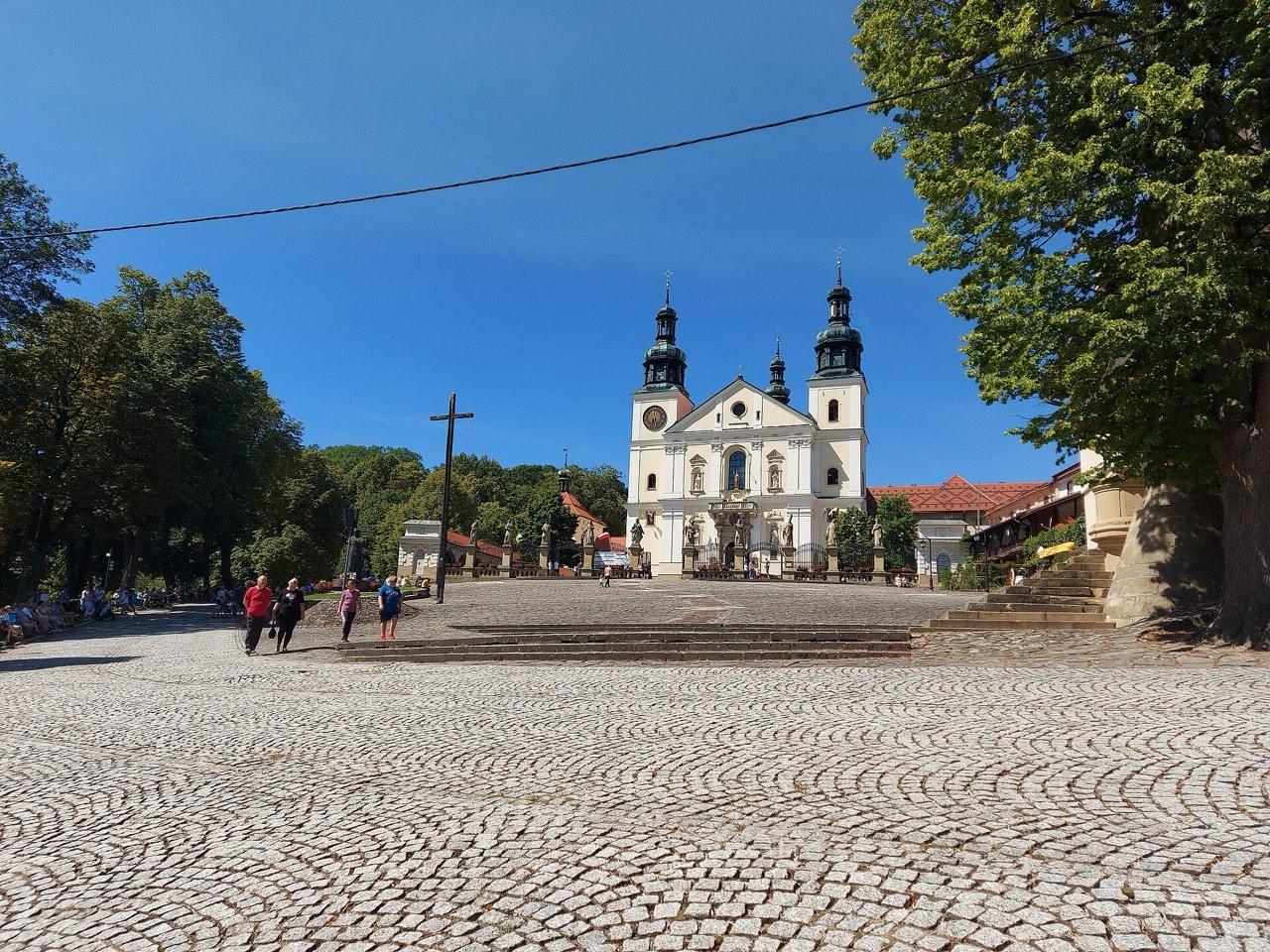
The second great moment of the year is the August celebration of the Dormition, funeral and Assumption of the Blessed Virgin Mary. Processions then take place on the Paths of Our Lady, vividly portraying the last moments of Mary's earthly life and her passage into glory. The celebrations draw pilgrims from all over Poland, including many groups walking from nearby parishes.
As in Holy Week, the detailed schedule of services and processions is announced by the shrine. August is also a hot time, so bring a hat and enough water. For many people, Kalwaria in August is a natural extension of the summer walking pilgrimages.
You can follow current dates of the patronal feasts and other services in the events calendar on Bratnio, and always confirm exact times on the shrine's website.
Kalwaria Zebrzydowska on the UNESCO list
In 1999 the Calvary complex was inscribed on the UNESCO World Heritage List as a Mannerist architectural and landscape complex and pilgrimage park. This recognised not only the individual buildings but above all the way the architecture was woven into the natural landscape of hills and valleys. Kalwaria served as a model for many later calvaries in Central Europe.
You will find the description of the inscription on the website of the UNESCO World Heritage Centre. Its UNESCO status means that Kalwaria also attracts tourists interested in architecture and history. For a pilgrim, it is another reason to come outside the peak season, when the paths are quieter and it is easier to recollect yourself.
Other calvaries in Poland worth discovering
Kalwaria Zebrzydowska is not the only Polish calvary, but it is the oldest of the great ones and the best known. If this form of devotion speaks to you, other places are worth discovering too:
- Kalwaria Pacławska in Subcarpathia, with a Franciscan shrine and paths among the forests;
- St Anne's Mountain (Góra Świętej Anny) in the Opole region, which also has a calvary with many chapels;
- Wambierzyce in Lower Silesia, known as the Silesian Jerusalem.
For a wider overview, see our article on Marian shrines in Poland, and you can see all the places described on the map of pilgrimage places.
Planning your visit: Kalwaria, Wadowice and Kraków
Kalwaria Zebrzydowska lies in Lesser Poland (Małopolska), not far from Wadowice and Kraków, so these three places are usually combined in one trip. This plan lets you follow the path that shaped Karol Wojtyła's faith, from his home town through the Calvary paths to the shrines of Kraków.
A sample two or three-day itinerary:
- Day one: Wadowice. Prayer in the Basilica of the Presentation of the Blessed Virgin Mary in Wadowice, where Karol Wojtyła was baptised, a walk around the market square and a visit to the Family Home of John Paul II (check opening hours in advance).
- Day two: Kalwaria Zebrzydowska. Mass in the basilica, prayer before the image of Our Lady and a walk along your chosen cycle of paths.
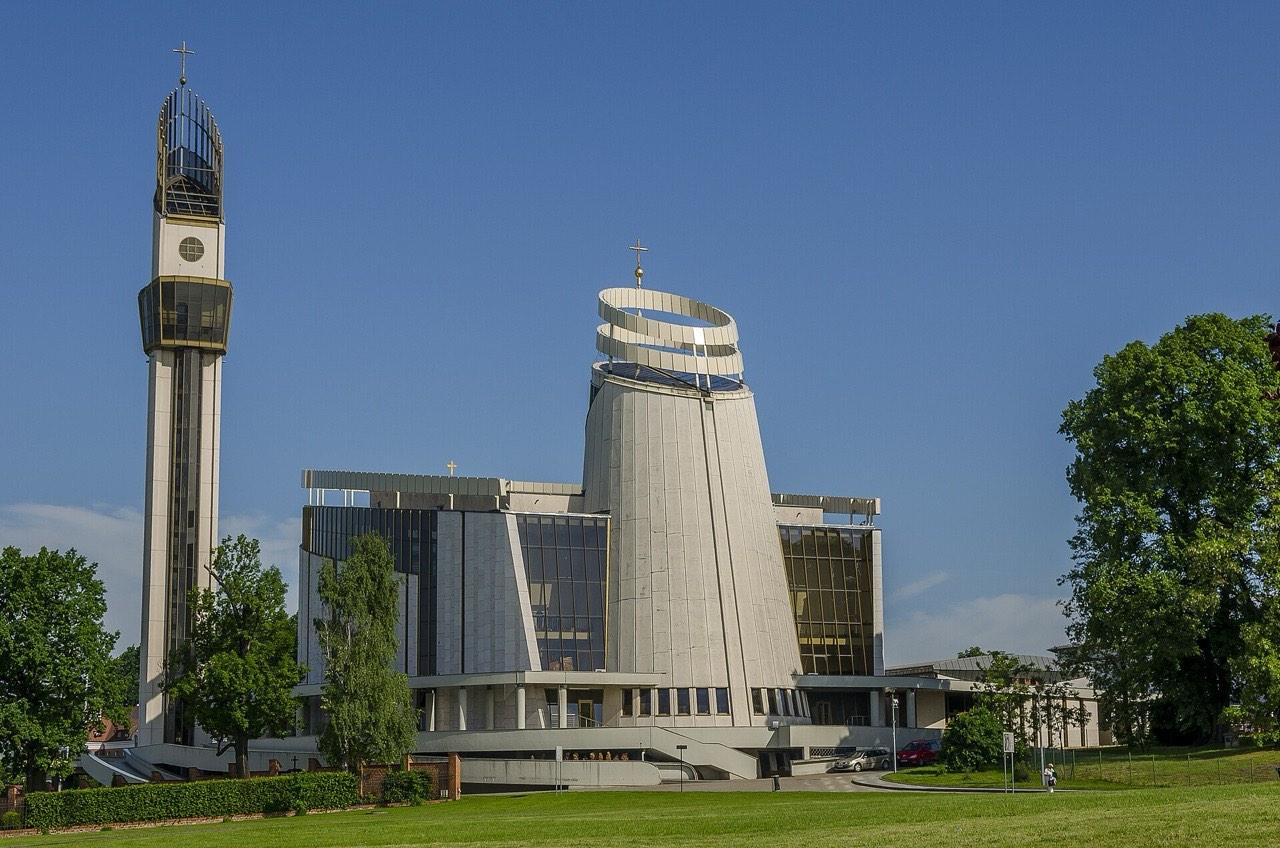
- Day three: Kraków. The Divine Mercy Sanctuary in Łagiewniki and the nearby Sanctuary of St John Paul II.
You can reach Kalwaria by car, train or bus from Kraków. Timetables change, so check them before you travel. Remember that from the station or bus stop you still need to walk to the shrine, and the basilica itself stands on a hill.
If you would rather someone else took care of the logistics, consider an organised trip. Many parishes and tour operators run one-day or multi-day pilgrimages to Lesser Poland. We explain what to look for when choosing one in our guide how to choose a coach pilgrimage. We have gathered current offers in the list of pilgrimage trips.
Kalwaria with Bratnio: plan, companions and memories
When planning your visit you can use Bratnio's tools. The Kalwaria Zebrzydowska place card has basic information, the location on the map and reviews from other pilgrims. You can save the place to come back to it when planning.
In the journey planner you can lay out a route in stages, for example Wadowice, Kalwaria and Kraków, and after you return describe your pilgrimage and add photos. You can share this story with family or friends.
If you are going alone and would like to walk the paths with someone, the Find a travel companion feature lets you briefly show yourself to other pilgrims in the area. Visibility is off by default; you switch it on for 1, 2 or 4 hours, and others see only an approximate zone. A conversation begins only after an invitation is accepted. We write more about finding a companion safely in our article how to find a pilgrimage companion.
On the paths, the songbook with traditional Passion and Marian hymns, available in the app, will also come in handy.
Frequently asked questions
How long does it take to walk the Calvary paths?
It depends on the cycle you choose and the pace of your prayer. Walking one of the main cycles with meditations usually takes several hours. On your first visit, set aside a whole day for Kalwaria so you are not rushed and have time to pray in the basilica.
When is the Passion Play held at Kalwaria?
The Passion Play is performed during Holy Week, culminating on Holy Thursday and Good Friday. The shrine announces the detailed programme each year, so check it on the Bernardines' official website before you travel.
Are the Calvary paths accessible for older people?
The basilica is accessible to most pilgrims, but the paths run along uneven and often steep trails. Older people or those with limited mobility can choose a shorter section or pray in the basilica and nearby chapels. It helps to have a walking stick and a companion.
Why is Kalwaria Zebrzydowska on the UNESCO list?
In 1999 UNESCO recognised the exceptional combination of Mannerist architecture and landscape that created a pilgrimage park. The complex was a model for other calvaries in the region and has kept its original religious function to this day.
How do you combine a visit to Kalwaria with Wadowice and Kraków?
The most convenient plan is two or three days: Wadowice, Kalwaria Zebrzydowska and Kraków with Łagiewniki. The towns are close together, so you can stay in one place and travel out. You can build the route in the Bratnio journey planner.
Can you go to confession at Kalwaria?
Yes, confessions are heard regularly in the shrine's basilica, and during major celebrations more confessors are available. Check the times on the shrine's website or ask on site.
Kalwaria Zebrzydowska teaches that a pilgrimage is a journey, not just a destination. If you want to plan your visit, save your favourite places and share your memories of the paths, create a free account on Bratnio. You can build a plan in stages, check events at the shrine, and, if you wish, find a companion for shared prayer on the paths.