
Shrine guides
Pilgrimage to Assisi: St Francis, St Clare and La Verna
Published October 21, 2026 · 14 minute read
A guide to Assisi in the footsteps of St Francis and St Clare: the lower and upper basilica, the Portiuncula, the old town, La Verna and tips for planning your pilgrimage.
Machine translation of an article written in Polish.
For many Catholics, a pilgrimage to Assisi is an encounter with the simplest and at the same time most demanding form of the Gospel. In this small Umbrian town on the slopes of Mount Subasio, St Francis and St Clare were born, lived and prayed. Here communities were founded that still inspire people all over the world. In this guide we describe the key places: the Basilica of St Francis with its lower and upper church, the Portiuncula in Santa Maria degli Angeli, the streets of the old town, and La Verna, which is well worth adding to your route. At the end you will find practical tips for planning your trip.
Assisi is not a place to "tick off" in a hurry. It gives most to those who slow down, sit for a moment in silence and let the stones, frescoes and landscape tell the story of the poor brother from Umbria. You will find the place card with a map in the Bratnio catalogue under Basilica of St Francis in Assisi.
St Francis of Assisi: who he was and why pilgrims keep coming back
Francis was born in Assisi in 1181 or 1182 into the family of a wealthy cloth merchant, Pietro di Bernardone. He spent a carefree youth, dreamed of knightly glory, fought in the war against Perugia and was taken prisoner. After his return he went through a deep conversion. An encounter with a leper, prayer before the cross in the ruined little church of San Damiano and the words "Francis, go and repair my house" changed the course of his life.
He publicly renounced his father's wealth before the Bishop of Assisi and began to live in radical poverty. The first brothers soon joined him, and in 1209 Pope Innocent III gave oral approval to their way of life. This was the birth of the Order of Friars Minor. Francis died on the evening of 3 October 1226 at the Portiuncula, and as early as 1228 Pope Gregory IX declared him a saint. In 2026 the Church marks the 800th anniversary of his death, which for many pilgrims is an extra reason to set out for Assisi now.
Pilgrims come here because Francis remains close: his love for the poor and crucified Christ, his brotherhood with every person, peace and respect for creation need no lengthy explanation. His "Canticle of the Sun", also called the Canticle of the Creatures, is one of the oldest works of Italian literature and a prayer you can say at every stop on this pilgrimage.
St Clare and the Franciscan roots of Assisi
A pilgrimage to Assisi would not be complete without St Clare. She came from the noble Offreduccio family. On the night of Palm Sunday 1212 she left her family home and, at the Portiuncula, placed her life in God's hands, receiving the tonsure from Francis. Soon she settled at the church of San Damiano, where for more than forty years she led a community of poor sisters, known today as the Poor Clares.
Clare was the first woman to write a religious rule approved by a pope. She died in 1253 and was canonised as early as 1255. Her body rests in the Basilica of St Clare, built near the former church of San Giorgio. This church also keeps the San Damiano Cross before which Francis prayed. For many pilgrims a moment before this crucifix is the most personal point of the whole trip.
Remember that Assisi is the town of two saints who complemented each other. Francis travelled and preached; Clare remained in prayer and contemplation. A well-planned pilgrimage combines both dimensions: the road and silence.
The Basilica of St Francis in Assisi: the lower and upper church
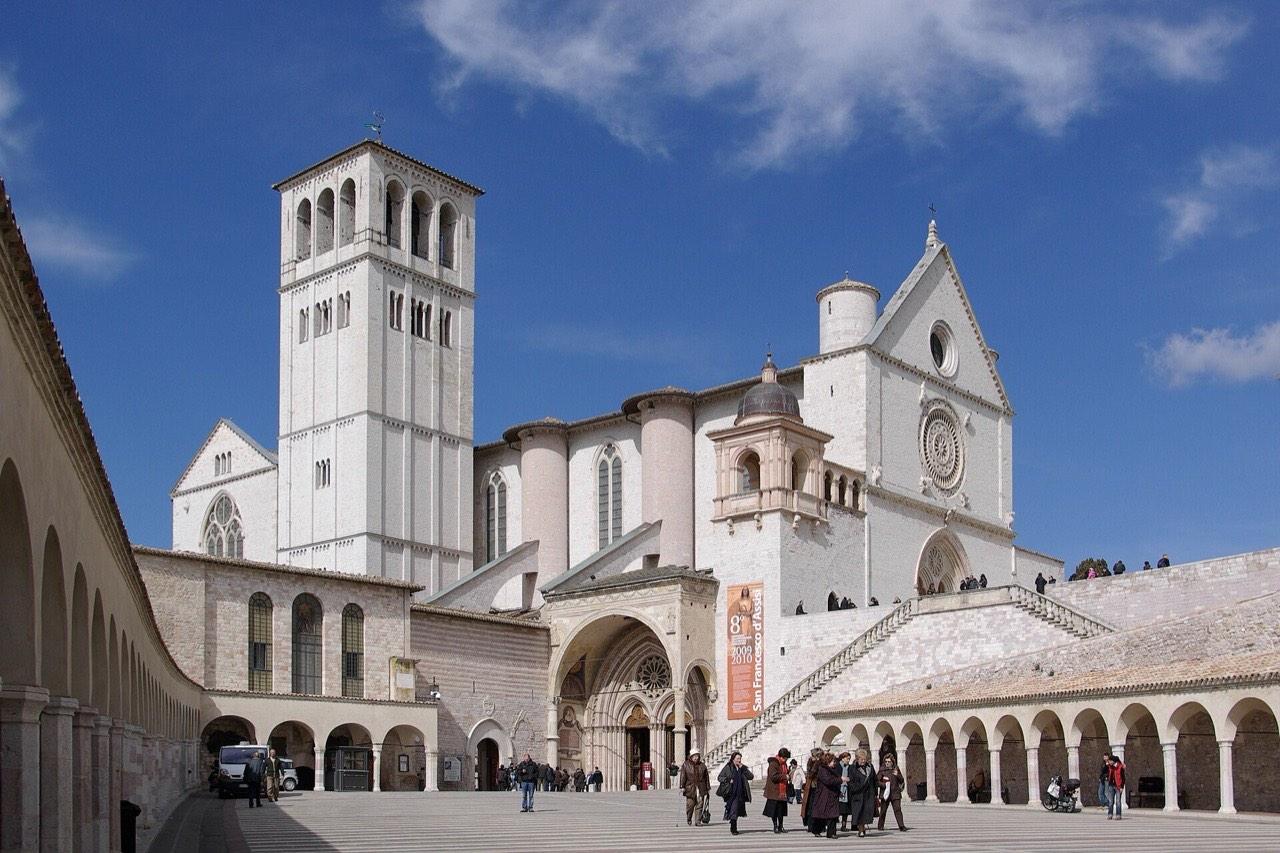
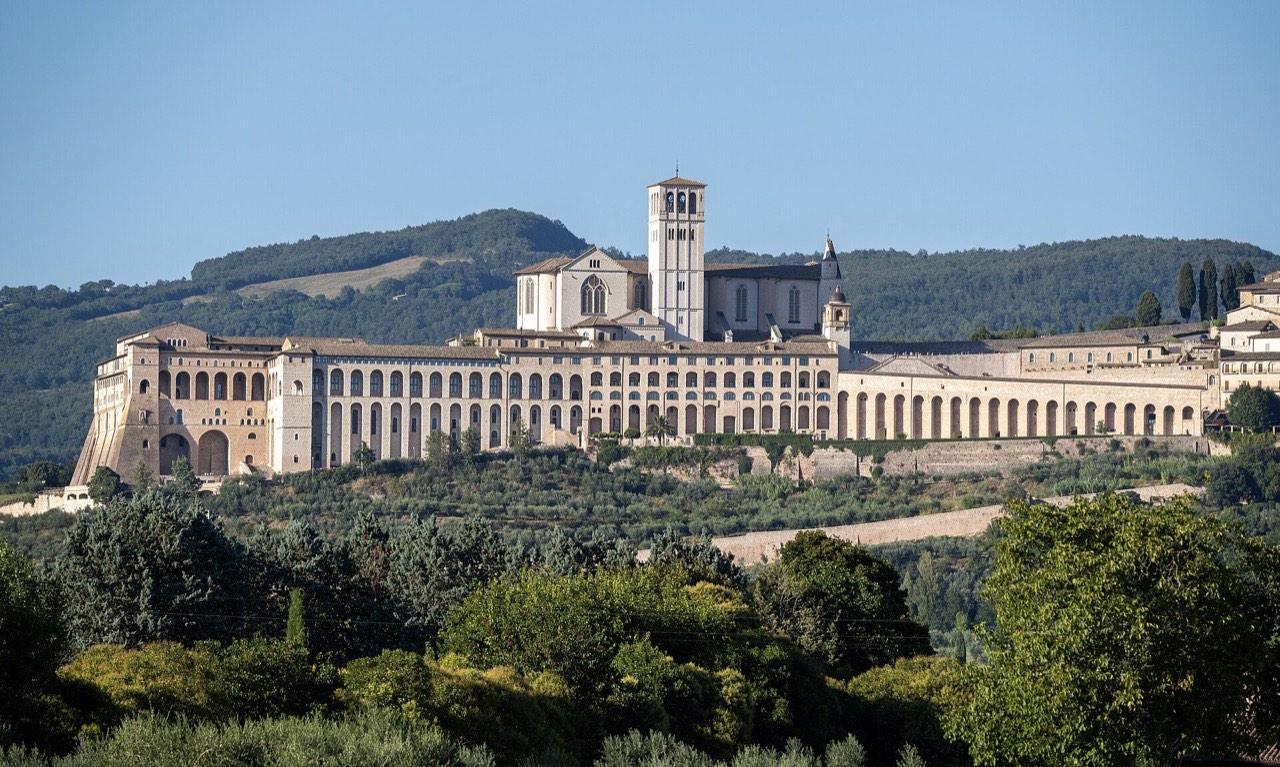
Construction of the basilica began in 1228, immediately after Francis's canonisation. The church stands at the western edge of the town, on a hill once called the "Hill of Hell", which has since been known as the Hill of Paradise. The complex consists of two churches built one above the other and the Sacro Convento, the friars' friary. Together with other Franciscan sites, Assisi is a UNESCO World Heritage Site.
The lower basilica and the tomb of St Francis
The lower church is lower, darker and more recollected. Its walls are covered with frescoes by 13th and 14th-century masters, including Cimabue, Simone Martini and Pietro Lorenzetti. Beneath the lower basilica is the crypt with the tomb of St Francis. His remains were only rediscovered in the 19th century, because for centuries the friars had kept the exact burial place hidden. People from all over the world pray at the tomb, often in complete silence. It is a good moment for personal prayer, for entrusting your loved ones, or simply for a moment of gratitude.
The upper basilica and the fresco cycle of Francis's life
The upper church is bright, tall and Gothic. Its walls carry the famous cycle of 28 scenes from the life of Francis, traditionally attributed to Giotto and his workshop (art historians still debate the authorship). The scenes show, among others, the renunciation of his inheritance, the dream of Innocent III, the sermon to the birds and the receiving of the stigmata. Walk through them slowly, as a kind of catechesis in pictures. During the 1997 earthquake the vault of the upper basilica was seriously damaged and some of the frescoes collapsed. Rebuilding and conservation took many years.
Both churches ask for silence and modest dress, and visits are restricted during liturgies. Current Mass times, rules on photography and information for groups are on the official website of the Basilica and Sacro Convento of Assisi.
The Portiuncula in Santa Maria degli Angeli: the cradle of the Order
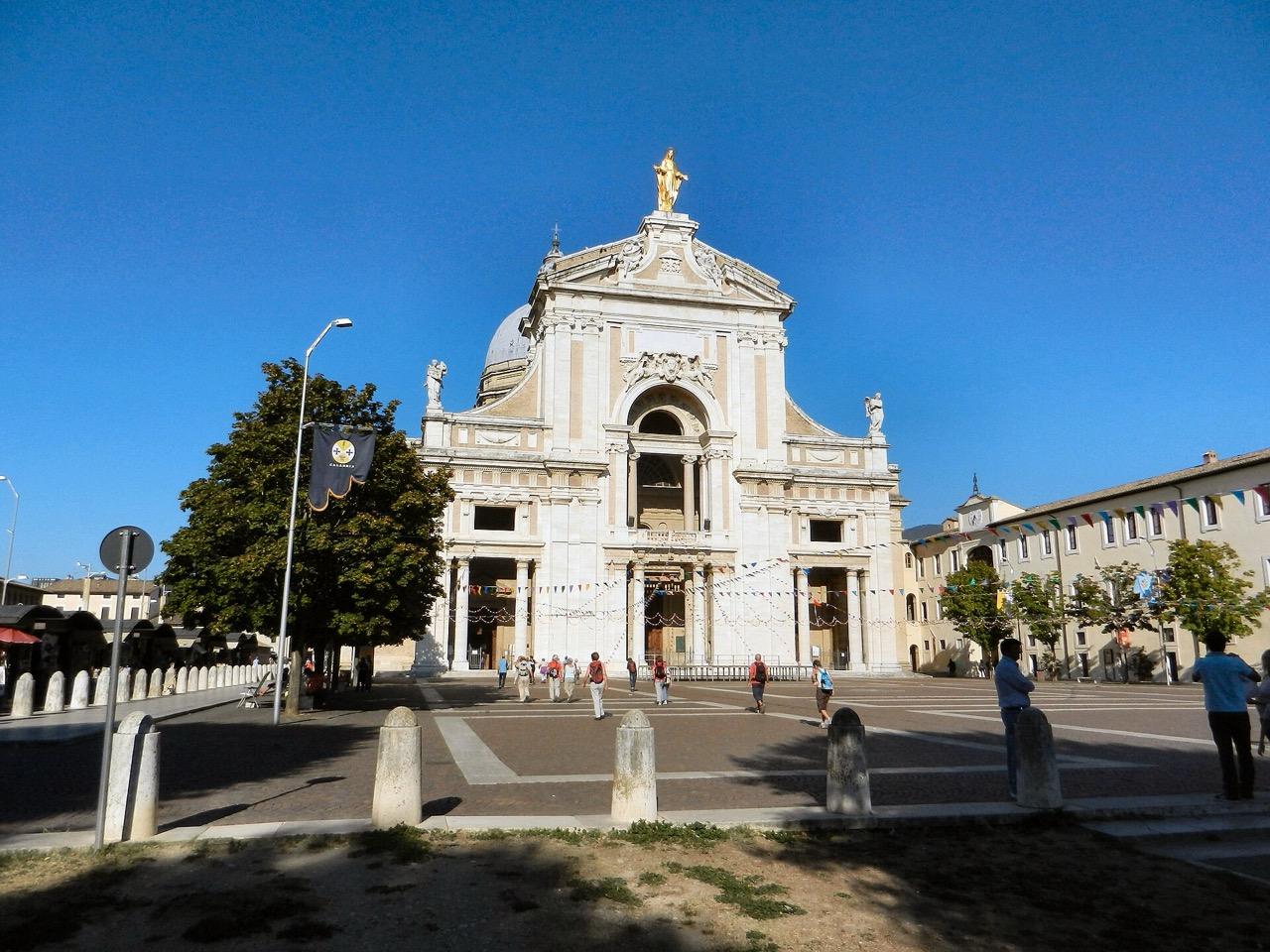
At the foot of the hill, in the valley, stands the monumental Basilica of St Mary of the Angels with the Portiuncula. It was built between the 16th and 17th centuries, and inside, directly under the dome, stands the tiny Portiuncula chapel. This is the little church that Francis restored with his own hands and made the centre of life for the first community of brothers. Here Clare began her religious life, and here Francis wished to die.
Next to the Portiuncula is the Chapel of the Transitus, marking the place of the saint's death. Nearby there is also a rose garden, linked to the tradition of the thornless roses, and small places of remembrance of the first brothers. The contrast between the huge basilica and the humble chapel is itself a lesson in Franciscan spirituality: what matters most is often the smallest.
The Portiuncula is also linked to the Portiuncula Indulgence, called in Italian the Perdono di Assisi. Tradition connects it with Francis's request for forgiveness for all who visit this little church. It is celebrated especially on 1 and 2 August, and the conditions for obtaining it are the same as for other plenary indulgences. If you plan to come at this time, expect large numbers of pilgrims and book accommodation well in advance.
Assisi on foot: San Damiano, the Basilica of St Clare, San Rufino and the Carceri
The old town is best explored on foot, in comfortable shoes, because the streets are steep and paved with stone. Here are places worth including in your route:
- San Damiano - a small church below the town walls, where Francis heard the call to rebuild the Church and Clare spent most of her life. The Canticle of the Sun was composed here. A quiet path through olive groves leads to it.
- Basilica of St Clare - the saint's tomb and the San Damiano Cross.
- San Rufino Cathedral - the church where, according to tradition, Francis and Clare were baptised.
- Chiesa Nuova - a church built on the site that tradition associates with Francis's family home.
- Sanctuary of the Spoliation at the church of Santa Maria Maggiore - the place where Francis renounced his possessions. St Carlo Acutis, the young saint canonised in 2025, also rests here, and his tomb draws many young people.
- Eremo delle Carceri - a hermitage in the woods on the slopes of Subasio, where Francis and the brothers went to pray. The road is quite steep, so plan a separate half-day for it.
- Rivotorto - a place associated with the brothers' first shelter in the valley.
You do not have to see everything. It is better to choose three or four places and experience them calmly than to rush from church to church. A good idea is to end the day on the square in front of the upper basilica, when the setting sun lights up the Umbrian valley.
La Verna: extending your Assisi pilgrimage to the place of the stigmata
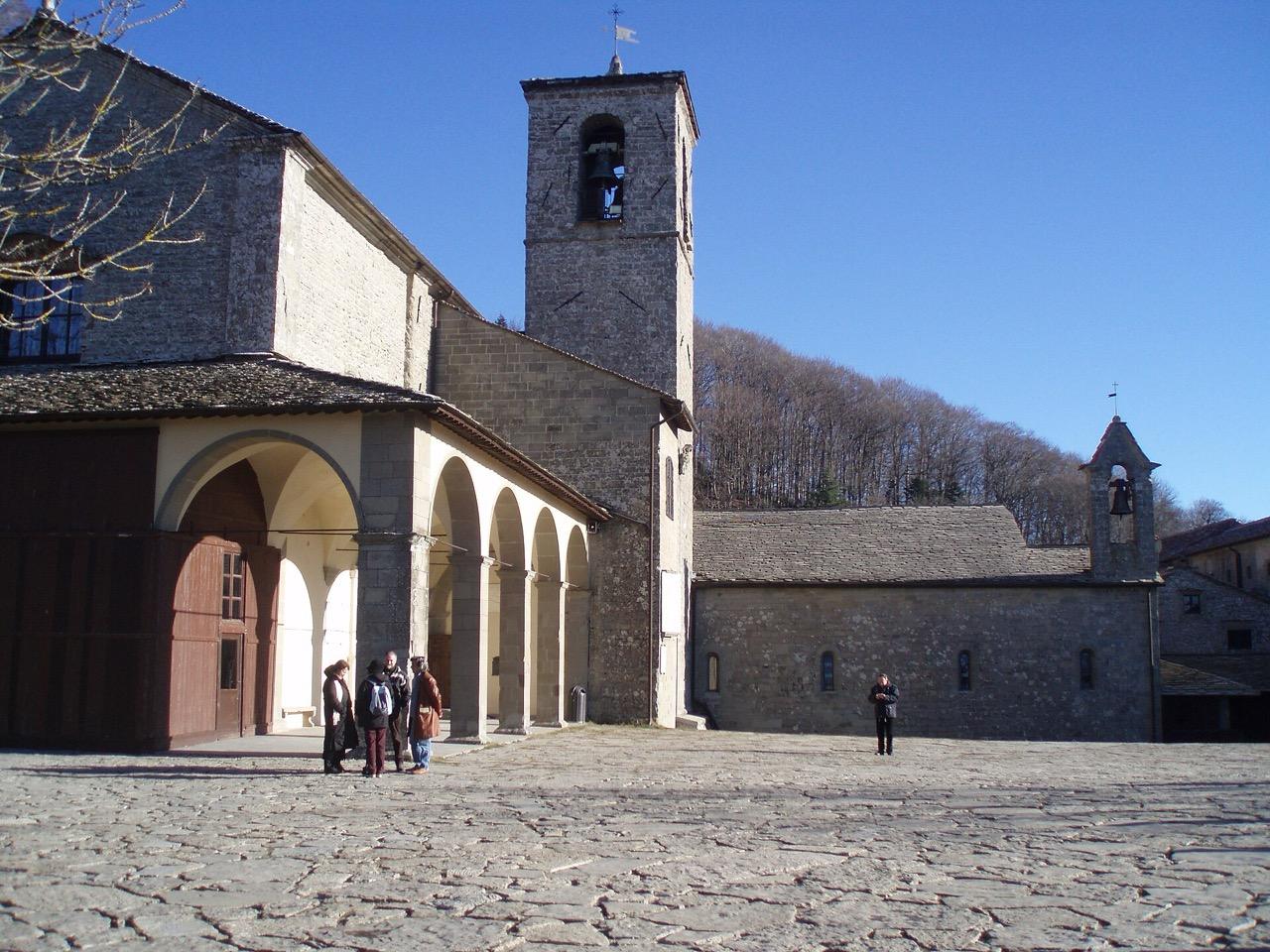
If you have more time, add the Sanctuary of La Verna in Tuscany, in the Casentino area, to your route. The mountain was given to Francis in 1213 by Count Orlando of Chiusi as a place of prayer and solitude. Here, in September 1224, during a fast in honour of St Michael the Archangel, Francis received the stigmata, the wounds of Christ in his own body.
The sanctuary is a group of churches, chapels and corridors on a rocky mountain surrounded by forest. The most important is the Chapel of the Stigmata, built on the site of the event. Every day the friars lead a procession to this chapel, a beautiful moment for pilgrims. The forest, rocks and mountain coolness create a completely different atmosphere from sunny Assisi.
La Verna is in a different region from Assisi, so getting there needs planning. For walkers there is the Via di Francesco (the Way of St Francis), a trail linking La Verna with Assisi and on to Rome. Walking the whole route is a challenge of many days, but even a few stages let you feel how Francis travelled.
How to plan a pilgrimage to Assisi: getting there, accommodation and season
Start planning with a few simple decisions: are you going with a parish group, with a pilgrimage tour operator or on your own, and how many days do you have? Some general tips:
- Getting there. Assisi is in Umbria, in central Italy. The nearest airport is Perugia, and Assisi railway station is in the valley, at Santa Maria degli Angeli. You can reach the old town by bus or walk up. Many people fly to Rome and continue by train. Check current connections with the carriers before you travel.
- Accommodation. You can choose from hotels, guesthouses and pilgrim houses run by religious communities. Staying in the old town lets you enter the basilica early and enjoy the evening quiet. Staying in the valley makes rail travel easier.
- Season. Spring and early autumn are usually the most pleasant for walking. Summer can be very hot, and around 1-2 August and 4 October, the feast of St Francis, the town is full of pilgrims.
- Dress and behaviour. Modest dress is required in the churches: covered shoulders and knees. Keep silence, especially at the saints' tombs.
- Fitness. Assisi sits on a hillside, and you walk uphill and downhill between the churches. People with limited mobility should check the accessibility of their chosen places in advance.
If this is your first longer journey, our walking pilgrimage packing list will come in handy, especially if you plan to walk part of the Via di Francesco.
How many days for Assisi and how to combine it with other Italian shrines
Two full days are enough for the town itself: one for the Basilica of St Francis, the Basilica of St Clare and the old town, the second for the Portiuncula, San Damiano and the Carceri. A third day allows a calmer pace, adoration, confession and rest. With La Verna, plan at least four days.
Assisi combines very well with other places in central Italy. Nearby, also in Umbria, is the Shrine of St Rita in Cascia. To the east, on the Adriatic, is the Holy House of Loreto. Many groups combine Assisi with Rome and visit St Peter's Basilica, as we describe in our guide a 3-5 day pilgrimage to Rome. For more route ideas, see our article on shrines in Italy beyond Rome.
If you are planning a longer journey around Italy, you can extend it south and visit the Gargano. We describe this in our guide San Giovanni Rotondo: in the footsteps of Padre Pio. You can see all these places together on the map of pilgrimage places in Europe.
Your Assisi pilgrimage with Bratnio: group, companion and shared story
Bratnio helps you prepare for the trip and experience it together with others. In the pilgrimage planner you can add stages, for example Assisi, La Verna and Rome, and after you return tell the story of your journey with photos and share it with family or friends. If you are looking for an organised trip, browse pilgrimage trips and events in the calendar.
On the spot, the Find a travel companion feature comes in handy. Your visibility is off by default. You can switch it on for 1, 2 or 4 hours, and others see only an approximate zone, not your exact location. A conversation begins only after an invitation is accepted, and blocking and reporting are free. We describe how to do this wisely in our article how to safely find a pilgrimage companion.
Frequently asked questions
How many days do you need for a pilgrimage to Assisi?
Two full days are enough for the main places. A third day gives time for quiet prayer, confession and a visit to the Eremo delle Carceri. If you want to visit La Verna, plan at least four days on site.
Where is the tomb of St Francis?
The tomb of St Francis is in the crypt beneath the lower Basilica of St Francis in Assisi. The entrance is from the lower church. Silence and recollection are expected at the tomb.
What is the Portiuncula?
It is the small church that Francis restored and made the centre of the first community of brothers. Today it stands inside the Basilica of St Mary of the Angels in Santa Maria degli Angeli, in the valley below Assisi. Next to it is the Chapel of the Transitus, where Francis died.
When can you obtain the Portiuncula Indulgence?
The Portiuncula Indulgence is linked above all to 1 and 2 August. The usual conditions for a plenary indulgence apply: being in a state of sanctifying grace, Holy Communion, prayer for the intentions of the Holy Father and freedom from attachment to sin. Check the details with your parish or the Franciscans.
Is it worth going from Assisi to La Verna?
Yes, if you have an extra day. La Verna is the place of St Francis's stigmata and has a completely different, mountainous and wooded atmosphere. It is in Tuscany, so plan your journey in advance.
How should you dress for the Basilica of St Francis?
Modest dress is required: covered shoulders and knees. Silence is kept in the churches, and visits are restricted during liturgies. The basilica's official website gives the current rules, including those on photography.
Is Carlo Acutis buried in Assisi?
Yes. St Carlo Acutis rests in the Sanctuary of the Spoliation at the church of Santa Maria Maggiore in Assisi. Many people, especially young people, visit his tomb.
A pilgrimage to Assisi can be the beginning of a new path, not just a trip. If you want to prepare it well and live it together with others, create a free account on Bratnio. Save the Basilica of St Francis, the Portiuncula and La Verna to your list of places, plan the stages of your journey, choose hymns for the road in the songbook, and after you return share your story with photos and review the places you visited to help future pilgrims.