Shrine guides
San Giovanni Rotondo: A Pilgrimage in the Footsteps of Padre Pio
Published October 21, 2026 · 12 minute read
A practical guide to San Giovanni Rotondo: the life of St Padre Pio, the shrine and St Pio's church, St Michael's grotto at Monte Sant'Angelo and a route via Lanciano, Manoppello and Bari.
Machine translation of an article written in Polish.
San Giovanni Rotondo is a small town on the Gargano peninsula in Apulia (Puglia) that has drawn pilgrims from all over the world for more than a hundred years. For over fifty years St Padre Pio of Pietrelcina, a Capuchin friar, confessor and stigmatist, lived and ministered here. For many Catholics, a trip in the footsteps of Padre Pio is an encounter with a spirituality that is simple but very demanding: prayer, confession, suffering accepted in faith and care for the sick. In this guide we describe the shrine and St Pio's church, nearby Monte Sant'Angelo, and how to plan a route around southern Italy with Lanciano, Manoppello and Bari.
You will not find sensationalism or promises of miracles here. You will find well-organised information and practical tips to help you live this time in a spirit of prayer. The place card with a map is in the Bratnio catalogue under Shrine of St Padre Pio in San Giovanni Rotondo.
Who was St Padre Pio of Pietrelcina
Padre Pio was born Francesco Forgione on 25 May 1887 in Pietrelcina, a small village in Campania near Benevento. He came from a poor, devout farming family. At fifteen he entered the Capuchin order and took the name Brother Pio. He was ordained a priest in 1910 in Benevento Cathedral.
For years he struggled with illness, and in 1916 he came to the Capuchin friary in San Giovanni Rotondo, where he remained for the rest of his life. On 20 September 1918, while praying before the crucifix in the choir of the old church, he received the visible stigmata, which he bore for about half a century. The Church investigated him many times, and for a period he was subject to restrictions on his ministry. He accepted them in obedience, which for many is one of the strongest testimonies to his holiness.
He was best known as a confessor. He spent hours in the confessional, and people queued for days. He founded the hospital Casa Sollievo della Sofferenza, the Home for the Relief of Suffering, which opened in 1956, and started the Prayer Groups that are active all over the world today. He died on 23 September 1968. St John Paul II, who met him in San Giovanni Rotondo as a young priest, beatified him in 1999 and canonised him on 16 June 2002. The liturgical memorial of St Pio falls on 23 September. You can find more about his canonisation on the website of the Holy See.
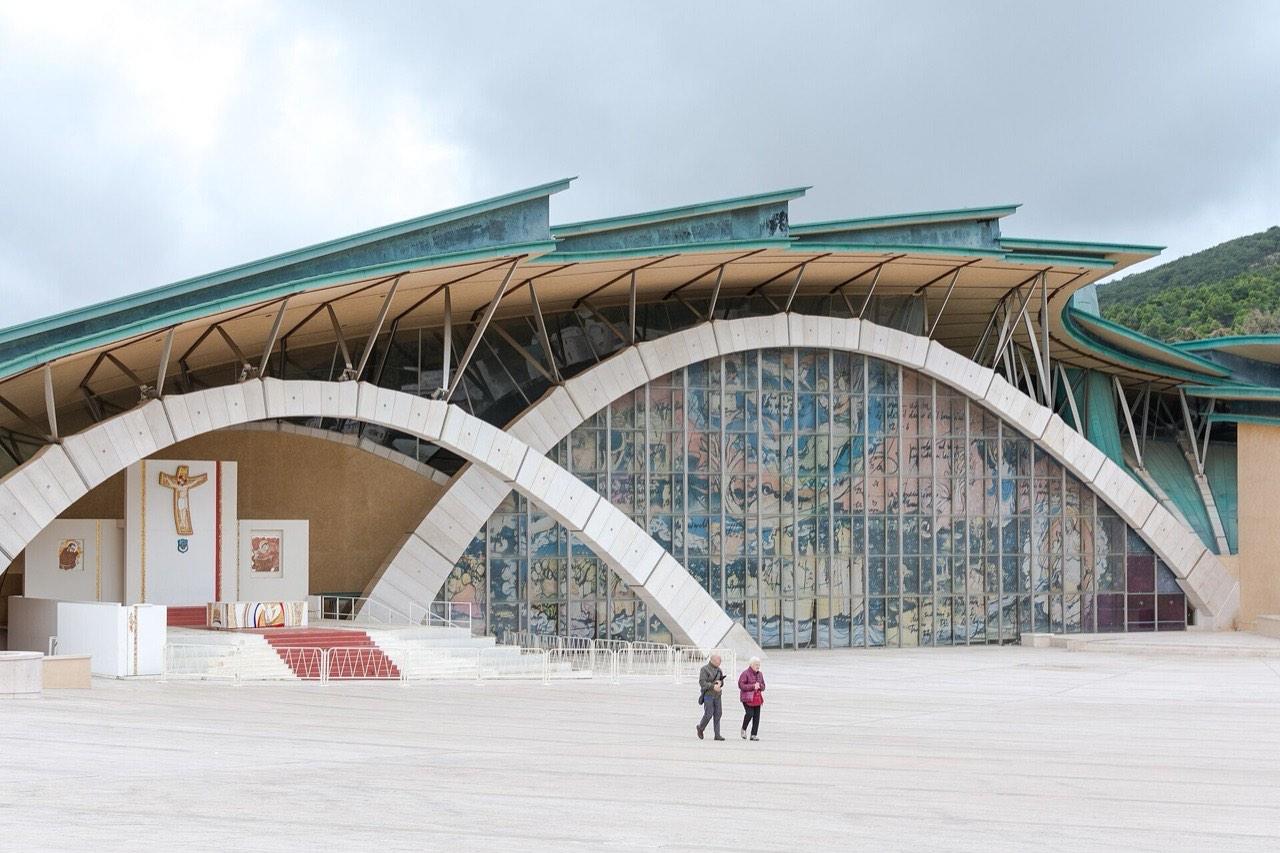
The shrine in San Giovanni Rotondo: what to see in the footsteps of Padre Pio
The shrine complex lies on the edge of the town, at the foot of the Gargano hills. Pilgrims usually begin with the places where Padre Pio lived and ministered day to day. The main sights are:
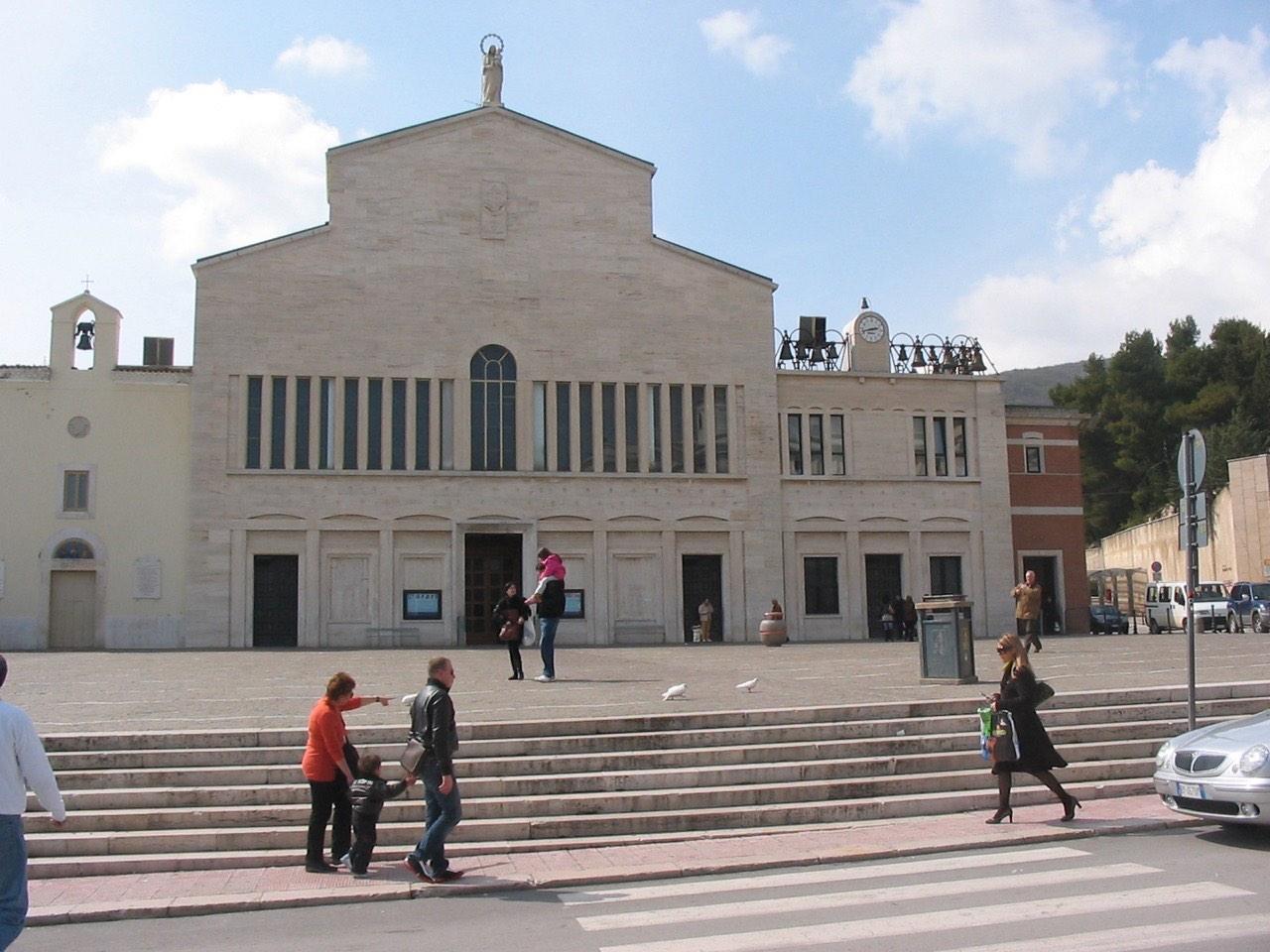
- The old church of Our Lady of Grace (Santa Maria delle Grazie) - the small church next to the friary where Padre Pio celebrated Mass and heard confessions. The choir holds the crucifix before which he received the stigmata.
- The new church of Santa Maria delle Grazie - a larger church built beside the old one when the small church could no longer hold the number of pilgrims.
- The Capuchin friary and Padre Pio's cell - the modest room where he lived; it shows how simple a life the saint led.
- The Church of St Pio of Pietrelcina - a modern church, described below.
- The Way of the Cross on Monte Castellano - stations with sculptures by Francesco Messina along a path up the hillside.
- Casa Sollievo della Sofferenza - the hospital that still operates today, a living fruit of his care for the sick. It is a working hospital, so be discreet when visiting the area.
Pilgrims come here above all to pray and to go to confession. Confession is available at the shrine in several languages, and many groups come with their own priest. Check current Mass times, confession hours and visiting times for the tomb directly on the shrine's official websites before you travel.
St Pio's church and the saint's resting place
The Church of St Pio of Pietrelcina, designed by Renzo Piano, was consecrated in 2004. It is one of the largest modern churches in Italy, built for the thousands of pilgrims who come especially in summer and September. Stone arches, a broad forecourt and open space allow liturgies for very large groups, including outdoors.
In the lower part of the complex is a crypt where the saint's mortal remains are displayed. Pilgrims file past slowly and in silence, often with a rosary in hand. If you come at a busy time, expect a queue. It is a good moment to pray for the loved ones and sick people whose intentions you have brought.
For many people the contrast between the modern church and the humble cell and old choir is spiritually significant. It shows that Padre Pio's holiness grew from a hidden, simple life, and only later drew the crowds.
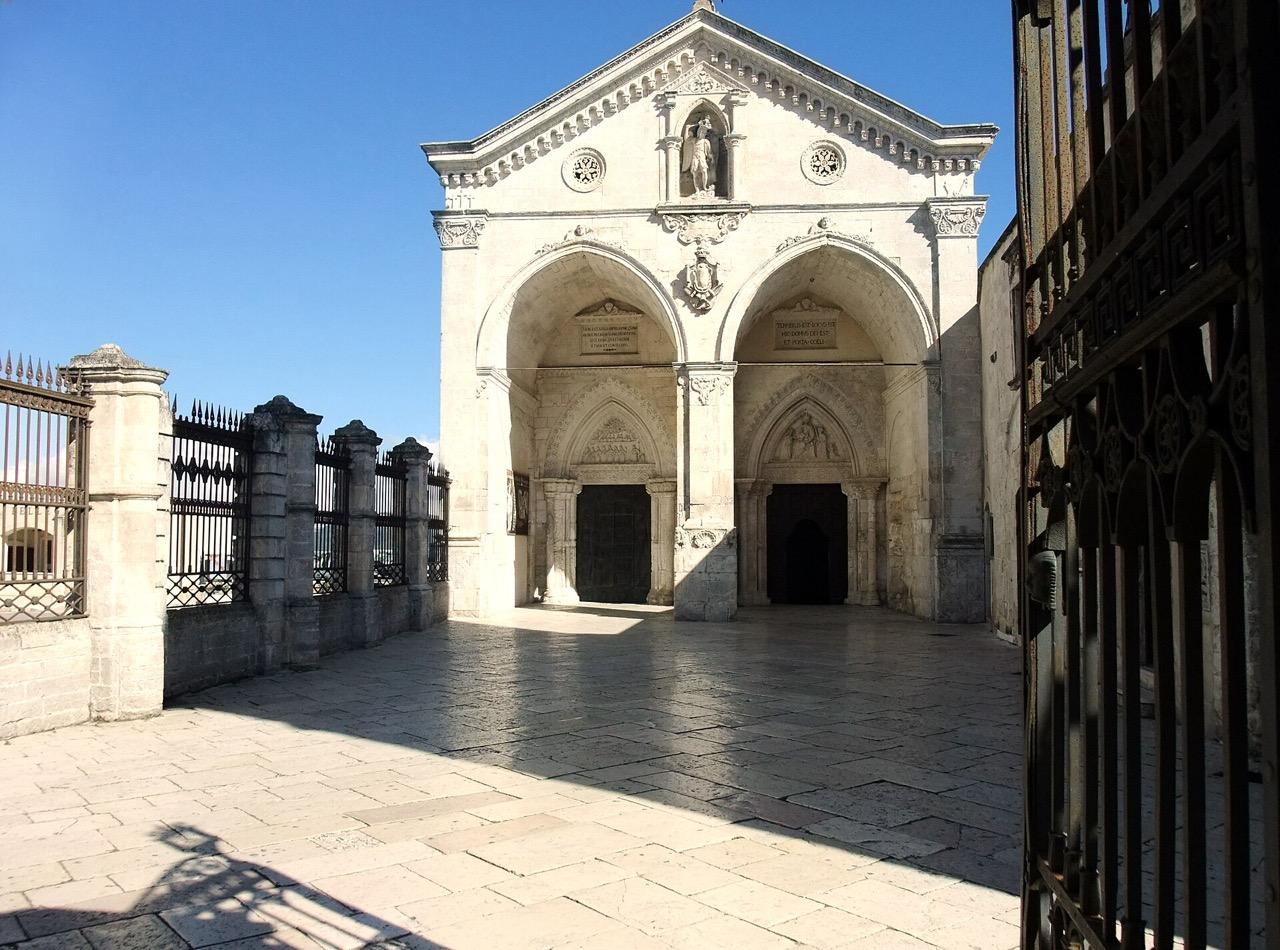
Monte Sant'Angelo: the grotto of St Michael the Archangel on the Gargano
Not far from San Giovanni Rotondo, higher in the Gargano mountains, lies the Shrine of St Michael the Archangel at Monte Sant'Angelo. It is one of the oldest shrines to St Michael in Western Europe. Tradition traces its origins to apparitions of St Michael the Archangel at the end of the 5th century. The heart of the shrine is a grotto reached by a long flight of steps. In the Middle Ages it was an important stop for pilgrims and for crusaders heading to the Holy Land. The shrine is a UNESCO World Heritage Site as part of "The Longobards in Italy. Places of the Power".
Padre Pio had a great devotion to St Michael the Archangel and recommended it to his penitents. That is why most pilgrimages in the footsteps of Padre Pio combine San Giovanni Rotondo with Monte Sant'Angelo over one or two days. The little town also has charming old streets and views over the Gulf of Manfredonia. The liturgical feasts of St Michael fall on 8 May and 29 September, when especially many pilgrims come.
Pietrelcina: where Padre Pio's journey began
If you have more time, also visit Pietrelcina in Campania, the saint's home village. There you can see the house where he was born, the church where he was baptised, and Piana Romana, a place in the countryside where as a young priest he spent time during a period of illness and prayer. Pietrelcina is in a different region from the Gargano, however, so it is usually visited at the beginning or end of a longer route rather than on the same day as San Giovanni Rotondo.
A pilgrimage in southern Italy: Lanciano, Manoppello and Bari
The Gargano is easy to combine with other important shrines on the Adriatic. Many groups plan a north-south route from Abruzzo to Apulia.
Lanciano: the Eucharistic Miracle
The Shrine of the Eucharistic Miracle in Lanciano keeps the relics of a miracle that tradition dates to the 8th century. According to the account, a priest who doubted the real presence of Christ in the Eucharist saw the Host change into Flesh and the wine into Blood during Mass. The relics are displayed in the Church of St Francis, in the care of the Franciscans. It is a particularly good place for adoration of the Blessed Sacrament.
Manoppello: the Holy Face
Nearby, in the mountains of Abruzzo, lies the Shrine of the Holy Face in Manoppello, run by the Capuchins. A delicate veil bearing the image of the face of Christ, known as the Volto Santo, is venerated here. Pope Benedict XVI visited the shrine in 2006. Because the custodians are Capuchins, as in San Giovanni Rotondo, many pilgrims see this place as a natural complement to the journey in the footsteps of Padre Pio.
Bari: the tomb of St Nicholas
South of the Gargano, in the capital of Apulia, stands the Basilica of St Nicholas in Bari. The relics of the Bishop of Myra were brought here by sailors from Bari in 1087. The tomb in the crypt is visited by both Catholics and Orthodox Christians, making the place an important sign of Christian unity. Bari also has a large airport, so it is often the starting or finishing point of the whole pilgrimage.
How to plan a pilgrimage to San Giovanni Rotondo
A few general tips to help you plan your trip:
- Getting there. San Giovanni Rotondo has no railway station of its own. Most people fly into Bari or another airport in the region and continue by bus or car. The nearest rail hub is Foggia. Check current connections with the carriers before you travel.
- How many days. Two full days are enough for San Giovanni Rotondo and Monte Sant'Angelo. With Lanciano, Manoppello and Bari, plan five to seven days, depending on your pace.
- Accommodation. San Giovanni Rotondo has many hotels and pilgrim houses. Staying close to the shrine makes it easier to attend morning Mass and evening prayer.
- Season. Spring and autumn are the most pleasant. Summer is very hot, and around 23 September, St Pio's memorial, huge crowds of pilgrims arrive.
- Spiritual preparation. Think about the intentions you are bringing. Many people prepare for a general confession or bring requests from loved ones and the sick.
- Dress. Modest dress is required in the shrines: covered shoulders and knees.
If you are going to Italy for longer, a route in the south can be combined with the Shrine of Our Lady of the Rosary in Pompeii or with the Holy House of Loreto on the way back north. For ideas on further places, see our guide shrines in Italy beyond Rome, and if you are starting your journey in Rome, read our article a 3-5 day pilgrimage to Rome. Pilgrims drawn to Franciscan spirituality can also plan a stop in central Italy, as we describe in our guide to the pilgrimage to Assisi.
In the footsteps of Padre Pio with Bratnio: plan, companion and story
On the map of pilgrimage places you can see San Giovanni Rotondo, Monte Sant'Angelo, Lanciano, Manoppello and Bari in one view, which makes it easier to build your route. In the pilgrimage planner you can add further stages, and after you return describe the journey in a story with photos for family and friends. If you prefer to travel with a group, browse organisers' pilgrimage trips.
At a large shrine it is easy to feel alone, especially when you travel on your own. The Find a travel companion feature lets you briefly show yourself to other pilgrims nearby. Visibility is off by default; you switch it on for 1, 2 or 4 hours, and others see only an approximate zone. The chat opens only after an invitation is accepted, and blocking and reporting are free. We describe the practical rules in our article how to find a pilgrimage companion.
Frequently asked questions
Where is Padre Pio buried?
The mortal remains of St Padre Pio rest in San Giovanni Rotondo, in a crypt within the complex of St Pio's church. Pilgrims can pray there in silence. Check the current access times before you go.
How many days do you need for San Giovanni Rotondo?
One full day is enough for the shrine itself, but it is better to plan two so you can walk the Way of the Cross calmly and visit Monte Sant'Angelo. A route including Lanciano, Manoppello and Bari takes about a week.
How do you get to San Giovanni Rotondo?
Most people fly into Bari and continue by bus or car. The nearest rail hub is Foggia, from where buses run to the Gargano. Check timetables and connections before you travel.
Can you go to confession in English in San Giovanni Rotondo?
Many groups come with their own priest. Confession at the shrine is available in various languages, but the availability of confessors speaking a particular language depends on the day. Ask on site or at the shrine office.
What is worth seeing near San Giovanni Rotondo?
The most important is the Shrine of St Michael the Archangel at Monte Sant'Angelo, a patron especially dear to Padre Pio. Further north lie Lanciano and Manoppello, and to the south Bari with the tomb of St Nicholas.
When is the feast of St Padre Pio?
The liturgical memorial of St Pio of Pietrelcina falls on 23 September, the anniversary of his death. Very many pilgrims come to San Giovanni Rotondo at this time, so book accommodation in advance.
A pilgrimage in the footsteps of Padre Pio is a chance to stop, go to confession and entrust to God what is difficult. If you want to prepare it well, create a free account on Bratnio. Save San Giovanni Rotondo, Monte Sant'Angelo and Lanciano to your list of places, plan the stages of your journey through Apulia and Abruzzo, take hymns from the songbook for the road, and after you return share your story with photos and your reviews of the shrines you visited.